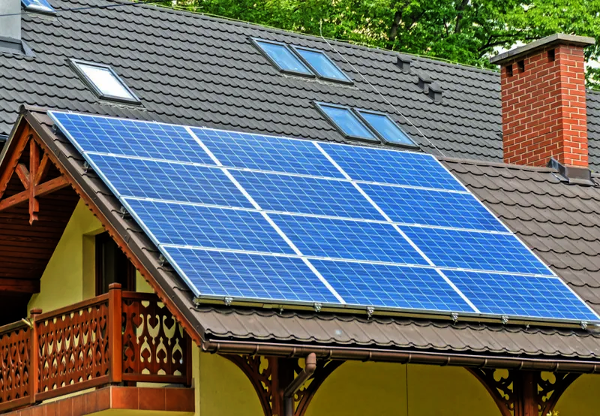
The World Bank Group has approved a $890 million financing package to accelerate residential rooftop solar deployment across India under the PM Surya Ghar: Muft Bijli Yojana. The investment will help millions of households adopt clean energy, reduce monthly electricity expenditure and support the development of a larger domestic solar manufacturing and services ecosystem.
Approved by the World Bank’s Board of Executive Directors, the programme is expected to generate around 1.7 million employment opportunities across solar equipment manufacturing, installation, logistics, maintenance, financing and associated services. It will also mobilise billions of dollars in private capital for household rooftop solar systems.
Financing Package Combines Loans and Grant Support
The $890 million package comprises an $820 million loan from the International Bank for Reconstruction and Development, a $60 million concessional loan from the Clean Technology Fund and a $10 million grant from the World Bank’s Livable Planet Fund.
Alongside this direct financial assistance, the World Bank plans to help mobilise around $4.2 billion in private financing, primarily through commercial loans that can enable households to install rooftop solar systems.
This blended financing structure brings together conventional development funding, concessional climate finance, grant assistance and private investment. It is designed to reduce financial barriers faced by residential consumers while creating a scalable lending ecosystem for rooftop solar adoption.
Supporting PM Surya Ghar: Muft Bijli Yojana
The financing will strengthen the implementation of the PM Surya Ghar: Muft Bijli Yojana, India’s flagship residential rooftop solar programme.
The scheme aims to incentivise rooftop solar installations across 10 million urban and rural households. It seeks to expand access to affordable electricity, reduce household power bills and encourage domestic production of solar panels, inverters and associated equipment.
Households equipped with rooftop solar systems can generate a portion of their electricity directly at the point of consumption. Surplus electricity may be supplied to the grid under applicable net-metering arrangements, creating opportunities for consumers to lower their power expenses further.
Distributed generation also reduces pressure on centralised electricity infrastructure by producing energy closer to homes. Wider adoption can help electricity distribution companies manage daytime demand while supporting the integration of renewable energy into local power networks.
Collateral-Free Loans to Improve Household Access
Access to affordable financing remains one of the main factors determining the pace of residential solar adoption. The programme will therefore support collateral-free financing arrangements that allow eligible households to install rooftop systems without providing conventional security for the loan.
The World Bank-backed initiative will work with banks, electricity distribution companies and solar vendors to create integrated service models. These arrangements are expected to bring financing, equipment supply, installation and after-sales services together within a more accessible framework.
Such a system can simplify the process for households, improve confidence in solar installations and enable financial institutions to develop dedicated clean-energy lending products.
Capacity building for banks and distribution companies will also strengthen their ability to evaluate solar projects, manage lending portfolios and coordinate consumer applications.
Rooftop Solar Programme Could Generate 1.7 Million Jobs
The programme is expected to create approximately 1.7 million job opportunities throughout India’s renewable-energy value chain.
Employment will arise across solar module and component manufacturing, project design, rooftop assessment, installation, electrical work, transport, warehousing, maintenance and digital services. Additional opportunities may emerge in banking, consumer support, skill development and electricity-distribution management.
Rooftop solar installations require trained technicians in cities, towns and villages, allowing employment benefits to spread across different regions. Expansion of the programme can also support small businesses and local entrepreneurs working as installers, equipment suppliers and service providers.
Demand generated by millions of household installations could provide sustained orders for Indian manufacturers of solar modules, mounting structures, cables, meters, inverters and other components.
Strengthening Domestic Solar Manufacturing
The initiative is expected to strengthen India’s domestic solar value chain by creating large and predictable demand for rooftop equipment.
A nationwide residential programme gives manufacturers greater visibility regarding future demand, encouraging investment in production capacity, technology and workforce development. It can also support the growth of domestic suppliers producing specialised components required for rooftop systems.
The focus on local manufacturing aligns the programme with India’s broader objective of developing globally competitive clean-energy industries. A stronger domestic supply network can improve equipment availability, shorten delivery times and expand access to technical support.
Industrial growth in the rooftop solar sector can also complement India’s larger renewable-energy manufacturing initiatives involving photovoltaic modules, batteries, power electronics and grid-management systems.
Building on More Than a Decade of World Bank Support
The World Bank has supported India’s rooftop solar sector for more than a decade. According to the institution, its assistance has helped mobilise more than $2 billion, contributing to the growth of India’s rooftop solar market from around 500 megawatts to more than 27 gigawatts of installed capacity.
The latest financing package shifts greater attention towards the residential segment, where rooftop solar adoption has considerable potential for expansion. Large commercial and industrial consumers have already played an important role in India’s rooftop solar growth, while household installations are expected to become the next major phase of market development.
A strong residential market could bring rooftop solar into everyday household energy planning and transform consumers into active participants in electricity generation.
Advancing India’s Energy and Climate Goals
India has committed to achieving net-zero emissions by 2070 and increasing the share of non-fossil-fuel energy resources to 60 per cent of its electricity mix by 2035.
Residential rooftop solar can contribute to these objectives by adding decentralised clean-energy capacity across the country. Each installation reduces dependence on grid-supplied conventional electricity and supports lower emissions over the operational life of the system.
Distributed renewable generation also contributes to energy security. Millions of small rooftop systems create a geographically dispersed power network, reducing reliance on a limited number of large generating locations.
As solar panels become more affordable and household financing improves, rooftop installations can become an important part of India’s future electricity system.
A Major Step Towards Household-Led Clean Energy
The World Bank’s $890 million commitment provides financial and institutional support for one of India’s largest household-focused renewable-energy programmes.
Through affordable loans, capacity building, private-sector participation and expanded domestic manufacturing, the initiative is designed to make rooftop solar accessible to a much wider section of the population.
The proposed mobilisation of $4.2 billion in private finance gives the programme a scale extending well beyond direct development assistance. It could create a self-sustaining market in which banks, consumers, manufacturers, vendors and electricity companies participate in the expansion of residential solar energy.
The initiative strengthens India’s transition towards cleaner electricity while connecting climate action with household savings, employment creation, industrial development and long-term energy security.
REFERENCES
- World Bank. “World Bank Supports India’s Solar Rooftop Program to Boost Clean Energy, Create Jobs and Unlock Private Capital.” July 9, 2026.
https://www.worldbank.org/en/news/press-release/2026/07/09/world-bank-supports-india-s-solar-rooftop-program-to-boost-clean-energy-create-jobs-and-unlock-private-capital - India Brand Equity Foundation. “World Bank Group Commits US$ 890 Million to Promote Solar Rooftop Project in India.” July 13, 2026.
https://www.ibef.org/news/world-bank-group-commits-us-890-million-to-promote-solar-rooftop-project-in-india - Ministry of New and Renewable Energy, Government of India. “Grid-Connected Rooftop Solar Programme.”
https://mnre.gov.in/en/grid-connected-solar-rooftop-programme/ - Ministry of New and Renewable Energy, Government of India. “Guidelines for PM-Surya Ghar: Muft Bijli Yojana.”
https://mnre.gov.in/en/notice/guidelines-for-pm-surya-ghar-muft-bijli-yojana/ - Government of India. “PM Surya Ghar: Muft Bijli Yojana—National Portal for Rooftop Solar.”
https://pmsuryaghar.gov.in/
You may also like
-
Bharat Forge Secures Long-Term Pratt & Whitney Canada Contract for Critical Aero-Engine Components
-
UltraTech Cement Nears 2 GW Green Power Capacity as Decarbonisation Drive Accelerates
-
GST 2.0 Simplifies Registration and Accelerates Refunds for Indian Businesses
-
India and United States Expand Indian Ocean Cooperation Through Strategic Connectivity and Maritime Initiatives
-
Dibrugarh Opens International River Cargo Route as Methanol Shipment Sails for Dhaka
