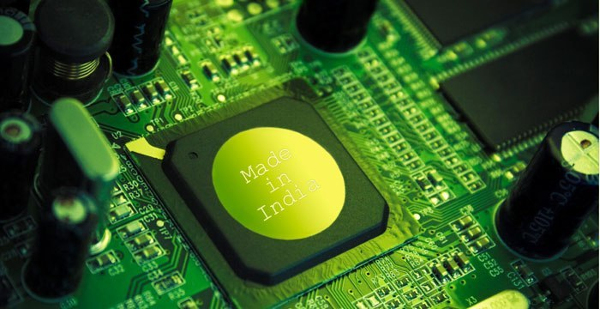
Jewar in Uttar Pradesh is moving steadily toward becoming one of India’s most important electronics and semiconductor manufacturing centres, with two major industrial projects worth around ₹6,750 crore set to come up in Yamuna City. The development is expected to create nearly 3,000 jobs and strengthen India’s push to build a deeper, component-led electronics manufacturing ecosystem.
Union Minister for Electronics and Information Technology Ashwini Vaishnaw, along with Uttar Pradesh Chief Minister Yogi Adityanath, laid the foundation stones for the two projects, marking a significant step in the region’s industrial transformation. The projects are expected to position Jewar as a key destination for advanced electronics manufacturing, particularly at a time when India is working to reduce dependence on imported electronic components.
A major highlight of the investment is the ₹3,250-crore advanced printed circuit board manufacturing facility by ASCENT-K Circuit, a joint venture linked with South Korea’s KCC. The facility will focus on high-density and multi-layer PCBs, which are critical components used in modern electronics, consumer appliances, automobiles, telecom systems, industrial equipment and defence technologies.
Printed circuit boards form the backbone of electronic products. India has traditionally depended heavily on imports for these components, with annual PCB imports estimated at nearly ₹40,000 crore. The new facility at Jewar is expected to help bring a part of this high-value manufacturing chain into India and support the country’s wider goal of becoming a trusted global electronics production base.
The second major project will be set up by Amber Enterprises with an investment of around ₹3,500 crore. The facility will manufacture HVAC components and PCB assemblies, strengthening India’s domestic supply chain for air-conditioning systems, consumer electronics and related industrial products. Amber’s investment is also expected to support component localisation, vendor development and skilled employment in the region.
Speaking at the event, Vaishnaw said India’s electronics industry is now moving beyond basic assembly into the manufacturing of core components. This shift is important because true manufacturing strength comes when a country controls essential parts of the value chain, from design and components to assembly and final products.
Jewar’s location gives it a strong advantage. With the upcoming Noida International Airport, expanding expressway connectivity and the development of Yamuna City as an industrial corridor, the region is being shaped as a future-ready manufacturing destination. The combination of logistics access, land availability, policy support and proximity to the National Capital Region is expected to attract more electronics, semiconductor and high-technology investments.
The projects also reflect Uttar Pradesh’s growing ambition to become a major industrial state. Over the past few years, the state has focused on attracting investments in electronics, data centres, defence manufacturing, logistics and infrastructure. Jewar, once known mainly for its airport project, is now emerging as a broader industrial growth zone.
For India, the significance of these investments goes beyond one region. Electronics is one of the fastest-growing sectors in the country, driven by demand for mobile phones, appliances, automobiles, telecom equipment, industrial electronics and emerging technologies. As India expands production, the next challenge is to build a stronger domestic component base. PCB manufacturing is central to that goal.
The Jewar projects could therefore become part of a larger national manufacturing story: reducing imports, creating skilled jobs, attracting global partnerships and making India a more complete electronics manufacturing economy. With advanced PCB production, HVAC components and electronics assembly capacity coming together, Jewar is set to play a major role in India’s next phase of industrial growth.
You may also like
-
India to Track Challenges Faced by Women Entrepreneurs in New National Business Survey
-
India Updates Vehicle Rules to Strengthen E85 and E100 Flex-Fuel Technology
-
Adani Green Energy Expands Battery Storage to 6.63 GWh at Khavda, Strengthening India’s Renewable Power Infrastructure
-
Manastu Space Secures ₹116 Crore Government Support to Develop Indigenous Green Propulsion Systems
-
GeM’s AABHAR Collection Showcases 294 Indigenous Products, Strengthens Market Access for Indian Artisans
