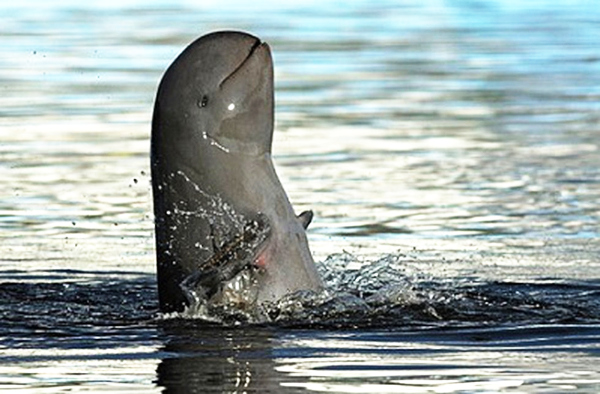
Gujarat has reported significant success in marine wildlife conservation, with more than 680 dolphins recorded along its coastline, according to data from a 2025 survey. The findings highlight the state’s growing role in protecting marine biodiversity while also promoting eco-tourism in coastal regions.
Officials noted that areas such as Shivrajpur and Poshitra have emerged as prime dolphin sighting locations, largely due to their clean and well-preserved marine waters. These regions are increasingly attracting tourists interested in marine wildlife experiences, contributing to the expansion of coastal tourism in the state.
According to the Forest and Environment Department, the majority of dolphin populations are concentrated in the Gulf of Kutch region, particularly within the Marine National Park and Marine Sanctuary. This protected area alone is estimated to host nearly 498 dolphins, making it the most important habitat for the species in Gujarat. Additional populations have been recorded in the northern Gulf of Kutch, Bhavnagar’s coastal waters, and parts of Morbi’s shoreline.
Officials emphasized that the Marine National Park—India’s first marine protected area—continues to play a central role in safeguarding aquatic biodiversity. Conservation efforts over the past several years have included habitat protection, mangrove expansion, and stricter monitoring of marine ecosystems, all aimed at improving conditions for marine species including dolphins.
State authorities have credited coordinated efforts between the government and local fishing communities for the conservation success. Fishermen along the Gujarat coast have played a supportive role in protecting marine life, helping ensure that dolphins are not harmed and that their habitats remain undisturbed. Hunting or harming dolphins is strictly prohibited under law, as the species is classified as endangered.
Officials also highlighted the ecological importance of dolphins, noting their role as top marine predators that help maintain balance within the ocean food chain. Their presence is considered an indicator of healthy marine ecosystems, particularly in coastal and estuarine environments.
Two species are commonly found in Gujarat’s waters—the Indo-Pacific humpback dolphin and the bottlenose dolphin. The humpback dolphin, identifiable by its distinctive dorsal hump, is more prevalent in the Arabian Sea region. These marine mammals are known for their intelligence, social behaviour, and acrobatic movements, often becoming a major attraction for visitors along the coast.
Beyond their ecological importance, dolphins have also become a symbol of Gujarat’s growing marine tourism sector. Sightings of these animals are increasingly drawing tourists from across India and abroad, further strengthening the state’s reputation as a destination for nature-based tourism.
India’s broader conservation efforts also recognise the importance of dolphins, with the Ganges river dolphin designated as the country’s National Aquatic Animal. This designation reflects the species’ ecological significance and its symbolic association with river ecosystems.
With sustained conservation measures and community participation, Gujarat’s dolphin population is expected to remain a key success story in India’s marine biodiversity protection efforts while also supporting sustainable tourism growth along its coastline.
You may also like
-
India’s Chip-Design Pipeline Accelerates as C2S Trains 68,000 and Enables 254 Semiconductor Tape-Outs
-
IIT Bhilai Turns Waste PET Bottles Into Reprocessable Engineering Material for 3D Printing
-
A smart cancer drug activating primarily in cancer cells, could replace chemotherapy
-
IIT Mandi Turns Sea Urchin Geometry Into an Antibiotic-Free Defence for 3D-Printed Bone Implants
-
Aheesa’s VIHAAN Achieves First-Pass Silicon, Advancing India’s Indigenous Broadband Chip Effort
