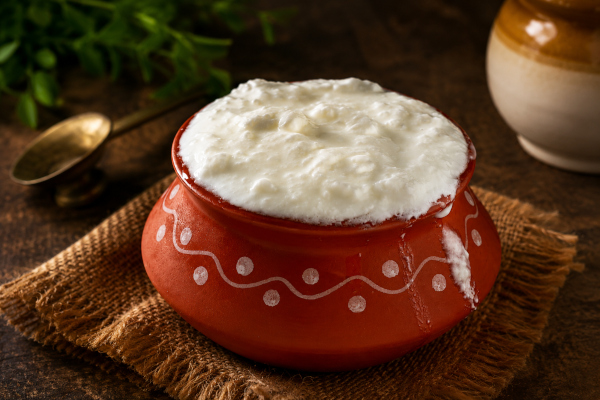
Curd is one of the most familiar foods in the Indian kitchen, but Ayurveda treats it as a powerful food-medicine. It is known as Dadhi, and it carries a special place in the traditional diet because it nourishes, strengthens, sharpens taste and supports digestion when used properly. Ayurveda also gives clear rules for its use because curd is heavy, sour, heating and capable of increasing kapha and pitta when taken without discipline.
Curd is a transformed food. Milk becomes curd through fermentation, and this process changes its nature. Milk is generally sweet, cooling and nourishing. Curd becomes sour, warming, thicker, heavier and more stimulating to the digestive fire. This transformation made dadhi important in both household food and classical Indian dietetics.
In Ayurveda, curd is generally described as amla in rasa, meaning sour in taste. It is guru, heavy to digest. It is snigdha, unctuous in quality. It is ushna virya, heating in potency. It is also considered deepana, because it can kindle appetite, and grahi, because it can bind and absorb excessive fluid in the gut. These qualities explain why curd appears in traditional food practice as both nourishment and digestive support.
Curd is especially useful for reducing vata when taken in the right way. Its sour, heavy and unctuous nature gives grounding to the body. A person with dryness, weakness, low weight, poor stamina and roughness may benefit from properly prepared curd when digestion is strong. It gives body, taste and satisfaction to a meal.
The same curd can increase kapha when taken in excess. It can produce heaviness, mucus, coated tongue, sluggishness and congestion in people who already have kapha dominance. Its sour and heating nature can also aggravate pitta in those prone to acidity, skin irritation, burning sensation or inflammatory tendencies. This is why Ayurveda teaches moderation and timing.
The classical rule is simple: curd should be fresh, mildly sour and taken during the day. It is best used with lunch when digestive fire is stronger. Night-time curd is traditionally discouraged because digestion slows down and kapha naturally rises after sunset. Stale curd, very sour curd, chilled curd and curd taken daily in large quantities can disturb the channels of the body.
Ancient Indian texts preserve a rich tradition of curd and buttermilk preparations. These are not random recipes. They show a highly developed understanding of fermentation, digestion, appetite, flavour and therapeutic food processing. Classical works such as Siddha Bheshaja Manimala, Bhavaprakash Nighantu, Brihat Nighantu Ratnakar, Ruchivadhu Gala Ratnamala and Pakadarpanam record different forms of dadhi and takra for specific digestive and dietary purposes.
One important preparation is Jiraka Dadhi, or cumin-flavoured curd. It is referenced in Siddha Bheshaja Manimala, 4/17, Atisara Chikitsita. This is meaningful because cumin, known as Jiraka, is one of Ayurveda’s great digestive spices. It supports appetite, reduces bloating and helps make curd more suitable for the stomach. Jiraka Dadhi can be understood as curd guided by spice. The curd nourishes, while cumin supports digestion.
A simple household version of Jiraka Dadhi can be prepared by taking fresh curd and mixing it with roasted cumin powder and a small amount of rock salt. It may be whisked until smooth and served with rice, kanji or a light meal. This preparation shows the old Indian principle that heavy foods can be made more intelligent through spice.
Another major preparation is Takra, or processed buttermilk. It is referenced in Bhavaprakash Nighantu, 12/162–163. Takra is one of the most celebrated dairy preparations in Ayurveda. It is made by churning curd with water and reducing the heaviness of the original curd. This process changes the food. Thick curd becomes lighter, sharper, more digestive and more suitable for regular use.
Takra is important because Ayurveda often prefers transformed curd over thick curd. Buttermilk can kindle digestion, reduce heaviness after meals, support gut function and help clear kapha from the channels. A traditional takra may be made with curd, water, roasted cumin, dry ginger, black pepper, rock salt and curry leaves. It is sipped after food, especially when the stomach feels heavy or sluggish.
The tradition also records Takrayoga, described as barley buttermilk. Its source is Brihat Nighantu Ratnakar, Volume 5, Chapter 1, Ajirnadhikara, p.40. This preparation is especially interesting because barley, known as Yava, is light, scraping and useful for reducing excess kapha and meda. When barley is combined with buttermilk, the result becomes more digestive and channel-clearing. Takrayoga belongs to the food-medicine tradition for indigestion and heaviness.
A practical form of Takrayoga can be made by mixing thin buttermilk with roasted barley powder or cooked barley water, along with cumin and rock salt. It becomes a light, sour, grain-based digestive drink. It suits people who feel heavy after rich meals and need a lighter fermented preparation.
Agnivardhaka Takra, or appetising buttermilk, is referenced in Ruchivadhu Gala Ratnamala, Shloka 97. The name itself explains the purpose. Agni means digestive fire, and vardhaka means that which increases or supports. This preparation belongs to the old Indian idea that digestion is the root of health. A food that improves agni becomes medicine.
Agnivardhaka Takra can be understood as buttermilk prepared with digestive spices. Dry ginger, black pepper, cumin, ajwain, rock salt and a small amount of asafoetida are natural companions for such a preparation. It is not merely a drink. It is a digestive stimulant in food form.
Rochaka Takra, or tangy buttermilk, is referenced in Ruchivadhu Gala Ratnamala, Shloka 98. The word rochaka means that which improves taste and desire for food. In Ayurveda, loss of taste is often linked with weak digestion, ama and poor appetite. Rochaka Takra is designed to awaken the tongue and prepare the stomach for proper digestion.
This preparation can be made with thin buttermilk, roasted cumin, rock salt, fresh ginger, coriander leaves and a mild souring note if needed. It should be lively, light and appetising. It suits people who feel tastelessness in the mouth, low appetite or dull digestion.
Dweshahara Takra, described as appetising spicy buttermilk, is referenced in Ruchivadhu Gala Ratnamala, Shloka 99. The name suggests a preparation that removes aversion to food. Ayurveda recognises that appetite is connected with taste, mood, digestion, tongue clarity and internal freshness. A well-prepared spicy buttermilk can restore interest in food when heaviness and dullness dominate.
Dweshahara Takra may be prepared with buttermilk, rock salt, roasted cumin, black pepper, dry ginger and a little ajwain. It should be taken in small quantity and preferably around meal time. Its purpose is to make food acceptable again to the body.
Divya Takra, described as camphor-ginger buttermilk, is referenced in Ruchivadhu Gala Ratnamala, Shloka 100. This is one of the more striking recipes because it brings together the sharp warmth of ginger and the aromatic quality of edible camphor. This preparation shows the sophistication of India’s old culinary medicine. Taste, aroma and digestion were all used together.
In a modern household context, edible camphor must be used only in extremely tiny food-grade quantity, and ordinary synthetic camphor should never be used in food. Ginger remains a safe and common digestive companion in buttermilk. Divya Takra represents a fragrant, stimulating and refined form of takra.
Piyusha Takra, or spicy buttermilk, is referenced in Ruchivadhu Gala Ratnamala, Shloka 101. The word Piyusha often carries a sense of nectar or pleasing nourishment. This suggests a buttermilk that is both tasty and digestive. It belongs to the class of preparations where medicine is delivered through flavour.
Piyusha Takra can be understood as spiced buttermilk prepared with cumin, ginger, pepper, rock salt and digestive herbs. It is a fine example of the Indian principle that food should satisfy the senses and support the digestive fire at the same time.
Temana Takra, or flavoured buttermilk, is referenced in Pakadarpanam, 1/142–150. Pakadarpanam is an important traditional text connected with Indian food preparation. The presence of takra in such a text shows how deeply buttermilk belonged to the culinary and health culture of India. It was not limited to the physician’s chamber. It lived in the kitchen.
Temana Takra can be seen as a general flavoured buttermilk preparation. It may include aromatic spices, digestive herbs and flavouring ingredients. In Indian homes, this tradition survives as spiced moru, chaas, sambaram and majjige across different regions. Each region gives it its own herbs, but the Ayurvedic foundation remains the same: churned curd, water, digestive spices and proper timing.
These recipes show one important Ayurvedic truth: curd becomes more useful when it is processed correctly. Thick dadhi is heavy. Churned takra is lighter. Curd with cumin becomes more digestive. Buttermilk with barley becomes more scraping and useful for heaviness. Buttermilk with ginger and spices becomes appetising. The food is transformed through method.
This is why Ayurveda respects the kitchen as a pharmacy. The cook is not only preparing taste. The cook is shaping the guna of food. A spoon of cumin, a pinch of dry ginger, a little rock salt, the act of churning, the amount of water, the freshness of curd and the time of serving all decide the medicinal effect.
For daily use, takra is often superior to thick curd, especially for people with sluggish digestion. A small glass of spiced buttermilk after lunch can help the stomach feel lighter. It supports appetite, reduces heaviness and brings clarity to the meal. It should be fresh, thin, lightly spiced and taken at room temperature.
Curd should be used more carefully. It can be eaten in small quantity with lunch, especially when fresh and mildly sour. It can be mixed with roasted cumin and rock salt. It can be softened with ghee or balanced with digestive spices. It should be avoided when very sour, stale, chilled, taken at night, or mixed with incompatible foods.
Traditional incompatibilities around curd are important. Curd with fish, milk, meat, very sour fruits and unsuitable heavy combinations is discouraged in the Ayurvedic food tradition. Direct heating of curd is also avoided. If curd is used in cooking, gentle handling is preferred. Boiling curd harshly makes it difficult for digestion.
People with repeated phlegm, sinus congestion, obesity, uncontrolled diabetes, skin disorders, acidity, inflammatory complaints or kapha-pitta dominance should use curd cautiously. Buttermilk may suit many of them better, especially when prepared thin and spiced. Personal digestion remains the final test.
The old texts prove that India had a highly developed science of fermented dairy. Siddha Bheshaja Manimala preserves cumin-flavoured curd in a therapeutic context. Bhavaprakash Nighantu records takra as a classical preparation. Brihat Nighantu Ratnakar links barley buttermilk with indigestion. Ruchivadhu Gala Ratnamala gives several specialised buttermilk recipes for appetite and taste. Pakadarpanam records flavoured buttermilk within the culinary tradition.
This is a remarkable heritage. Modern nutrition often speaks of curd and probiotics in a general way. Ayurveda went further. It classified curd by quality, timing, season, combination, processing, digestive effect and suitability. It understood that fermented food is powerful, and powerful food must be guided.
In the food-is-medicine tradition, curd is medicine when fresh, moderate and properly combined. Buttermilk is medicine when churned, thinned and spiced according to need. Jiraka Dadhi, Takra, Takrayoga, Agnivardhaka Takra, Rochaka Takra, Dweshahara Takra, Divya Takra, Piyusha Takra and Temana Takra are examples of a civilisation that understood digestion as the centre of health.
Curd gives strength. Takra gives lightness. Spices give direction. The ancient Indian kitchen knew how to bring all three together.
Reference :
Jiraka Dadhi — Siddha Bheshaja Manimala, 4/17, Atisara Chikitsita.
Takra — Bhavaprakash Nighantu, 12/162–163.
Takrayoga — Brihat Nighantu Ratnakar, Volume 5, Chapter 1, Ajirnadhikara, p.40.
Agnivardhaka Takra — Ruchivadhu Gala Ratnamala, Shloka 97.
Rochaka Takra — Ruchivadhu Gala Ratnamala, Shloka 98.
Dweshahara Takra — Ruchivadhu Gala Ratnamala, Shloka 99.
Divya Takra — Ruchivadhu Gala Ratnamala, Shloka 100.
Piyusha Takra — Ruchivadhu Gala Ratnamala, Shloka 101.
Temana Takra — Pakadarpanam, 1/142–150.
You may also like
-
India Expands Restrictions on Chlorpheniramine-Phenylephrine Cold Medicines for Children Below Four
-
Kadali — Ayurveda’s Nourishing Banana for Strength, Cooling and Digestive Balance
-
Parijata — Ayurveda’s Night-Blooming Tree of Fever, Inflammation and Healing
-
Palandu (Allium cepa): The Everyday Onion in Ayurveda as Food, Medicine and Strengthening Dravya
-
Jati — Jasminum grandiflorum: Ayurveda’s Fragrant Jasmine for Wound, Skin and Oral Care
