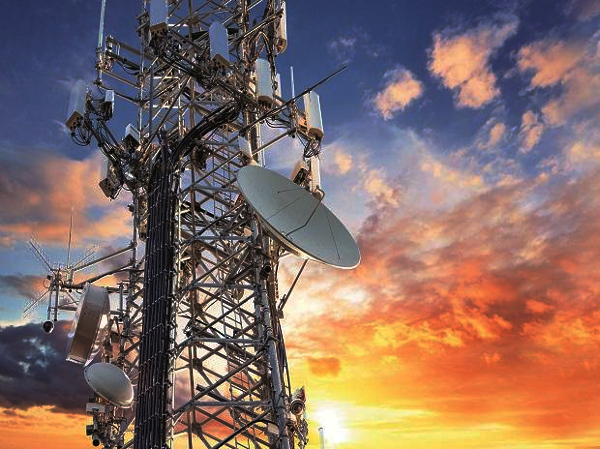
The Indian Army and Bharti Airtel have taken an important step to strengthen mobile connectivity in Arunachal Pradesh’s remote Kameng frontier. The new Memorandum of Understanding aims to expand communication infrastructure in difficult border areas where local communities and deployed troops require reliable digital access for daily life, administration, security and emergency response.
The initiative focuses on remote locations in the Kameng belt of Arunachal Pradesh, one of India’s most sensitive and challenging Himalayan regions. The terrain is mountainous, forested and cut by deep valleys. Many settlements remain far from dense commercial telecom networks. Weather, altitude, road access and low population density make telecom rollout difficult. This is exactly where civil-military cooperation becomes valuable.
The partnership between the Indian Army and Airtel is important because border connectivity has two dimensions. The first is civilian development. Mobile networks bring access to government services, digital education, telemedicine, banking, emergency calls, online payments and communication with families. The second is operational support. Troops deployed in forward areas need dependable communication for logistics, coordination, movement, rescue work and local engagement.
For people living in remote border villages, a mobile tower can change the rhythm of daily life. Students gain access to online classes and learning material. Patients can contact health workers and use telemedicine support. Farmers and small traders can check prices, receive payments and connect with markets. Citizens can use digital identity, welfare schemes, banking services and grievance platforms. Families can stay connected during weather disruptions, road closures and emergencies.
The Kameng region carries strategic importance because it sits in Arunachal Pradesh’s western frontier space. West Kameng shares borders with Tibet in the north and Bhutan in the west, while East Kameng lies close to the McMahon Line sector in the north. This geography gives the area a strong security and development value. Better communication infrastructure strengthens the state’s frontier districts and helps integrate remote communities with the national mainstream.
The move also reflects a larger shift in India’s border policy. Border villages are now treated as first villages of the country, with roads, telecom, electricity, tourism, livelihood and public services forming part of a unified development strategy. This approach is visible in the Vibrant Villages Programme, which focuses on comprehensive development of selected strategic villages. Telecom connectivity is one of its core interventions because a connected village becomes easier to serve, secure and sustain.
The telecom challenge in Arunachal is real. Official data from the Department of Telecommunications shows that the Northeast has made strong progress in mobile and 4G coverage, yet Arunachal Pradesh continues to face the toughest terrain-linked gaps. Out of 5,993 villages in the state, 4,258 had mobile connectivity and 3,094 had 4G coverage as of June 2025. This means that a large number of villages still require stronger digital infrastructure.
Digital Bharat Nidhi has already been used to push mobile coverage into remote and border areas. Under the project for uncovered villages of Arunachal Pradesh and two districts of Assam, 4G coverage was approved for 2,374 identified uncovered villages through 1,511 mobile towers. By April 2026, 475 towers had been commissioned in Arunachal Pradesh, covering 938 villages. The Army-Airtel MoU adds another practical layer to this national effort.
The Army’s role in such projects matters because troops are present in many of the same areas where telecom companies face access, security and logistics challenges. Military formations understand the terrain, routes, weather windows, local constraints and operational requirements. Telecom companies bring network planning, tower technology, service delivery and maintenance capability. Together, they can move faster in difficult frontier zones.
This is also a model of civil-military fusion. The Indian Army is not only guarding the frontier through military preparedness, it is also supporting infrastructure that improves civilian life. In high-altitude and remote areas, Army support often helps in road opening, rescue, medical aid, disaster response, local coordination and logistical movement. Communication infrastructure strengthens all these roles.
For national security, mobile connectivity in border regions creates several advantages. It improves coordination between troops, civil administration and local communities. It supports faster response during accidents, landslides, floods, medical emergencies and search operations. It improves logistics planning in areas where weather can cut road access. It also helps local residents become active participants in the security and development ecosystem of the border.
The Kameng belt has also seen the Army emphasise technology and high-altitude readiness. Recent activities in the region have included demonstrations of surveillance, real-time communication, drone systems and multi-domain operations. This shows that connectivity is now part of battlefield readiness as well as public infrastructure. Modern defence depends on data, communication, sensors, mobility and coordination.
For Airtel, the project strengthens its presence in India’s frontier telecom expansion. Private telecom participation is essential because government-funded towers alone cannot fully meet the rising demand for mobile data, voice communication and digital services. A commercial operator with field support from the Army can help build durable infrastructure in zones that are commercially difficult and strategically important.
The initiative also supports tourism and local enterprise. Arunachal Pradesh’s border districts have strong potential in eco-tourism, cultural tourism, trekking, homestays, horticulture and handicrafts. Connectivity helps visitors navigate, book services, make payments and share information. It helps local entrepreneurs promote their products and services. A connected border village can attract economic activity while retaining its people.
This MoU should be seen as part of India’s broader Himalayan infrastructure push. Roads, bridges, tunnels, power supply, telecom towers and digital services are now developing together. A road without communication remains incomplete in emergency situations. A village with electricity and mobile connectivity gains a stronger platform for education, commerce and governance. A forward post with reliable communication improves operational confidence.
The larger message is clear. Connectivity is now a strategic asset. In Arunachal Pradesh, a mobile network is not merely a convenience. It is a development tool, a security enabler and a symbol of national presence. The Indian Army-Airtel partnership in the Kameng frontier shows how India is building stronger borders through both military readiness and civilian empowerment.
The success of this initiative will depend on timely tower installation, stable backhaul links, power supply, maintenance access and service reliability through difficult weather. If implemented well, it can become a model for other frontier districts across the Himalayas and the Northeast. It can show how telecom companies, the Army, state administration and local communities can work together to bridge the last-mile digital divide.
Arunachal Pradesh’s geography makes connectivity difficult, yet its strategic value makes connectivity essential. The Army-Airtel MoU brings these two realities together. By taking mobile networks deeper into the Kameng frontier, India is strengthening both the lives of its border citizens and the operational fabric of its forward areas.
You may also like
-
Rajnath Singh Calls for Aatmanirbharta 2.0 in Defence at SWAVLAMBAN 2026
-
India Monitors 1,853 Infrastructure Projects Worth ₹37.56 Lakh Crore, ₹17.73 Lakh Crore Already Spent
-
Defence Acquisition Council Clears ₹2.12 Lakh Crore Proposals, 82% Earmarked for Indian Industry
-
Manastu Space Secures ₹116 Crore Government Support to Develop Indigenous Green Propulsion Systems
-
GeM’s AABHAR Collection Showcases 294 Indigenous Products, Strengthens Market Access for Indian Artisans
