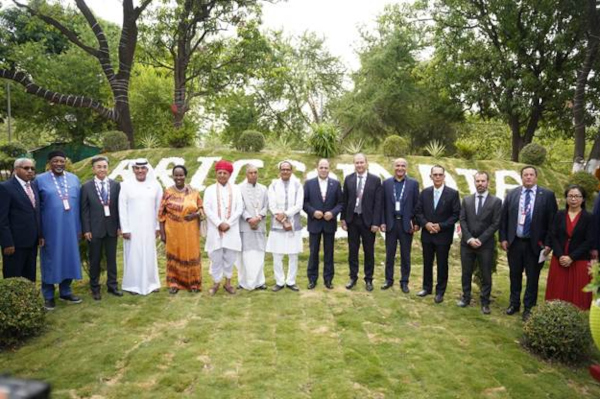
The BRICS Agriculture Ministers’ Meeting in Indore has ended with the unanimous adoption of the Indore Declaration, giving India a major diplomatic moment in global agriculture. The declaration brings together the BRICS countries around a farmer-centric agenda focused on food security, nutrition, climate-resilient farming, agricultural trade, digital innovation and protection of traditional seed systems.
The meeting was held under India’s BRICS Presidency and was led by Union Agriculture and Farmers Welfare Minister Shivraj Singh Chouhan. Nearly 100 delegates participated, including around 60 foreign representatives from BRICS member and partner countries. The scale of the gathering is significant because BRICS countries together represent nearly half of the world’s population, around 42 percent of global agricultural land and about 42 percent of global foodgrain production.
The Indore Declaration gives agriculture a central role in the future of BRICS cooperation. It recognises that food security has become a strategic global issue at a time when climate change, conflicts, supply chain disruptions, fertilizer price volatility and post-harvest losses are affecting farmers across the world. The declaration also places small and marginal farmers, often called family farmers in many countries, at the heart of the discussion. Their access to inputs, credit, fair prices, markets, machinery and technology was treated as a core priority.
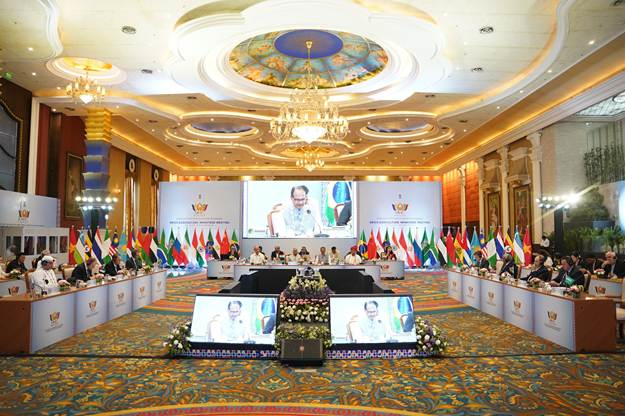
Four major areas shaped the meeting. The first was food and nutritional security for BRICS nations and the wider world. The second was promotion of agricultural trade and cooperation among member countries. The third was regenerative, climate-resilient and sustainable agriculture. The fourth was innovation, technology and partnerships in food systems. Together, these priorities show that BRICS is looking at farming as a combined question of livelihood, science, trade, environment and food sovereignty.
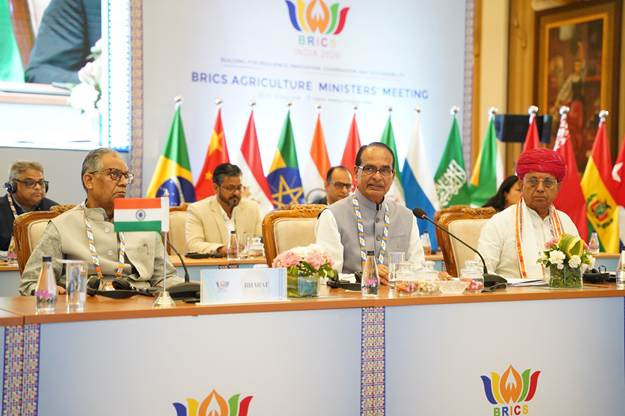
A major outcome of the meeting was the announcement of four new institutional platforms. The first is the BRICS Network of Centres of Excellence on Agro-Ecology and Regenerative Agriculture. This platform will support joint research, knowledge sharing and capacity building in natural, organic and regenerative farming. India’s Indian Institute of Farming Systems Research, Modipuram, will play a key role as India’s Centre of Excellence in this network.
The second initiative is the BRICS Network on Digital Agriculture. This platform will promote cooperation in artificial intelligence, geospatial technology, digital public infrastructure and data-driven farm solutions. IIT Delhi will coordinate the network, while member countries will share innovations, experiences and policy models. This is important for India because digital agriculture is becoming a major bridge between scientific research and the everyday needs of farmers.
The third initiative is the Global Forum on Farmers’ Rights in Seed Systems. This forum will focus on farmers’ seed rights, conservation of indigenous seed diversity and protection of traditional agricultural knowledge. India has a long civilisational history of seed preservation and local farming practices. The forum can help protect traditional varieties that carry biodiversity value, climate resilience and cultural memory.
The fourth platform is BRICS AgriN, or the Agro Inputs, Genetic Resources and Information Network. This network will support cooperation in agricultural inputs, seeds, genetic resources, information sharing, technical collaboration and capacity building. It can help countries and farmers with limited access to advanced seed resources, improved varieties and agricultural knowledge.
Another important decision was to strengthen the existing BRICS Agricultural Research Platform and develop it into a stronger Knowledge-to-Action Hub. The idea is to ensure that agricultural research moves from laboratories to farmers’ fields. This “lab to land” approach is especially important for small farmers who need practical technologies, localised solutions and affordable access to machinery.
Agricultural trade also received attention. BRICS countries reaffirmed support for a fair, inclusive and transparent multilateral trading system. Discussions on ideas such as a BRICS Grain Exchange gained momentum during the meeting. Bilateral meetings also focused on reducing barriers, improving trade facilitation, expanding research cooperation and promoting technology exchange.
Climate change remained a major concern. The meeting discussed regenerative agriculture, El Niño risks, carbon credits, food loss and post-harvest wastage. Reducing food loss was presented as both an economic and environmental priority because wastage affects farmer income, food availability and carbon emissions. The discussion also recognised the need for climate-sensitive agricultural policies that prepare farmers for changing weather patterns.
The meeting also touched on fertilizer affordability. Chouhan stated that India will continue providing fertilizers to farmers at affordable prices, with urea available at ₹266 per bag and DAP at ₹1,350 per bag, while the Central Government bears the additional financial burden. He also stressed balanced fertilizer use, natural farming, organic farming and awareness efforts such as the “Khet Bachao Abhiyan.”
The declaration also highlights the role of youth and women in transforming agriculture. India’s growing ecosystem of agri-startups, agripreneurship, digital services and technology-based farm solutions gives young people a larger role in rural innovation. Women’s participation is equally important because they form a major part of the agricultural workforce in many countries.
The Indore meeting has therefore turned agriculture into a major pillar of BRICS cooperation. It gives India a strong platform to project its experience in natural farming, digital public infrastructure, seed diversity, farmer welfare and climate-resilient agriculture. For BRICS, the Indore Declaration is a step toward building a shared agricultural future where farmers, food security and sustainability remain at the centre of policy.
You may also like
-
India Strengthens Trade Ties with Netherlands as Piyush Goyal Visits Port of Rotterdam
-
India to Train 600 Nigerian Army Soldiers in Specialised Jungle and Mountain Warfare
-
India and Russia Strengthen Parliamentary Diplomacy as Om Birla Meets State Duma Chairman Vyacheslav Volodin
-
India Seeks South Korean Shipbuilding Partnerships as Sarbananda Sonowal Begins Four-Day Visit to Busan
-
India and Italy Hold First Maritime Security Dialogue in Rome, Strengthen Strategic Maritime Cooperation
