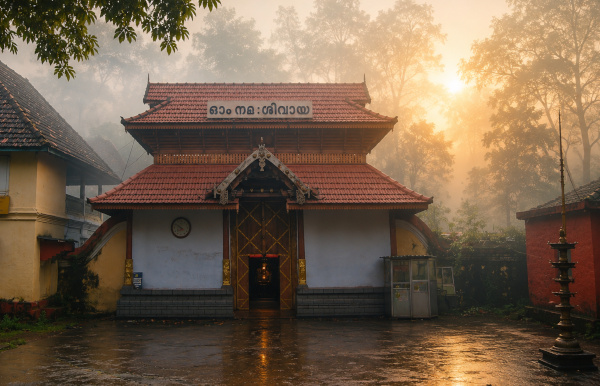
Ernakulathappan Temple, also known as Ernakulam Shiva Temple, is one of the most loved Shiva temples of Kerala. Located in the heart of Ernakulam city, close to Durbar Hall Ground, this temple carries the spiritual identity of Kochi’s mainland. For devotees, Lord Shiva here is not merely the deity of a temple. He is Ernakulathappan, the Lord of Ernakulam, the guardian presence of the city.
The temple stands in a rare position within Kerala’s sacred geography. It is a Shiva temple in the middle of a busy urban centre, yet the atmosphere inside the temple compound carries the stillness of an older world. Around it, Ernakulam moves with traffic, offices, commerce, railway stations, shops and modern life. Inside the temple, the rhythm changes to lamps, bells, sandal paste, abhishekam, deepaaradhana, sheeveli and the quiet power of Mahadeva.
Ernakulathappan Temple is deeply connected with the history of Ernakulam itself. Local tradition holds that the name of the city is linked to the temple. The deity is lovingly called Ernakulathappan, meaning the Lord of Ernakulam. This shows the way a temple can become the spiritual centre of a town. Cities are built by trade, administration and people, but their inner identity is often shaped by sacred spaces. For Ernakulam, this Shiva temple is one such sacred heart.
The temple is dedicated to Lord Shiva. The district tradition describes it as one of the rare Shiva temples where the deity faces west, toward the sea. This west-facing presence gives the shrine a special character. Kerala’s coastline, backwaters and sea-facing geography have always shaped its life. Ernakulathappan’s orientation toward the waters adds to the temple’s sense of guardianship over land, city and coast.
The temple is also associated with the royal history of Kochi. It is remembered as one of the seven royal temples of the Kochi Maharajas. This royal connection gives the temple a dignified place in the cultural history of the region. The Cochin royal house had many sacred centres connected to its political and ritual world. Ernakulathappan Temple stood among these royal shrines and became part of the religious memory of the kingdom.
In Kerala, kingship and temple culture were closely linked. Temples were not only places of worship. They were centres of music, learning, ritual, festivals, art, land administration and public identity. A royal temple carried both devotion and authority. Ernakulathappan Temple reflects this older relationship between dharma, city life and governance.
The present temple structure reflects traditional Kerala temple architecture. Kerala’s temple style is different from the towering stone gopurams of Tamil Nadu. It is shaped by timber, sloping roofs, copper coverings, laterite, woodwork, mural tradition, courtyards and proportion. The climate of Kerala influenced the architecture. Heavy rain, humidity and tropical seasons shaped temple roofs and building forms. The result is a sacred architecture that feels intimate, grounded and deeply connected to the land.
Kerala Tourism notes the beauty of the temple’s traditional architectural style, the sculptures on the sanctum walls and the copper-tile work on the ceiling. These details are important because they show the temple as both a place of worship and a work of sacred craftsmanship. Every part of a Kerala temple has meaning: the sreekovil, the namaskara mandapam, the vilakkumadam, the chuttambalam, the flagstaff and the temple tank. Together they create a spiritual geography within the compound.
The deity of Ernakulathappan is worshipped as Shiva in a form that radiates calm authority. Devotees approach Him for protection, peace, removal of obstacles, family welfare, health, spiritual strength and inner steadiness. Shiva worship carries a unique emotional depth. He is Mahadeva, the great god. He is also Ashutosha, the easily pleased one. He is the lord of yogis, the destroyer of ego, the compassionate protector and the stillness behind all movement.
The daily worship of Ernakulathappan begins before sunrise. The temple opens early, with rituals such as Nirmalyam, Abhishekam, Ushapooja, Sheeveli, Pantheeradi Pooja, Uchcha Pooja, evening opening, Deepaaradhana and Athazha Pooja forming the rhythm of the day. This daily order is the living heartbeat of the temple. A temple remains alive through nitya puja, the daily worship that preserves continuity across generations.
Abhishekam has special importance in Shiva worship. Water, milk, tender coconut water, sandal paste, vibhuti and other sacred offerings are used according to ritual practice. The act of bathing the Shiva linga expresses devotion, purification and surrender. For the devotee, it is also a reminder that Shiva is both fire and coolness, ascetic force and compassionate grace.
Deepaaradhana in the evening is one of the most moving moments in any Kerala temple. The lamps glow, the bells ring, the sanctum opens to the waiting devotees and the entire atmosphere gathers into a single moment of darshan. In an urban temple like Ernakulathappan, this moment has a special power. People come from work, homes, shops and daily duties. They stand before Shiva and allow the city’s noise to fall away.
The annual festival of Ernakulathappan Temple is one of the major religious and cultural events of Kochi. It is celebrated in the Malayalam month of Makaram. The festival follows the classical rhythm of Kerala temple utsavams, with kodiyettam, daily rituals, sheeveli, melam, processions, cultural programmes, annadanam and arattu. During the festival, the temple and the nearby Durbar Hall Ground become filled with devotion, music and movement.
Pakalpooram and arattu are among the most visible festival moments. Caparisoned elephants, panchavadyam, chenda melam, temple lamps, crowds of devotees and the dignity of ritual procession create a powerful public celebration of devotion. Kerala’s temple festivals are not only religious gatherings. They are also living museums of music, percussion, elephant culture, ritual movement, classical arts and community participation.
Maha Shivaratri is another major observance at the temple. For Shiva devotees, Shivaratri is a night of fasting, prayer, vigil and inner purification. It is the night of Mahadeva, the time when the mind turns toward silence, surrender and spiritual awakening. In Ernakulam, devotees gather at Ernakulathappan Temple with special devotion during this sacred time.
Pradosham, Mondays, Thiruvathira and other Shiva-related observances also draw devotees. Each of these days carries a different devotional mood. Monday is dear to Shiva. Pradosham is connected with the worship of Shiva during the twilight period. Thiruvathira has deep associations with Shiva worship in Kerala. Through these observances, the temple remains active not only during festivals but throughout the year.
The temple’s location gives it a unique place in modern Kochi. Ernakulam is a city of commerce, education, transport, public offices and urban movement. The temple stands in the middle of this life as a point of spiritual balance. It shows that sacred geography does not belong only to forests, hills and ancient villages. It can also live at the centre of a city. Ernakulathappan Temple proves that even a busy urban landscape can carry a deep dharmic pulse.
The shrine also reflects Kerala’s ability to preserve tradition within change. Kochi has grown into a metro city, a port city, a business centre and a cultural hub. Yet temples like Ernakulathappan preserve continuity with older Kerala. The lamps, rituals, Sanskrit mantras, Malayalam devotion, temple arts, festivals and royal memory keep the city connected to its roots.
The temple tradition also places Ernakulathappan among Kerala’s wider Shiva sacred geography. Kerala has many great Shiva temples, from Vaikom and Ettumanoor to Vadakkunnathan and Sreekanteswaram. Each has its own mood, legend and ritual identity. Ernakulathappan’s special role is urban guardianship. He is Shiva as the Lord of Ernakulam, seated at the centre of the city’s life.
The temple’s connection with the Kochi Maharajas adds a historical layer to this sacred identity. Royal patronage helped temples remain centres of public order, ritual dignity and cultural preservation. Even after the end of monarchy, the memory of royal temples remains important. It reminds us that temple culture shaped the civic life of Kerala long before modern municipal institutions came into being.
Today the temple is administered under the Cochin Devaswom Board. This reflects the modern phase of temple management in Kerala, where ancient shrines function within contemporary administrative systems while preserving traditional ritual practices. The temple continues to receive devotees, support festivals, maintain daily worship and remain one of the important Shiva shrines of Ernakulam district.
For a visitor, Ernakulathappan Temple offers both devotion and heritage. One can see Kerala architecture, experience temple music during festivals, witness daily pujas, and feel the serenity of a sacred space inside the city. It is a temple for residents, pilgrims, cultural travellers and Shiva devotees alike.
The best way to understand the temple is to stand quietly during the evening lamp worship. The old lamps, the fragrance of incense, the rhythm of the bells, the glow from the sanctum and the still presence of Mahadeva reveal why this shrine is loved as Ernakulathappan. The Lord of Ernakulam is not distant from the city. He stands within it, blessing its people through daily darshan.
Ernakulathappan Temple is therefore more than a well-known Shiva temple. It is a symbol of Kochi’s sacred continuity. It connects royal history with public devotion, Kerala architecture with urban life, festival culture with daily worship, and Lord Shiva’s timeless presence with the modern movement of Ernakulam.
In the story of Kerala’s temples, Ernakulathappan Temple holds a special place. It is a city shrine, a royal memory, a Shiva kshetra, a cultural centre and a living spiritual landmark. For the people of Kochi, Ernakulathappan remains the Lord who watches over the city with calm power and eternal grace.
You may also like
-
India and France Sign Agreement to Preserve and Digitise Ancient Indian Manuscripts
-
Huna in the Mahabharata: Nakula’s Western Campaign, the Harahunas and Central Asia’s Changing Frontiers
-
GeM’s AABHAR Collection Showcases 294 Indigenous Products, Strengthens Market Access for Indian Artisans
-
Tushara in the Mahabharata: The Lands Beyond the Hindu Kush and the Horsemen Who Faced Arjuna
-
Shaka in the Mahabharata: Central Asia’s Steppe Peoples, Nakula’s Campaign and the Alliance with Duryodhana
