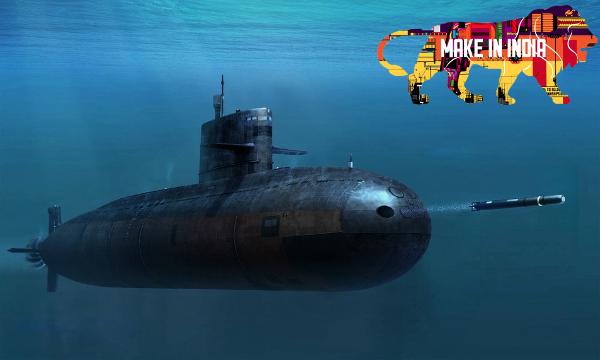
India’s future maritime defence will be shaped beneath the surface of the sea. Warships, aircraft and missiles dominate the visible battlefield, but the underwater domain decides who controls the ocean during a crisis. Submarines can move silently through deep water, approach sea lanes, monitor naval deployments, threaten carrier groups and shadow strategic assets. Autonomous underwater vehicles can map seabeds, study harbour approaches, inspect cables, collect acoustic data and prepare the battlespace before conflict begins. In this environment, India needs more than ships and submarines. It needs a permanent listening architecture under the sea. That is where DRDO’s seabed sensors and underwater surveillance technologies become critical.
India’s seabed sensor capability must be understood as part of a larger anti-submarine warfare network. It is a silent layer below the visible naval shield. Surface ships carry sonars. Maritime aircraft drop sonobuoys. Helicopters hunt submarines near fleet formations. Submarines patrol silently. Harbour defence systems protect naval bases. Seabed sensors add another dimension by creating persistent underwater awareness in selected zones. They can watch approaches, listen for movement, identify underwater intrusions and feed warnings into shore-based control systems. In modern naval warfare, detection is the first weapon. A submarine that is detected loses its strongest advantage.
DRDO’s Naval Physical and Oceanographic Laboratory at Kochi sits at the centre of this undersea technology ecosystem. NPOL’s work in sonar systems, underwater surveillance, acoustic research and ocean environment studies gives India the scientific foundation needed for undersea defence. The sea is a difficult battlefield because sound behaves differently with depth, temperature, salinity, currents and seabed structure. A sonar system that performs well in one water column may behave differently in another. India’s advantage comes from studying its own waters, building indigenous sensors and developing acoustic knowledge suited to the Indian Ocean.
One of the most direct examples of seabed-deployable DRDO technology is the Portable Diver Detection Sonar. This system is built to detect divers, diver delivery vehicles and small underwater threats in shallow waters. Its importance is tactical and strategic. Naval bases, ports, shipyards, ammunition depots and anchored warships are vulnerable to underwater sabotage. A swimmer, mini-submarine or small underwater vehicle can approach quietly and exploit harbour clutter. A bottom-deployable sonar closes this gap. It can be placed near a pier, harbour wall, ship or seabed position and provide automatic detection, tracking and classification of diver-like targets.
This is important because harbour defence is the innermost ring of maritime security. A warship is heavily armed at sea, but it becomes vulnerable when berthed, under repair, refuelling or loading stores. Seabed sensors convert the harbour from a passive anchorage into an active defensive zone. They give commanders range, bearing, speed and course information on underwater contacts. This allows security teams to react before a threat reaches the ship or jetty. In war, even a small underwater intrusion can create strategic damage if it targets a high-value vessel. DRDO’s diver detection systems strengthen this close-protection layer.
The next major requirement for seabed surveillance is endurance. A sensor placed underwater needs power, reliability and connectivity. This is why DRDO’s long-life seawater battery system is significant. Sustained underwater sensing requires power sources that can support long-duration operations in harsh marine environments. A sensor grid becomes useful only when it can remain active across time, survive corrosion, operate with minimal intervention and keep feeding data. Long-life underwater power systems turn isolated sensors into persistent watchers.
India’s Acoustic Research Ship programme adds another crucial layer to this undersea defence architecture. The new ship being built for NPOL is designed as an acoustically silent platform with low underwater radiated noise. That feature matters because acoustic trials demand a quiet host platform. A noisy ship pollutes the data it is trying to collect. A silent research ship can deploy and tow acoustic modules, collect ocean data, generate sound-velocity profiles and deploy underwater moored systems. These capabilities support the design, calibration and testing of future undersea surveillance equipment.
Sound-velocity profiling is a defence requirement, not a laboratory luxury. Submarine detection depends on how sound travels through water. Temperature layers can bend sound. Salinity changes can alter propagation. Seabed type can absorb or reflect acoustic energy. Currents and tides can distort detection conditions. A navy that understands these patterns can position sensors better, interpret contacts faster and design more effective sonar systems. This is why oceanographic data becomes military data in undersea warfare.
INS Sagardhwani has already served this mission for decades. As DRDO’s marine acoustic research vessel under NPOL, it supports oceanographic and acoustic data collection relevant to Underwater Domain Awareness for the Indian Navy. Its missions build the environmental knowledge required for sonar performance, submarine detection and acoustic modelling. In simple defence terms, Sagardhwani helps India understand how the Indian Ocean sounds. That knowledge becomes the base for better sensors, better tracking and better anti-submarine tactics.
The future Indian undersea network will likely combine fixed, mobile and deployable systems. Fixed or moored sensors can watch selected maritime zones. Portable seabed systems can protect harbours and temporary deployments. Towed array sonars can be used by ships and submarines to listen across wider ranges. Autonomous underwater vehicles can inspect seabeds, detect mines, classify objects and extend surveillance into dangerous zones. Maritime patrol aircraft and helicopters can then respond to cues generated by these sensors. The system becomes powerful when all layers work together.
DRDO’s autonomous underwater vehicle work strengthens this trend. Man-portable AUVs equipped with side-scan sonar and underwater cameras are already relevant to mine countermeasure missions. The same technology family has strong military value for seabed inspection, underwater object classification and route clearance. Future AUVs can support naval bases, island commands and forward operating areas by scanning underwater approaches before major fleet movement. In a conflict, this capability can protect ships from mines, hidden sensors and underwater sabotage devices.
International cooperation also matters in this field. India and Australia have started undersea surveillance research focused on towed-array target motion analysis. This is directly relevant to submarine tracking. Passive sonar operations require advanced algorithms that estimate the movement of a target from bearing and acoustic data. Better tracking algorithms allow a navy to classify contacts with greater confidence while preserving stealth. In the Indo-Pacific, where submarine activity is rising, this kind of research has clear operational value.
The strategic reason behind India’s seabed sensor push is the growing contest for the Indian Ocean. The ocean floor is becoming a military space. Major powers use survey ships, seabed mapping platforms, underwater drones and research missions to understand routes, depths, acoustic conditions and cable networks. Such knowledge can support submarine operations and anti-submarine warfare. India cannot treat the seabed as empty space. It is a sensor field, a data field and a future battlespace.
For India, seabed sensors have five major defence roles. First, they protect naval bases and harbours from underwater intrusion. Second, they strengthen anti-submarine surveillance in key maritime zones. Third, they support the safe movement of Indian submarines and strategic assets. Fourth, they help monitor underwater drones and mine-like objects. Fifth, they generate acoustic and oceanographic data that improves the performance of India’s wider ASW network.
This capability also supports India’s sea-based nuclear deterrent. Strategic submarines require secure patrol areas, safe harbour exits and protection from hostile tracking. Undersea awareness helps create protective corridors and warning zones. A strong seabed and sonar ecosystem makes it harder for adversaries to trail Indian submarines or approach sensitive waters undetected. In nuclear strategy, silence is survival. Underwater awareness protects that silence.
India’s undersea shield is therefore becoming a layered defence architecture. DRDO’s seabed sensors, portable diver detection systems, long-life underwater power sources, acoustic research ships, autonomous underwater vehicles and sonar research form the technological base. The Navy’s ships, aircraft, helicopters and submarines provide the operational arm. Together, they create a system designed to detect, classify and counter threats before they reach India’s maritime core.
The next phase will demand wider deployment, stronger data fusion, AI-assisted acoustic recognition, underwater communication networks and deeper integration with maritime command centres. The Indian Ocean is moving into an era where the side that hears first will act first. DRDO’s seabed sensor work gives India the foundation for that advantage. It is a quiet defence revolution, hidden below the waves, guarding the ports, ships, islands, sea lanes and strategic submarines that secure India’s maritime future.
References:
- DRDO — Portable Diver Detection Sonar, Technology Transfer Document
https://drdo.gov.in/drdo/sites/default/files/tot/CAT-A_Portable_Diver_Detection_Sonar.pdf - DRDO Newsletter, January 2026 — Long-life seawater battery system for sustained underwater sensing and surveillance
https://drdo.gov.in/drdo/sites/default/files/publication-document/NL_Jan2026.pdf - DRDO Newsletter, December 2025 — Acoustic Research Ship for NPOL, underwater moored systems and acoustic modules
https://www.drdo.gov.in/drdo/sites/default/files/publication-document/NL_Dec_2025.pdf - PIB — INS Sagardhwani Flags Off for Sagar Maitri V
https://www.pib.gov.in/PressReleasePage.aspx?PRID=2215791&lang=1®=3 - PIB — GRSE Commences Construction of Acoustic Research Ship for NPOL, DRDO
https://www.pib.gov.in/PressReleasePage.aspx?PRID=2122177 - PIB — DRDO Develops New Generation Man-portable Autonomous Underwater Vehicles for Mine Countermeasure Missions
https://www.pib.gov.in/PressReleasePage.aspx?PRID=2190096 - Bharat Electronics Limited — HUMSA-NG Mk 2 Sonar System
https://bel-india.in/product/humsa-ng-mk-2/ - DRDO / NPOL — Naval Physical and Oceanographic Laboratory, Kochi: Underwater Sensors and Surveillance Systems
https://drdo.gov.in/drdo/sites/default/files/vacancy/advtNPOL05062026.pdf - Australia Department of Defence — Indian Pact Bolsters Undersea Surveillance
https://www.defence.gov.au/news-events/news/2025-07-03/indian-pact-bolsters-undersea-surveillance
You may also like
-
Bengaluru Startup Paar Autonomy Develops AI-Powered Drone Systems for GPS-Denied Environments
-
Sigma Advanced Systems Secures Fresh ₹973 Crore NATO Artillery Ammunition Order
-
India Advances Indigenous Defence and Space Technologies Through Naval Innovation, Drones and Advanced Electronics
-
Thales Seeks Indian Partnerships for Next-Generation Missiles, Radars and Electronic Warfare Systems
-
Indian and Australian Armies Conduct Jungle and Coastal Warfare Drills in AUSTRAHIND 2026
