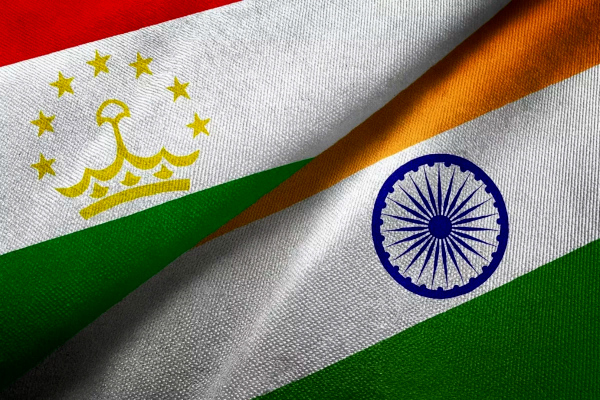
India and Tajikistan have taken a fresh step toward strengthening their economic partnership, with both countries agreeing to expand cooperation across trade, investment, pharmaceuticals, agriculture, services, energy, connectivity and capacity building. The discussions took place during the 12th Meeting of the India-Tajikistan Joint Commission on Trade, Economic, Scientific and Technical Cooperation, held through video conference on June 10, 2026.
Commerce Secretary Rajesh Agrawal, while delivering the opening remarks, called for stronger business engagement between the two countries. He said the global trade, supply-chain and technology environment had changed significantly, making it important for India and Tajikistan to convert political goodwill and historical friendship into stronger economic outcomes. The focus was placed on trade expansion, investment, market access, regulatory cooperation and closer engagement between businesses.
The meeting was co-chaired by Mohit Yadav, Joint Secretary in India’s Department of Commerce, and Nuriddinzoda Ahliddin Nuriddin, Deputy Minister of Economic Development and Trade of Tajikistan. Senior officials and representatives from ministries, departments and agencies of both sides participated in the discussions. Both countries reviewed the progress made after the 11th session of the Joint Commission and exchanged views on widening economic cooperation.
India also highlighted its current economic strength during the meeting. The Indian side noted that the country recorded GDP growth of 7.7 percent in FY 2025–26 and 7.8 percent in the fourth quarter of FY 2025–26. India’s total exports during FY 2025–26 were estimated at US$ 863 billion, including US$ 442 billion in merchandise exports and US$ 421 billion in services exports.
Bilateral merchandise trade with Tajikistan has also shown positive movement. India’s exports to Tajikistan were estimated at US$ 58.12 million in 2025–26, marking a 27.23 percent rise over the previous year. Drug formulations and biologicals formed the major part of India’s exports to Tajikistan, followed by pulses, dairy-sector industrial machinery, medical and scientific instruments, tea, Ayush and herbal products, and refrigeration machinery.
Pharmaceuticals emerged as one of the strongest areas of cooperation. India offered to work with Tajikistan to expand procurement of high-quality and affordable Indian medicines. This has strategic value because Indian pharmaceutical products are widely recognised for affordability, reliability and scale. For Tajikistan, wider access to Indian medicines can support public health needs. For India, it opens a stronger market for pharma companies, exporters and healthcare-linked businesses.
Agriculture and food products also received attention. Both sides discussed opportunities in rice, sugar, processed foods, meat products, pulses, agricultural inputs, food processing, agri-technology and food safety standards. India conveyed its readiness to work with Tajikistan in a way that supports food security, consumer choice and mutually beneficial trade. This creates opportunities for Indian farmers, MSMEs and food-processing companies.
Services trade was identified as another important pillar. India’s services exports to Tajikistan stood at US$ 123.89 million in 2024, while Tajikistan’s services exports to India stood at US$ 37.56 million. The two sides agreed to explore cooperation in IT, digital services, healthcare, education, tourism, professional services, start-ups, innovation and skill development.
The Joint Commission also discussed energy, hydropower, renewable energy, mining, critical minerals, science and technology, investment, textiles, leather, light industries, digital economy, tourism, transport, logistics, banking and finance. These sectors give the partnership a wider industrial base and can help both countries move beyond traditional trade items into long-term economic cooperation.
India and Tajikistan also agreed to continue discussions through video conference to resolve pending issues and carry forward the outcomes of the Joint Commission. Regular engagement between government agencies, regulators, trade bodies, business chambers and private enterprises will be encouraged. The meeting concluded with the signing of the Protocol of the 12th Session, with both sides reaffirming their commitment to deeper industrial, trade and economic cooperation.
For India, this engagement strengthens its outreach to Central Asia through trade, healthcare, agriculture, connectivity and services. For Tajikistan, it opens access to India’s growing market, affordable medicines, agricultural products, technology capabilities and development experience. The meeting shows that the India-Tajikistan relationship is moving from goodwill to practical economic partnership, with clear space for businesses, farmers, exporters, healthcare companies and service providers.
You may also like
-
India and Netherlands Deepen Agriculture and Agritech Partnership as Dutch Minister Begins Six-Day Visit
-
India Sends Fresh Medical Aid to Afghanistan as Humanitarian Assistance to Kabul Continues
-
Jaishankar and Lavrov Review India–Russia Strategic Partnership, BRICS Coordination and Upcoming Bilateral Contacts
-
India Signs UN Convention Against Cybercrime as Global Digital Security Cooperation Expands
-
India and GCC Review Joint Action Plan as Free Trade Agreement Negotiations Move Forward
