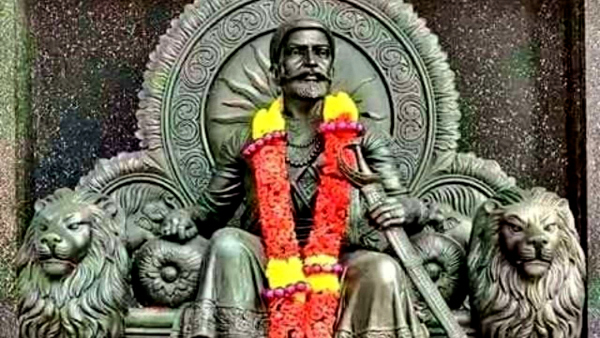
Israel’s plan to install a statue of Chhatrapati Shivaji Maharaj marks a powerful moment in India-Israel cultural diplomacy. The proposal, announced by Israel’s Consul General in Mumbai, Yaniv Revach, seeks to honour one of India’s greatest warrior-kings in an Israeli city and create a lasting symbol of goodwill between the two nations.
The announcement carries deep meaning because Shivaji Maharaj represents courage, statecraft, good governance, civilisational confidence and military vision. His life continues to inspire India because he built power through discipline, public trust, strategic planning and respect for people across communities. By choosing Shivaji Maharaj, Israel is recognising a figure whose legacy belongs to India’s national memory and whose ideas speak to nations that value sovereignty and resilience.
The proposal also reflects the growing warmth between India and Israel. Over the years, the relationship has expanded across defence, agriculture, technology, water management, innovation, homeland security and people-to-people engagement. A statue of Shivaji Maharaj in Israel adds a cultural and historical dimension to this partnership. It turns diplomacy into a visible public symbol that ordinary citizens can understand and remember.
Maharashtra Chief Minister Devendra Fadnavis has welcomed the initiative and assured support from the state government. This matters because Shivaji Maharaj is central to Maharashtra’s identity and India’s larger civilisational story. A memorial in Israel would carry Maharashtra’s historical pride beyond India’s borders and introduce more people abroad to the ideals of Hindavi Swarajya.
The timing also gives the proposal added significance. The announcement came around Shivrajyabhishek Din, the anniversary of Shivaji Maharaj’s coronation. The coronation was a defining moment in Indian history because it represented the rise of an indigenous sovereign power rooted in civilisational self-respect. Remembering that moment in an international setting gives the proposed statue a larger symbolic force.
For Israel, the gesture also reflects a desire to deepen public awareness about India’s historical personalities. Cultural diplomacy often works through monuments, museums, language, literature and shared memory. A statue can become a place of learning, ceremony and friendship. It can introduce schoolchildren, visitors, officials and citizens to the story of a king who defended his people, strengthened administration and built a maritime and military vision far ahead of his time.
The proposed statue also highlights the long connection between Maharashtra and the Jewish community in India. Maharashtra has historically been home to the Bene Israel community, one of India’s oldest Jewish communities. This shared human link gives the project a deeper social foundation. It connects state history, diaspora memory and modern diplomacy in one frame.
Chhatrapati Shivaji Maharaj’s legacy is respected because it combines battlefield courage with administrative clarity. He built forts, strengthened naval power, protected trade routes, encouraged local governance and created a disciplined military structure. His model of leadership was rooted in preparedness, justice and strategic foresight. These values continue to hold relevance in a world where nations seek security, identity and stable governance.
The installation of his statue in Israel would therefore be more than a cultural tribute. It would be a statement that India’s heroes are entering the global space through respect, friendship and historical recognition. It would show that India-Israel ties are moving beyond official agreements into the realm of shared symbols and public memory.
In the larger story of diplomacy, such gestures carry quiet strength. Treaties build frameworks, trade builds dependence, defence cooperation builds trust, and cultural symbols build emotional connection. A statue of Chhatrapati Shivaji Maharaj in Israel would stand as a reminder that friendship between nations grows stronger when it honours history, identity and the values that shaped their people.
You may also like
-
Jaishankar and Lavrov Review India–Russia Strategic Partnership, BRICS Coordination and Upcoming Bilateral Contacts
-
India Signs UN Convention Against Cybercrime as Global Digital Security Cooperation Expands
-
India and GCC Review Joint Action Plan as Free Trade Agreement Negotiations Move Forward
-
Australian PM Albanese Credits Modi as India’s Energy Access Expands on Historic Scale
-
Duryodhana Wins Shalya Through Hospitality: Gifts, Obligation and Political Leverage Before the Kurukshetra War
