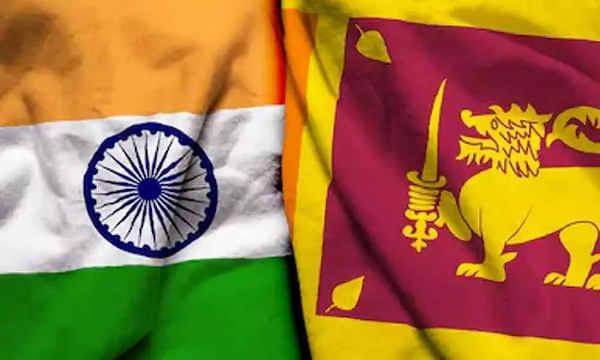
India’s development partnership with Sri Lanka has taken one of its most human forms through the model village housing programme. Built with Indian grant assistance, these villages are improving everyday living conditions for low-income, landless and homeless families by giving them secure homes, stronger community spaces and a better foundation for social mobility. The programme reflects a neighbourhood-first approach where diplomacy is measured through families housed, communities stabilised and futures rebuilt.
The model village initiative grew from India’s long-running housing support in Sri Lanka. In 2017, India and Sri Lanka signed an agreement for 1,200 houses across 50 model villages with Indian grant assistance of SLR 600 million. The programme targeted low-income families and followed an owner-driven construction model, where beneficiaries received support in stages linked to the progress of house construction.
In 2018, the partnership was expanded with another 1,200 houses across 50 additional model villages, again supported by SLR 600 million in Indian grant assistance. With this expansion, India’s collaboration under the Model Villages Housing Programme reached 2,400 houses in 100 model villages across Sri Lanka.
The strength of the programme lies in its method. The houses are built through an owner-driven model, giving beneficiary families a direct role in creating their homes. This gives the project a deeper social value because families are not treated merely as recipients of aid; they become participants in the process of rebuilding their own lives. The cash grant support of SLR 5 lakh per beneficiary is released in instalments according to construction progress, creating both accountability and local involvement.
For Sri Lankan families who have faced landlessness, displacement or poverty, a permanent house means more than shelter. It brings safety during the monsoon, privacy for women, study space for children, storage for household assets and a stable address for accessing public services. A proper home gives a family the confidence to plan beyond daily survival. It turns a vulnerable household into a settled unit with roots, dignity and a visible place inside the community.
The model village programme also carries a wider community impact. When houses are built together in planned clusters, families gain neighbourhood support, common identity and better access to local infrastructure. Roads, sanitation, electricity, water access, community facilities and public services become easier to organise when settlements are planned as villages rather than scattered individual houses. This makes the project a social development intervention, not just a construction exercise.
India’s housing support in Sri Lanka has steadily expanded over the years. News On AIR reported in October 2025 that India’s total housing assistance in Sri Lanka spans 65,000 houses across all 25 districts, with a value of over LKR 64 billion. The same update noted that the next stage of the Indian Housing Project advanced support for 14,000 houses for the Indian Origin Tamil community under Phase IV.
This gives the model village programme an important place within a much larger Indian development footprint. India’s assistance in Sri Lanka has covered housing, education, healthcare, skills, community development and infrastructure. The housing programme stands out because it touches the household directly. It brings foreign policy into the courtyard of the ordinary citizen and converts bilateral friendship into something a family can live inside.
The Sri Lankan model villages also show the practical meaning of India’s development diplomacy in the neighbourhood. These are grant-supported projects designed around local needs, local participation and long-term social benefit. They strengthen trust because they are visible, usable and directly connected to human welfare. A completed house is a permanent symbol of partnership, standing long after ceremonies and announcements have passed.
For India and Sri Lanka, such projects deepen the relationship at the people’s level. Strategic ties between nations are often discussed through trade, security and connectivity, but neighbourhood relations are strengthened most deeply when ordinary families feel the benefit. A home built with Indian assistance becomes a quiet ambassador of goodwill. It tells a story of shared history, cultural closeness and practical solidarity.
The model villages therefore represent a powerful form of development cooperation. They improve living standards, strengthen vulnerable communities and give families the security required to build better futures. In Sri Lanka’s villages, India’s assistance is not only constructing walls and roofs; it is helping create dignity, stability and hope across communities that needed a firm foundation for a new beginning.
You may also like
-
Hindustan Shipyard Docks Three Vessels Simultaneously in Precision Engineering Milestone
-
BCCL Dispatches First Rake From 5-MTPA Maheshpur Rapid Loading System
-
NPCIL Begins Fuel Loading at RAPP-8 as India’s Fourth Indigenous 700 MWe PHWR Moves Towards Commissioning
-
FUJIFILM India Dedicates First Serial-Numbered Made-in-India Endoscopy System Through AIIMS New Delhi
-
India’s Defence Production Hits Record ₹1.78 Lakh Crore as Private-Sector Share Rises to 24%
