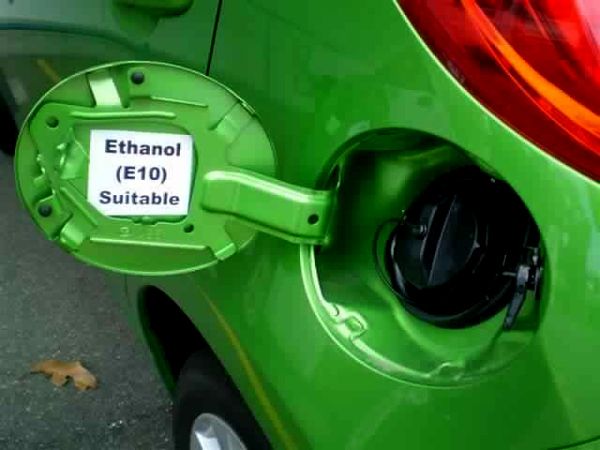
India’s clean mobility transition is entering a new phase with the government preparing to expand ethanol dispensing infrastructure across major urban centres. Union Petroleum and Natural Gas Minister Hardeep Singh Puri has said that India is beginning with around 50 to 100 ethanol fuel stations in regions such as Delhi-NCR, Pune, Mumbai and Nagpur, with the network expected to grow to 500 stations by the end of 2026 and 5,000 stations by the end of 2027.
This marks a major step from ethanol blending in petrol towards a dedicated flex-fuel ecosystem. Until now, India’s ethanol story has largely focused on E20, where petrol is blended with 20 percent ethanol. The next stage moves towards vehicles that can run on much higher ethanol blends such as E85 and, in advanced cases, even E100. This requires a complete support system of compatible vehicles, separate fuel storage, dedicated dispensing points, pricing support, testing fuel availability and consumer awareness.
The timing of the announcement is significant because it comes alongside the launch of India’s first flex-fuel passenger vehicle by Maruti Suzuki. Flex-fuel vehicles can operate on different petrol-ethanol blends, giving motorists the ability to use cleaner, domestically produced biofuel where available. This brings India closer to the kind of ethanol mobility model already seen in countries such as Brazil, where sugarcane-based ethanol has become a major transport fuel.
For India, ethanol is both an energy-security tool and a rural-economy opportunity. The country imports a large share of its crude oil requirement, making fuel prices and supply stability vulnerable to global shocks. Every litre of ethanol used in transport reduces the need for imported petroleum. At the same time, ethanol production creates demand for sugarcane, maize, damaged grains, broken rice and other biomass-based feedstocks. This links the mobility sector directly with farmers, distilleries, oil marketing companies and vehicle manufacturers.
India’s ethanol blending programme has already produced measurable gains. The blending level has risen from 1.5 percent in 2014 to 20 percent today. The programme has saved large amounts of foreign exchange, substituted crude oil imports, reduced carbon dioxide emissions and generated additional income for farmers. The government now wants to build on this achievement by moving from blended petrol to vehicles designed for higher ethanol use.
The planned ethanol station rollout also shows that fuel transition is not only about vehicle technology. A flex-fuel car or motorcycle becomes useful only when the fuel is easily available. That is why the creation of 5,000 ethanol dispensing stations by 2027 is central to the larger strategy. The early focus on Delhi-NCR, Pune, Mumbai and Nagpur allows the government and oil marketing companies to test demand, logistics, storage systems and consumer behaviour before expanding to a wider national network.
The minister has also indicated that supportive measures are being considered to speed up adoption. These may include fuel pricing support, road tax concessions, special identifiers for flex-fuel vehicles and retail outlets, availability of E85 testing fuel, and investment in storage and dispensing infrastructure. Such steps can help reduce the hesitation that usually comes with any new fuel system.
The farmer-income angle is especially important. If even half of new two-wheelers and four-wheelers become flex-fuel compliant, India could create demand for hundreds of crore litres of additional ethanol. This would mean more purchases from distilleries and more value flowing back to agricultural supply chains. In a country where energy imports take money out of the economy, ethanol keeps a larger share of fuel spending within the domestic economy.
The environmental benefit also strengthens the case for flex-fuel mobility. Ethanol is produced from renewable biomass and can reduce the net carbon footprint of transport when produced and distributed efficiently. It gives India another clean mobility pathway alongside electric vehicles, compressed natural gas, hybrids, hydrogen and biofuels. Instead of depending on one technology, India is building a mixed mobility strategy suited to its geography, agriculture, fuel demand and industrial capacity.
The challenge ahead is execution. Ethanol availability, pricing, vehicle compatibility, consumer confidence, fuel efficiency, engine durability, storage standards and supply-chain planning will decide how fast the system grows. Consumers will adopt flex-fuel vehicles only when ethanol fuel is easily available and economically attractive. Automakers will scale production when the fuel network becomes visible and reliable. Oil marketing companies will expand outlets when there is clear demand from vehicles on the road.
Still, the direction is clear. India’s ethanol programme has moved from policy ambition to fuel-station reality. The planned expansion to 5,000 ethanol dispensing stations by 2027 can turn flex-fuel mobility from a demonstration technology into a practical transport option. If implemented well, it can reduce oil imports, support farmers, cut emissions and create a new domestic energy economy where Indian vehicles increasingly run on Indian fuel.
You may also like
-
ONGC Strikes Gas in Mahanadi Deepwater Basin Off Odisha Under Samudra Manthan Campaign
-
India–New Zealand FTA to Take Effect From October 20, Opening Duty-Free Access for All Indian Exports
-
Sintez-PKZh Expands Carbonyl Iron Supplies to India With Inlab Chemicals
-
Russian Rich Chemical Signs Cooperation Agreement With India’s Green Wings at INNOPROM India 2026
-
India’s Software Services Exports Rise 8.2% to $221.4 Billion in FY2025-26
