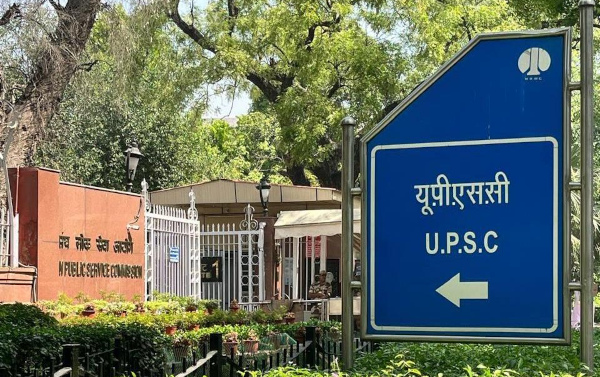
The Union Public Service Commission has successfully implemented real-time face authentication during the Civil Services and Indian Forest Service Preliminary Examination 2026, marking a major technology upgrade in India’s public examination system. The exercise was carried out across 2,072 examination venues nationwide, making it one of the largest real-time identity verification deployments by UPSC. The preliminary examination was held on 24 May 2026, and the successful implementation was reported on 4 June 2026.
The core purpose of the system is simple and powerful: the candidate who uploaded the photograph during the application process must be the same person who appears at the examination hall with the admit card. This directly targets impersonation, proxy attendance and identity fraud, which are among the most serious threats to the credibility of high-stakes competitive examinations.
The face-authentication application was developed and implemented by UPSC with technical support from the National e-Governance Division, under the Ministry of Electronics and Information Technology. Instead of depending on expensive biometric hardware, the system works through Android smartphones. Invigilators used mobile-phone-based verification at the venues, reducing the need for complex infrastructure and making the system easier to deploy at national scale.
The speed of the system is one of its biggest strengths. A typical face authentication took only 6 to 8 seconds, allowing candidates to enter examination halls smoothly without creating long queues. During peak entry time, the application processed nearly 12,000 authentications per minute, while more than 7,000 invigilators used it simultaneously.
This scale matters because UPSC examinations operate across a massive and diverse geography. The Civil Services Preliminary Examination 2026 was conducted across 83 cities and 2,072 venues. Around 8,19,732 candidates had applied, and nearly 5.49 lakh candidates, or about 67 percent, appeared for the examination. Delhi recorded the highest applicant load, followed by Hyderabad and Patna, while smaller centres such as Kargil, Port Blair and Leh also formed part of the national examination network.
UPSC prepared a detailed Standard Operating Procedure for the exercise and shared it with states, districts and examination venues. Multiple rounds of training were given to invigilators so that the process could work smoothly on exam day. This shows that the reform was not only a software change, but a complete administrative exercise involving technology, training, coordination and field-level discipline.
The Commission had already placed a notice on its official website stating that all candidates appearing in UPSC examinations would undergo face authentication at the venue. The website entry was last updated on 26 February 2026, showing that this system had been formally introduced before the Civil Services Preliminary Examination.
The larger significance of this move goes beyond one examination. UPSC is one of India’s most trusted recruitment institutions, and the Civil Services Examination carries immense public importance. When technology is used to strengthen candidate verification, it protects honest aspirants, reduces malpractice risk and improves public faith in the examination process.
This reform also reflects a wider shift in India’s governance systems, where digital identity tools are being used to bring speed, accuracy and transparency into public services. In UPSC’s case, the use of face authentication creates a direct connection between the digital application record and the physical candidate present at the venue. That bridge between online identity and real-world verification is now becoming central to secure examination management.
The successful deployment of face authentication across thousands of venues shows that India can implement large-scale, low-cost, indigenous digital solutions in sensitive public systems. For lakhs of aspirants, it means a more secure entry process. For UPSC, it means a stronger shield against impersonation. For India’s examination ecosystem, it may become a model for future reforms in fair and technology-backed recruitment.
You may also like
-
Semicon 2.0 Targets 200 Chip-Design Companies and One Lakh Semiconductor Technicians
-
Centre to Lower NEET-SS 2025 Cut-Off to 30th Percentile as 1,857 Super-Speciality Seats Remain Vacant
-
Krishna’s Last Peace Mission: The Five Villages That Could Have Prevented Kurukshetra
-
The Frog King and the Serpent: The Enemy Invited Into the Well
-
The Serpent and the Meaning of Violence: When Grief Turned Ruru Against Every Snake
