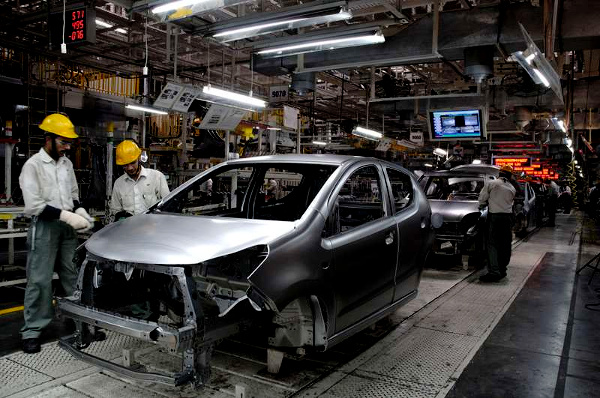
India’s automobile market moved with fresh confidence in May 2026 as leading carmakers reported strong sales across passenger vehicles, utility vehicles, exports and farm equipment. The numbers show that demand remains healthy across urban and rural markets, supported by better consumer sentiment, preference for personal mobility, rising interest in feature-rich vehicles and steady traction in utility vehicle and hybrid segments.
Maruti Suzuki India delivered the most striking performance of the month by recording its highest-ever monthly sales volume. The company sold 2,42,688 units in May, marking a major milestone for India’s largest carmaker. Its domestic sales touched a record 1,93,535 units, while exports stood at 41,914 units. The performance shows Maruti Suzuki’s continued strength across compact cars, utility vehicles, family cars and export markets.
The company’s record month also reflects the depth of India’s automobile demand. Maruti Suzuki has long held a dominant position in the mass passenger vehicle segment, and its May performance indicates that affordability, fuel efficiency, reliability and wide service access continue to shape buyer preference. At the same time, the company’s export strength shows how India is becoming an important production base for global automobile markets.
Hyundai Motor India also delivered a steady performance in May 2026, recording total sales of 61,137 units. This included 47,837 units in the domestic market and 13,300 units in exports. The company’s domestic sales during the first two months of FY27 rose 13 percent year-on-year to 99,739 units, showing healthy momentum at the beginning of the financial year.
Hyundai’s numbers highlight the strong demand for premium hatchbacks, sedans, compact SUVs and technology-loaded passenger vehicles. Indian buyers are increasingly looking for connected features, safety systems, automatic transmission options, modern infotainment and stylish designs. Hyundai’s performance fits into this changing market behaviour, where consumers are moving beyond basic mobility and seeking comfort, convenience and advanced features.
Mahindra & Mahindra continued to benefit from the strong utility vehicle wave in India. The company reported overall auto sales of 99,636 vehicles in May, including exports, registering 20 percent growth over the previous year. Its domestic utility vehicle sales reached 58,021 units, underlining the powerful demand for SUVs and rugged family vehicles.
Mahindra’s growth is closely linked to India’s expanding appetite for utility vehicles. SUVs have become one of the most important segments in the passenger vehicle market, attracting buyers from metro cities, smaller towns and rural regions. Customers are drawn to higher ground clearance, strong road presence, spacious interiors, diesel and petrol options, and vehicles suited for both city and highway use. Mahindra has built its recent momentum around this shift, with a portfolio that appeals to families, professionals, adventure users and rural buyers.
The company also recorded strong growth in its farm equipment business. Domestic tractor sales rose to 47,845 units, while the farm equipment division posted 23 percent growth. This is an important signal for the rural economy because tractor demand is closely linked to farm activity, crop expectations, rural liquidity and agricultural investment. Strong tractor sales suggest improving confidence among farmers and continued demand for mechanisation in Indian agriculture.
Toyota Kirloskar Motor also reported positive movement in May, with sales of 33,128 units, reflecting 7 percent year-on-year growth. The company’s performance was supported by demand for hybrid and utility vehicle models. Toyota has built a strong reputation in India around reliability, long vehicle life, strong resale value and fuel-efficient technologies, and its recent growth shows rising consumer interest in cleaner and more efficient mobility options.
A major highlight for Toyota was its crossing of three lakh Strong Hybrid Electric Vehicle sales in India. This milestone reflects the increasing acceptance of hybrid technology among Indian consumers. Hybrid vehicles are becoming attractive because they offer better fuel efficiency, lower emissions and practical usability without depending fully on charging infrastructure. In a country where charging networks are still expanding, strong hybrids provide a bridge between conventional petrol vehicles and full electric mobility.
The broad-based performance across Maruti Suzuki, Hyundai, Mahindra and Toyota shows that India’s automobile industry is entering FY27 with encouraging momentum. Passenger vehicles remain in demand, SUVs continue to dominate customer interest, exports are strengthening India’s manufacturing role, and farm equipment sales point toward positive rural movement. The market is also showing early signs of technology transition, with hybrid models gaining wider acceptance among buyers.
This growth has wider economic importance. The automobile sector supports a large industrial ecosystem that includes component manufacturers, logistics providers, dealerships, service networks, steel, rubber, electronics, plastics, financing companies and insurance providers. Strong vehicle sales therefore generate impact beyond carmakers. They support jobs, production activity, exports, tax revenue and local business activity across the country.
May 2026’s auto sales performance presents a confident picture of India’s mobility market. Record sales by Maruti Suzuki, steady growth by Hyundai, strong SUV-led expansion by Mahindra and hybrid-driven gains by Toyota together show that the industry is being powered by multiple engines of demand. From family cars to SUVs, from tractors to hybrids, India’s automobile sector is moving forward with scale, diversity and renewed market energy.
You may also like
-
India Ranks First Among 41 Markets in Swedish Global Business Climate Survey 2026
-
India’s Semiconductor Market Could Cross US$200 Billion by 2035 as Domestic Demand Accelerates
-
Pace Robotics Moves Construction Automation From Pilot Stage to Commercial Deployment
-
Hindustan Shipyard Docks Three Vessels Simultaneously in Precision Engineering Milestone
-
BCCL Dispatches First Rake From 5-MTPA Maheshpur Rapid Loading System
