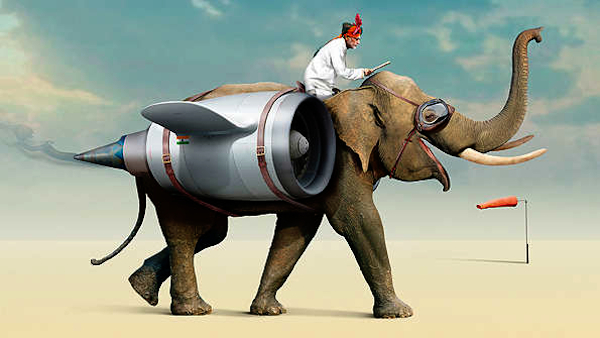
India’s manufacturing sector entered May with renewed strength, as the HSBC India Manufacturing Purchasing Managers’ Index rose to 55.0, up from 54.7 in April and above the earlier flash estimate of 54.3. The reading marked the strongest improvement in factory operating conditions in three months, showing that Indian manufacturing retained forward momentum despite global uncertainty and cost pressure. A PMI reading above 50 signals expansion, and India’s latest figure keeps the sector firmly in growth territory.
The May improvement was led by stronger growth in factory output, new orders and purchasing activity. Manufacturers reported better demand conditions, fresh business gains and support from infrastructure-linked activity. The rise was especially visible in intermediate and capital goods, where output and order flows improved faster than in consumer goods. This matters because capital and intermediate goods are closely linked to investment, supply chains, construction, machinery, industrial expansion and future production capacity.
The domestic market remained the main engine of this growth. New business expanded at a faster pace, while export orders grew more softly compared with domestic demand. International sales still remained positive, with firms reporting demand from regions such as Asia, Europe, Kenya, Nigeria and the Middle East. This pattern shows a manufacturing cycle powered mainly by India’s internal economy, with exports adding support rather than carrying the entire expansion.
A striking feature of the May data was the rise in stock-building. Manufacturers increased purchases of raw materials and inputs at the fastest pace in three months, partly to build contingency inventories. This suggests that companies are preparing for continued demand while also protecting themselves against possible supply disruptions. Stocks of finished goods also rose for a second consecutive month, with the pace of accumulation touching an 11-year high, indicating that supply in some areas moved ahead of immediate demand.
Cost pressure remained the biggest concern beneath the headline growth. The unresolved conflict in the Middle East added pressure to energy, fuel, materials and transport costs. S&P Global’s release noted that input cost inflation remained among the strongest seen in nearly four years, although it eased slightly from April. Factory-gate price inflation rose more slowly than input costs, which points to margin pressure because many manufacturers absorbed part of the cost instead of fully passing it on to buyers.
The employment signal stayed positive as well. Greater production requirements encouraged another round of hiring in the manufacturing sector, though the pace of job creation slowed from April. This shows that companies are still expanding capacity and workforce strength, even while managing higher costs and cautious future expectations.
The wider message from the May PMI is clear: India’s manufacturing sector is expanding with steady domestic demand, stronger production, better order books and active purchasing by firms. The pressure point lies in costs, especially energy and transport-linked inputs. For policymakers and industry, the next challenge is to sustain this momentum while protecting margins, improving supply-chain resilience and converting strong domestic demand into deeper industrial investment.
You may also like
-
Hindustan Shipyard Docks Three Vessels Simultaneously in Precision Engineering Milestone
-
BCCL Dispatches First Rake From 5-MTPA Maheshpur Rapid Loading System
-
NPCIL Begins Fuel Loading at RAPP-8 as India’s Fourth Indigenous 700 MWe PHWR Moves Towards Commissioning
-
FUJIFILM India Dedicates First Serial-Numbered Made-in-India Endoscopy System Through AIIMS New Delhi
-
India’s Defence Production Hits Record ₹1.78 Lakh Crore as Private-Sector Share Rises to 24%
