India’s emergence as the world’s fifth most digitalised economy marks a major milestone in the country’s technological transformation. What began as a connectivity revolution through affordable mobile data, digital identity and online payments has now matured into a wider digital economy shaped by artificial intelligence, public digital infrastructure, fintech, cloud services, start-ups, e-governance and large-scale technology adoption.
The development is important because digitalisation is no longer a narrow measure of internet access. It now reflects how deeply technology is embedded in daily life, business activity, government delivery, financial systems, innovation capacity and national competitiveness. India’s climb into the top five shows that the country is not merely a large consumer of digital services. It is becoming one of the major shapers of the global digital order.
India’s digital rise has been built on scale. The country has hundreds of millions of internet users, one of the world’s largest smartphone markets, massive digital payment adoption, a rapidly expanding start-up ecosystem and a growing base of technology workers. This scale gives India a unique advantage. A digital product or public platform that works in India has already been tested in one of the most complex, diverse and high-volume markets in the world.
The strongest foundation of this growth has been India’s digital public infrastructure. Aadhaar created a nationwide identity layer. UPI transformed real-time payments. DigiLocker gave citizens a secure way to store and share documents. CoWIN demonstrated how large-scale digital platforms could support public health operations. ONDC is attempting to democratise digital commerce. These systems show how public technology can create open rails on which private innovation can flourish.
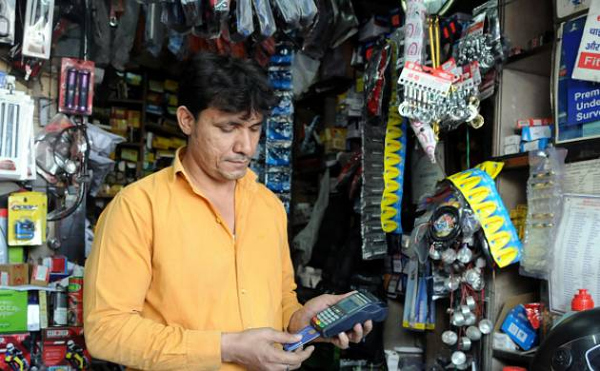
UPI is the most visible example of this transformation. It changed digital payments from an elite urban habit into a mass public utility. Street vendors, small shops, taxi drivers, online sellers, restaurants, professionals and large businesses now use the same instant payment architecture. This kind of adoption gives India’s digital economy a special character: technology has moved into everyday transactions, not just corporate boardrooms and start-up offices.
Artificial intelligence is now becoming the next major layer of this story. India’s strong ranking in AI performance shows that the country has moved beyond basic digital adoption and is entering the era of intelligent systems. AI is spreading across software development, customer service, education, healthcare, agriculture, finance, cybersecurity, governance, logistics and content creation. The size of India’s developer base and data-rich digital ecosystem gives it a powerful foundation for AI-led growth.
The global AI shift also favours India in a new way. Developing countries now account for a major share of global AI users, and India stands among the most important contributors to that adoption. This means AI is not remaining confined to Silicon Valley, Europe or a few advanced economies. It is becoming a mass technology, and India is one of the largest arenas where its social, business and productivity effects will be tested.
India’s advantage lies in the combination of talent and use cases. The country has a large pool of engineers, data scientists, software developers, product managers and digital entrepreneurs. At the same time, it has real-world problems at massive scale: healthcare access, language diversity, agricultural advisory, urban mobility, financial inclusion, education quality, legal backlog, small-business productivity and public service delivery. AI solutions built for such problems can become globally relevant.
The start-up ecosystem has played a crucial role in this journey. Indian start-ups have created products in fintech, edtech, healthtech, agritech, logistics, SaaS, mobility, gaming, deep tech and enterprise software. Many of these companies are now moving from digital convenience to productivity transformation. They are not only building apps; they are building business systems, automation tools, AI platforms and digital infrastructure for other enterprises.
The rise of India’s digital economy also reflects the changing nature of Indian business. MSMEs are adopting QR payments, digital accounting, online marketplaces, inventory tools and social media commerce. Large enterprises are shifting to cloud platforms, data analytics, cybersecurity systems and AI-assisted operations. Government departments are digitising services, records and delivery mechanisms. This creates a full-stack digital economy where consumers, businesses and the state are all moving together.
India’s digital strength is also linked to its expanding data centre and cloud infrastructure. As AI, streaming, fintech, e-commerce, digital governance and enterprise software grow, the country needs more domestic compute and storage capacity. The rise of India as a major data centre market strengthens its ability to host digital services locally, reduce latency, improve security and support AI workloads.
Another important feature is the spread of digital services beyond major metros. Tier-2 and tier-3 cities are becoming active participants in the digital economy. Small-town entrepreneurs sell online, students learn through digital platforms, patients access telemedicine, local businesses use digital payments and young professionals work remotely. This wider geography gives India’s digital transformation social depth.
The ranking also highlights a larger global shift. Digital leadership is moving from a purely North Atlantic story to a more multipolar order. Asian and Indo-Pacific economies are becoming central to digital growth, AI adoption, platform innovation and technology markets. India’s place in the top five shows that the world’s digital future will be shaped not only by the United States and Europe, but also by large emerging economies with scale, talent and public digital systems.
This has strategic meaning. Digital power now influences economic competitiveness, national security, public administration, financial inclusion, innovation, social trust and geopolitical influence. Countries that control digital infrastructure, AI systems, data flows, cybersecurity standards and platform ecosystems will have greater influence in the coming decades. India’s rise in digital rankings therefore has both economic and strategic significance.
The country’s next challenge is quality. High digital scale must be matched with stronger digital trust. Cybersecurity, privacy protection, data governance, safe AI, platform accountability and consumer protection will become more important as more citizens and businesses rely on digital systems. A large digital economy cannot grow sustainably without confidence in the safety and fairness of its systems.
The digital divide also needs continued attention. India has made major progress in connectivity and adoption, but gaps remain across gender, income, education, geography and language. The next phase of growth must ensure that digital tools reach rural households, women entrepreneurs, small farmers, micro-enterprises, elderly citizens and local-language users. Inclusion will decide whether digitalisation becomes a narrow growth story or a national development engine.
Language technology can play a major role here. India’s digital future cannot be built only in English. AI-powered translation, voice interfaces, local-language search, regional content tools and speech-based services can bring millions of new users into the digital economy. This is one area where India can build solutions that are globally useful for multilingual societies.
India must also invest more in compute infrastructure, semiconductor capability, deep-tech research and AI safety. Digital adoption gives the country scale, but technological leadership requires ownership of critical layers: chips, cloud, models, cybersecurity, standards, intellectual property and advanced research. The journey from digital market to digital power depends on this deeper capacity.
Skilling will be equally important. The digital economy needs software engineers, AI specialists, cybersecurity experts, cloud architects, data analysts, electronics technicians, product designers, digital marketers and platform managers. At the same time, every worker will need some level of digital fluency. India’s education and skilling systems must prepare students for a workplace where AI and digital tools become routine.
The employment effect can be large if managed well. Digitalisation can create jobs in software, services, logistics, e-commerce, fintech, content, cloud operations, hardware maintenance, cybersecurity and AI-enabled industries. It can also raise productivity in traditional sectors such as agriculture, manufacturing, retail, healthcare and education. The real opportunity lies in using digital technology to strengthen the whole economy, not only the technology sector.
India’s fifth-place ranking therefore represents both achievement and responsibility. It confirms that the country has built one of the world’s most dynamic digital ecosystems. It also reminds policymakers, industry and civil society that the next stage will be more demanding. The future will depend on deeper innovation, stronger trust, better infrastructure, inclusive access and responsible AI adoption.
The larger message is clear: India has moved from digital participation to digital influence. Its platforms, users, developers, start-ups and public digital systems are now part of the global technology conversation. The country’s digital economy is no longer just catching up. It is beginning to define new models of scale, inclusion and innovation.
India’s rise as the world’s fifth most digital economy is therefore a landmark moment. It shows that technology has become one of the central engines of India’s growth story. If the country can combine scale with trust, AI with inclusion, and innovation with strong governance, its digital economy can become one of the defining pillars of Viksit Bharat.
You may also like
-
EON Space Labs and Dhruva Space Advance Indian Space Hardware on Transporter-18 Mission
-
SatLeo Labs’ TAPAS-1 Reaches Orbit, Advancing India’s Private Thermal-Imaging Capability
-
TakeMe2Space’s MOI-1A Reaches Space on Falcon 9 Transporter-18 Mission
-
Bank of Baroda Enters Pension Fund Management After PFRDA Appointment
-
SCI and India’s Push for a Larger Indigenous Maritime Fleet
