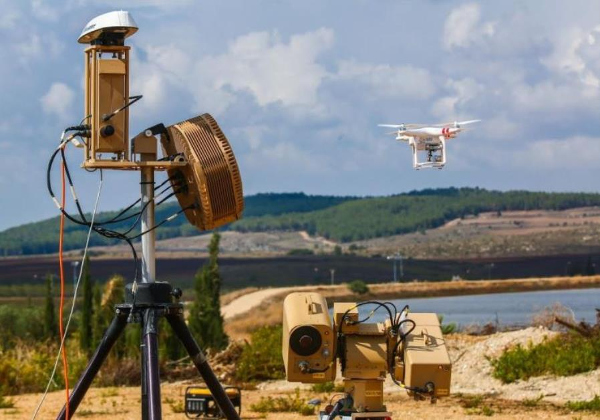
India is preparing to strengthen its border security architecture with anti-drone systems to curb the smuggling of narcotics and weapons through unmanned aerial platforms. Union Home Minister Amit Shah said the government is moving to install such systems within the next six months, marking a focused push against the growing use of drones for cross-border criminal and anti-national activities. The announcement was made while addressing Border Security Force personnel at the Sanchu border outpost in Rajasthan’s Bikaner district.
The decision reflects a major shift in how India is approaching border management. Smuggling across sensitive frontiers is increasingly moving from traditional ground routes to low-flying drones that can carry small but dangerous payloads, including narcotics, weapons and other materials. By placing anti-drone systems along the border, India is aiming to build a sharper technological shield that can detect, track and neutralise hostile aerial intrusions before they disappear into civilian areas.
Amit Shah also stressed that drone interception alone is only one part of the security challenge. Since these drones land on Indian soil, he said it is equally important to identify the local receivers, handlers and networks that collect and distribute the smuggled material. This makes the response a combined intelligence, policing and border-security operation rather than a purely technical one. Close coordination between the BSF, district police and civil administration will be central to breaking the chain from drone launch to local delivery.
The Home Minister described border security as a wider territorial responsibility involving a multi-layered security grid. This grid brings together the BSF, the armed forces, local administration and citizens in border areas. Such an approach recognises that modern border threats are no longer limited to visible infiltration attempts. They can involve technology, local support networks, illegal construction, demographic manipulation, narcotics syndicates and weapons pipelines working in combination.
The announcement also fits into a broader modernisation plan for India’s border regions. The government has highlighted lateral roads, new-design fencing and piped drinking water for around 180 BSF outposts in Rajasthan as part of efforts to improve both operational readiness and living conditions for personnel. Better roads and stronger infrastructure are crucial because border security depends not only on weapons and sensors, but also on mobility, logistics, communication and rapid response.
The Sanchu post itself carries historical significance. During the 1965 India-Pakistan war, Indian personnel secured Sanchu against Pakistani attempts to capture the area, and the post continues to be remembered in BSF tradition through “Sanchu Diwas.” By choosing this location for the announcement, the message was clear: India’s older spirit of frontier defence is now being upgraded with new-generation surveillance, anti-drone technology and deeper coordination between security agencies.
The anti-drone deployment will be watched closely because it addresses one of the most practical security threats along India’s western border. A drone carrying contraband may be small, cheap and hard to spot at night, but its impact can be serious when narcotics money feeds organised crime and weapons reach hostile networks. India’s response, therefore, is moving towards a layered model: technology to stop the drone, intelligence to trace the receiver, policing to dismantle the network, and border-area participation to deny safe ground to smugglers.
At its core, the move signals that India is treating drone-based smuggling as a national-security problem, not just a law-and-order issue. The next six months could become an important phase in creating a tougher, smarter and more responsive border shield against narcotics, weapons and the networks that try to exploit technology against the country.
You may also like
-
JCBL Receives DRDO Technology for Indigenous 20-Tonne Heavy Drop System for C-130J and C-17
-
DRDO Moves 30 kW Laser Weapon Towards Production, Industry Partner Selection Planned Within Six Months
-
IG Defence Validates KAL Long-Range Strike Drone’s Integrated Systems in Pokhran Trial
-
Vajra Air Defence Warriors Validate AKASHTEER Sensor-to-Shooter Network in Day-Night Firing Drills
-
INS Sahyadri and INS Kulish Reach Philippines for ADMM-Plus Maritime Cooperation
