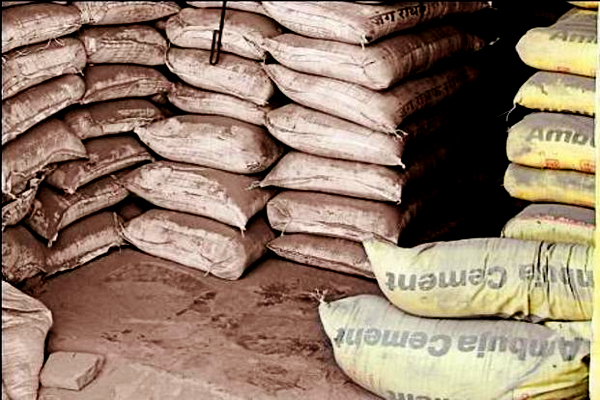
India’s cement industry is entering FY27 with a confident growth outlook, even as companies prepare for near-term pressure from fuel costs, freight expenses and geopolitical uncertainty linked to West Asia. Leading cement manufacturers expect the sector to grow by around 7–8% in FY27, supported by government infrastructure spending, steady housing demand and continuing urbanisation.
The optimism comes from the basic structure of India’s growth story. Cement demand rises when roads, bridges, housing projects, industrial corridors, railway works, urban infrastructure and rural construction move from planning to execution. India’s public capital expenditure has risen sharply over the past decade, with the Government’s Budget Estimate for FY2026–27 placing public capex at ₹12.2 lakh crore, compared with ₹2 lakh crore in FY2014–15. PIB has also noted that higher capex directly stimulates demand for cement, steel, machinery and services.
For cement companies, this creates a strong demand floor. Infrastructure projects provide large-volume consumption, housing gives the industry a broad retail base, and urbanisation creates continuous demand for commercial buildings, real estate, metro systems, logistics parks, public facilities and city expansion. This is why major cement producers remain positive despite cost-related headwinds.
According to the industry, companies including UltraTech Cement, Ambuja Cements, Shree Cement, Dalmia Cement and Nuvoco Vistas have expressed confidence about medium-term demand. Their expectations are built around sustained infrastructure execution, affordable and private housing demand, and the long-term shift of population and investment towards urban and semi-urban India.
The pressure point is cost. Cement manufacturing is energy-intensive, and the sector is highly sensitive to movements in fuel, freight and crude-linked input costs. The Economic Times report cited by IBEF noted that power, fuel and selling costs together account for 50–55% of total operating costs for cement companies. This makes the industry vulnerable when fuel prices rise or when West Asia-related tensions affect crude oil, shipping, imported inputs and supply-chain sentiment.
Still, the industry’s response is not defensive. Cement companies are preparing for growth by investing in capacity, premium products and better sales realisations. Premiumisation has become an important part of the strategy. Instead of relying only on volume, companies are trying to improve their product mix through premium cement categories, stronger trade sales and region-specific market positioning. UltraTech has indicated that better trade mix and premiumisation helped improve realisations, while Dalmia Bharat has also highlighted premiumisation as a continued focus for FY27.
Expansion plans show the confidence behind the sector’s projections. Ambuja Cements expects consolidated volumes to reach around 80 million tonnes in FY27, reflecting growth of nearly 8%. Dalmia Bharat has planned capital expenditure of ₹3,200–3,400 crore for FY27, while Nuvoco Vistas has earmarked ₹900 crore for FY27 and ₹960 crore for FY28. UltraTech has indicated annual capex of around ₹8,000–10,000 crore for the foreseeable future, while Ambuja is expected to keep FY27 capex in the range of ₹6,000–6,500 crore as it focuses on completing ongoing projects.
This investment cycle is important because cement is a capacity-led industry. Companies need plants, grinding units, logistics networks, limestone linkages, rail access, warehouses and dealer channels to serve a market as large and geographically diverse as India. When manufacturers continue to invest through periods of cost pressure, it signals confidence in long-term demand rather than short-term pricing alone.
Government infrastructure spending remains the central pillar of this outlook. Roads, railways, ports, urban transport, public buildings and housing-linked projects create steady cement consumption across regions. PIB has noted that public capital expenditure helps crowd in private investment, generate employment and strengthen demand for industrial materials such as cement. This makes cement one of the most direct beneficiaries of infrastructure-led growth.
Housing is the second major demand engine. Urban housing, affordable housing, rural home construction, repair demand and small-town real estate give the sector a wide customer base beyond large public projects. Even when pricing remains competitive, housing demand supports regular cement offtake because construction activity is spread across thousands of local markets rather than concentrated in a few mega-projects.
The FY27 outlook therefore reflects a balanced picture. On one side, cement makers face pressure from fuel, freight, packing material and import-linked costs. On the other side, India’s infrastructure pipeline, housing demand and urbanisation trend continue to create strong volume visibility. The result is a sector that may see margin pressure in the near term but still expects healthy volume growth.
India’s cement industry is closely tied to the country’s development cycle. Every kilometre of highway, every railway station upgrade, every affordable housing cluster, every industrial park and every new urban district adds to cement demand. With public capex staying high and private construction gradually expanding, the industry’s 7–8% FY27 growth expectation looks like a reflection of India’s broader building momentum.
In that sense, the cement sector’s outlook is more than a corporate earnings story. It is a signal of how India’s physical economy is expanding. Cost pressures from West Asia may test margins for a few quarters, but the structural drivers remain powerful: infrastructure, housing, cities, logistics, and the long-term ambition to build a larger, better-connected Indian economy.
You may also like
-
India Advances Trade Diplomacy at G20 Ministerial in Milwaukee
-
Kokasa Launches to Build Indigenous Mission-Critical Systems for Su-30MKI, MiG-29 and T-72
-
Tata Projects and MDS Aero Partner to Build Advanced Aero-Engine Test Infrastructure in India
-
Flying Wedge Defence Partners With Portugal’s Keydef to Manufacture Kaal Bhairava and YAMA Drones in Europe
-
Armenia Conducts Live-Fire Exercise With Indo-French TRAJAN 155 mm Howitzers Manufactured in India
