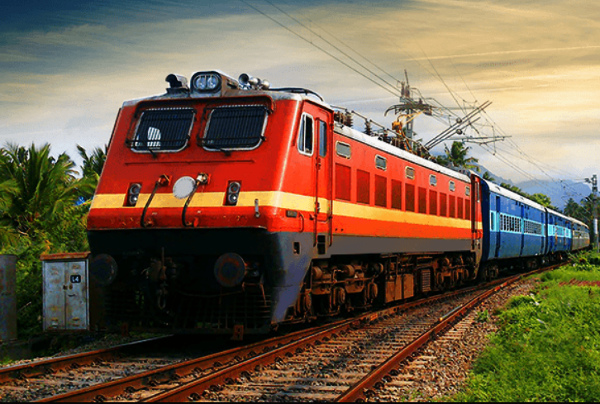
Indian Railways is moving into a new phase of expansion where electrification, speed, safety and corridor-based growth are beginning to reshape the network at scale. In 2025–26, the system carried around 741 crore passengers, moved a record 1,670 million tonnes of freight, and generated roughly ₹80,000 crore in revenue, underlining both its economic weight and its central role in national connectivity. The network now runs about 25,000 trains a day, making it one of the world’s largest and busiest rail systems.
The biggest structural shift has come from electrification. As of March 2026, 99.6% of India’s broad-gauge network had been electrified, with 69,873 route km electrified out of 70,142 route km, up sharply from 21,801 route km in 2014. This transition has reduced diesel dependence and improved operating economics: the Railways says electrification saved about 180 crore litres of diesel in 2024–25 and delivered savings of around ₹6,000 crore. At the same time, the physical network has been upgraded for faster operations, with 54,600 km of track renewed during 2014–26 and the length of track fit for 110 kmph and above rising to over 85,000 km by February 2026.
Passenger modernisation has gathered pace through new train categories that are changing both premium and mass-market travel. Vande Bharat services carried about 3.98 crore passengers in FY 2025–26, taking total ridership since launch to more than 9.1 crore across roughly 1 lakh trips. The newly introduced Vande Bharat Sleeper service also posted an early strong response, carrying 1.21 lakh passengers across 119 trips in its first three months. On the affordable-travel side, Indian Railways had 60 Amrit Bharat Express services in operation as of March 18, 2026, showing that the upgrade cycle is extending beyond flagship premium trains.
The transformation is also becoming more digital and freight-oriented. The indigenous Kavach automatic train protection system has been commissioned on over 3,100 route km, with implementation underway on another 24,400 km. The telecom backbone built on IP-MPLS has been commissioned at 1,396 stations, while AI-enabled video surveillance has reached 1,874 stations and real-time passenger information systems 1,405 stations. On the logistics side, the government says 306 Gati Shakti Cargo Terminals have been approved with 118 already commissioned, while the existing dedicated freight corridors are adding capacity to the main network: the Eastern DFC has been completed, and 1,404 km of the 1,506-km Western DFC has been commissioned.
Looking ahead, the next big leap is being framed around high-speed and high-capacity corridors. The government has announced seven new high-speed rail corridors spanning nearly 4,000 km, alongside a new 2,052-km Dankuni–Surat dedicated freight corridor, as part of a record railway investment push in Union Budget 2026–27. Official estimates say the seven high-speed corridors could attract around ₹16 lakh crore in investment, while the under-construction Mumbai–Ahmedabad High Speed Rail line remains India’s first live bullet train project and its main learning platform for future expansion. Taken together, these investments suggest Indian Railways is no longer just upgrading trains and tracks; it is redesigning the country’s mobility architecture around electrified operations, freight efficiency, digital control systems and faster inter-city travel.
Reference
https://www.ibef.org/news/indian-railways-evolves-from-steam-to-speed-with-99-6-electrification-record-passenger-reaches-and-high-speed-corridor-expansion
https://www.pib.gov.in/PressReleaseDetail.aspx?PRID=2252124&lang=1®=3
https://www.pib.gov.in/PressReleasePage.aspx?PRID=2250963&lang=1®=3
https://www.pib.gov.in/PressReleasePage.aspx?PRID=2221838®=3&lang=1
https://www.pib.gov.in/PressNoteDetails.aspx?ModuleId=3&NoteId=157295&lang=1®=3
https://www.pib.gov.in/PressReleseDetailm.aspx?PRID=2226597®=3&lang=1
https://static.pib.gov.in/WriteReadData/specificdocs/documents/2026/jan/doc2026113755701.pdf
You may also like
-
GHCL Begins Production at 2,800-Tonne Bromine Manufacturing Facility in Gujarat
-
BHEL Awards ₹52.68 Crore Indigenous Gas Turbine Component Contract to Azad Engineering
-
India Tightens Scrutiny of Satellite Internet Security as Government Clarifies Starlink Licensing Rules
-
PM Dhan-Dhaanya Krishi Yojana Completes One Year: Gaya, Nagaur and Umaria Emerge as Best-Performing Districts
-
Political Protests in India: Economic Losses, Export Disruptions and the Impact on Investor Confidence
