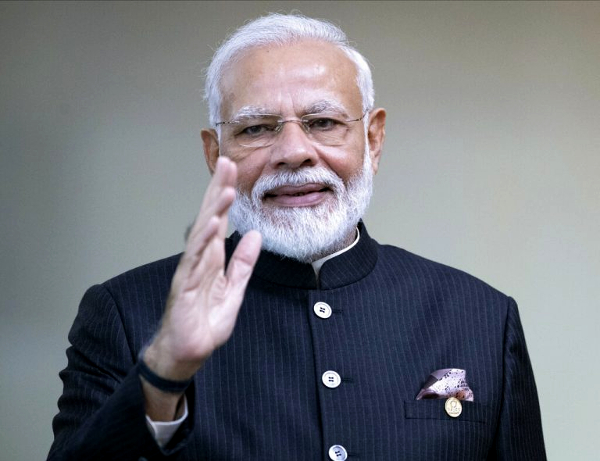
On March 1, 2026, Prime Minister Narendra Modi marked a significant milestone in Tamil Nadu’s development journey by inaugurating, dedicating to the nation, and laying the foundation stone for infrastructure projects worth over ₹4,400 crore in Madurai. The announcement signals a major boost to connectivity, logistics, manufacturing, and regional growth across the state.
Addressing a large gathering in the historic city of Madurai, the Prime Minister described infrastructure development not merely as construction activity, but as a tool for empowerment. Better roads, faster trains, modern stations, and improved logistics, he noted, directly translate into higher incomes for farmers, smoother pilgrim travel, safer commuting, and expanded business opportunities.
Transforming Tamil Nadu’s Highway Network
Over the past twelve years, the Government of India has invested heavily in Tamil Nadu’s highway infrastructure. Since 2014, more than 4,000 kilometres of highways have been constructed across the state, significantly reducing travel time and strengthening economic corridors.
Among the major announcements was the four-laning of the Marakkanam–Puducherry highway section, a project valued at over ₹2,100 crore. This corridor is expected to strengthen coastal tourism and enhance trade connectivity along the eastern seaboard.
Another critical project is the Paramakudi–Ramanathapuram four-laning stretch, involving an investment of over ₹1,800 crore. This route is vital for pilgrims traveling to Rameshwaram and Dhanushkodi, while also facilitating the smoother movement of agricultural produce and marine products — two key contributors to the regional economy.
Indian Railways: A Decade of Modernization
The Prime Minister highlighted what he described as a “historic transformation” of Indian Railways over the last decade. Tamil Nadu, he emphasized, stands as a strong example of this shift toward modernization and efficiency.
Railway budget allocation to the state has reportedly increased nearly nine-fold — from an average annual allocation of ₹880 crore between 2009 and 2014 to ₹7,600 crore for 2026–27. In practical terms, this has translated into:
- Over 1,300 kilometres of new railway tracks laid
- 97% electrification achieved
- Hundreds of flyovers and underpasses built to enhance safety and reduce congestion
A landmark achievement mentioned was the inauguration of the new Pamban Bridge last year — India’s first vertical lift railway sea bridge — improving connectivity to Rameshwaram and strengthening tourism and logistics in the region.
Tamil Nadu is also emerging as a manufacturing hub for modern trains. Currently, nine Vande Bharat and nine Amrit Bharat trains operate in the state, with coaches manufactured at the Integral Coach Factory in Chennai under the ‘Make in India’ initiative. This, the Prime Minister noted, strengthens self-reliance while generating employment for the youth.
Modern Railway Stations and Urban Connectivity
Under the Amrit Bharat Station Scheme, 77 railway stations in Tamil Nadu are undergoing redevelopment to combine modern amenities with local architectural identity. Eight newly redeveloped stations were inaugurated during the event.
The dedication of the Chennai Beach–Chennai Egmore fourth railway line is expected to ease congestion and significantly benefit thousands of daily commuters in the Chennai metropolitan region.
In addition, new FM relay transmitters of Akashvani were inaugurated in Kumbakonam, Yercaud, and Vellore, enhancing regional broadcasting reach and public communication infrastructure.
Budget 2026: Tamil Nadu in Focus
The 2026 Union Budget continues to prioritize Tamil Nadu’s infrastructure growth. The Prime Minister highlighted proposals for high-speed rail corridors connecting Bengaluru–Chennai and Chennai–Hyderabad, projects that could redefine regional mobility and economic integration in South India.
Importantly, Tamil Nadu has been positioned as part of the proposed Rare Earth Corridors, aimed at promoting advanced manufacturing, research, and technology development. With global demand for rare earth materials rising — especially for electronics, renewable energy systems, and defense technologies — this strategic positioning could strengthen India’s industrial competitiveness.
Heritage, Ecology, and Industrial Growth
Beyond transport infrastructure, the government announced plans to develop Adichanallur into a global heritage destination, preserving Tamil Nadu’s rich civilizational legacy.
Eco-tourism initiatives around Lake Pulicat and Podhigai Malai are also planned, balancing employment generation with environmental conservation. Additionally, nearly 200 industrial clusters are set to be identified and supported nationwide, with Tamil Nadu expected to benefit significantly given its strong manufacturing base.
A Vision for 2047
The broader context of these announcements ties into India’s vision of becoming a developed nation by 2047. The Prime Minister emphasized that Tamil Nadu will play a decisive role in this journey, given its industrial capacity, skilled workforce, maritime access, and technological potential.
Concluding his address, he reaffirmed the government’s commitment to inclusive development and stated that the collective goal remains clear: a developed Tamil Nadu contributing to a developed India.
Source: PIB
You may also like
-
Tulaipanji Rice: West Bengal’s Aromatic Heritage Grain from the Dinajpur Region
-
Profitable Banks, Growing Savings and Timely EMI Repayments: Signs of a Healthy and Alive Indian Economy
-
Oil India Signs Contract for 272 Sq Km Coal Bed Methane Block in Singrauli, Expanding India’s Domestic Natural Gas Exploration
-
CONCOR Facilitates First Liquid Glucose Export from Kanpur to Vietnam, Strengthening India’s Agri-Export Logistics
-
SAIL Awards ₹854.57 Crore Pellet Plant Contract to SEPC for IISCO Steel Plant Expansion in West Bengal
