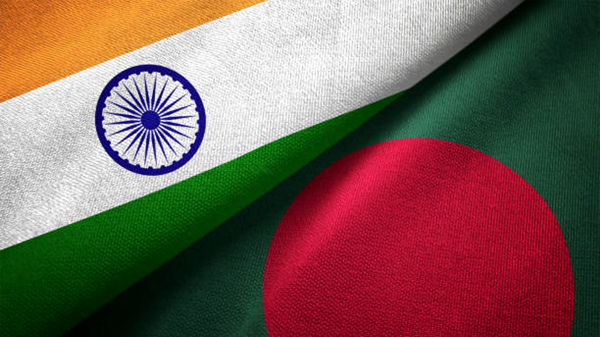
India on Monday began the reconstruction a 300-year-old temple, Sree Sree JoyKali Matar Temple, in Bangladesh’s northern Natore district. The reconstruction is taking place by Indian grant assistance of Bangladeshi Taka 97 lakh and a total cost of Bangladeshi Taka of 1.33 crore under the High Impact Community Development Project (HICDP) Scheme of Government of India.
The event was virtually inaugurated by Bangladesh’s State Minister for Information & Communication Technology Zunaid Ahmed Palak, Indian High Commissioner Riva Ganguly Das, Member of Parliament Shafiqul Islam and Mayor of Natore Uma Choudhury Jolly.
Speaking at the event, the Indian envoy said, “The High Commission of India is pleased to have supported the renovation of one of the oldest temples of Bangladesh, the Sree Sree Joy Kali Matar Temple in Natore. India continues to be a committed partner of Bangladesh in the preservation of our shared heritage and culture which further strengthens our people-to-people relations.”
The Bangladeshi Minister said, “We will build Natore as a role model of development. In this endeavour, our friendly neighbour India will continue to stand by our side in the coming days.”
Sree Sree JoyKali Matar temple is one of the oldest temples situated in Natore, Bangladesh and was built in the beginning of 18th century by Dayaram Roy, Dewan of Queen Bhahani of Natore and the founder of Dighapatia Royal Family. The compound of the temple also houses Lord Shiva temple.
Durga and Kali Puja are celebrated every year at the temple.
India is also funding construction of Ramakrishna Temple and restoration of Sree Sree Anandomoyee Kali Mata Mandir in the country.
Source: DNA India
You may also like
-
Simhala or Simhaladvipa in the Mahabharata: The Island Kingdom of Sri Lanka
-
Lanka in the Mahabharata: The Island Kingdom Beyond India’s Southern Shore
-
Cina in the Mahabharata: The Trans-Himalayan World at the Edge of the Epic’s Geography
-
India and France Sign Agreement to Preserve and Digitise Ancient Indian Manuscripts
-
Huna in the Mahabharata: Nakula’s Western Campaign, the Harahunas and Central Asia’s Changing Frontiers
