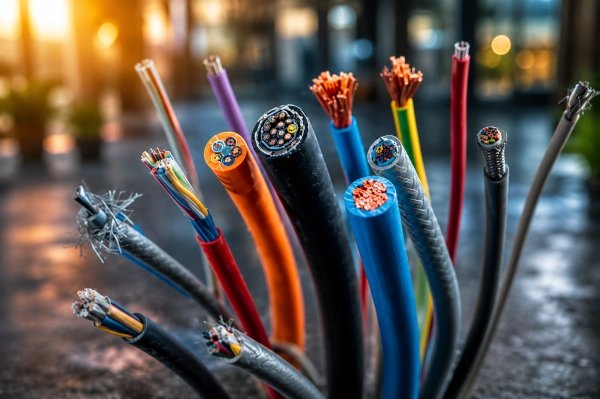
India’s largest cement manufacturer, UltraTech Cement Limited, has formally entered the wires and cables manufacturing business, commencing commercial production at its new facility at Jhagadia in Bharuch district, Gujarat, on September 1, 2026. The diversification takes the Aditya Birla Group company beyond its traditional cement and construction-material businesses and into one of India’s fastest-growing electrical building-product segments.
UltraTech disclosed to the stock exchanges that the newly commissioned facility has an installed capacity of 1,098,000 kilometres of house wires and light-duty cables. The plant forms part of the company’s approximately ₹1,800-crore investment programme announced in February 2025 to establish a significant presence in the wires and cables industry.
The start of commercial production is also earlier than the timetable originally outlined when UltraTech approved the investment. The company had initially expected the Bharuch plant to be commissioned by December 2026, while its April 2026 results subsequently indicated commissioning during the third quarter of FY2026-27. Production beginning on September 1 therefore brings the new business into operation ahead of those earlier targets.
Initial Capacity of Nearly 11 Lakh Kilometres
UltraTech’s September 1 regulatory filing identifies the Jhagadia facility’s current installed capacity as 10.98 lakh kilometres, or 1.098 million kilometres, with the initial product range consisting of house wires and light-duty cables.
This represents the first operational stage of a much larger wires-and-cables strategy. When UltraTech presented its business plan to investors in February 2025, it envisaged capacity of around 35–40 lakh kilometres at Jhagadia, together with a broader portfolio covering wires as well as low-tension, control, instrumentation, flexible and rubber cables.
The difference between those figures is important. The 10.98-lakh-kilometre number represents the installed capacity disclosed for the facility that has now entered production, whereas the 35–40-lakh-kilometre figure was the broader capacity envisaged in UltraTech’s original business plan. The company has not stated in its September 1 filing that the entire originally envisaged capacity has already been commissioned.
This leaves considerable potential for further product and capacity expansion as UltraTech builds its presence in the electrical-products market.
₹1,800 Crore Committed to the New Business
UltraTech’s Board approved an investment of approximately ₹1,800 crore over two years in February 2025 to establish the wires and cables operation. The investment was to be funded through a combination of internal accruals and borrowings and implemented through the company’s Building Products Division.
From the outset, UltraTech described the move not as an unrelated diversification but as an extension of its position within the construction value chain. The company already supplies cement, ready-mix concrete, white cement, wall-care products, waterproofing solutions, mortars and several other building products, while its distribution ecosystem reaches home builders, contractors and construction professionals across India.
Wires and cables allow UltraTech to participate in another substantial component of expenditure involved in constructing homes, commercial buildings and infrastructure. Instead of supplying mainly materials used to create the physical structure of a building, the company can now also participate in the electrical infrastructure installed inside it.
UltraTech has said that the strategy is intended to strengthen its position as a comprehensive building-solutions provider while increasing its share of spending by individual customers undertaking construction projects.
Jhagadia Becomes UltraTech’s New Electrical Manufacturing Base
The choice of Jhagadia in Gujarat’s Bharuch district places the plant within one of India’s established industrial manufacturing belts. Bharuch and the surrounding region host substantial chemical, engineering, electrical, pharmaceutical and industrial production capacity and benefit from access to major roads, ports and western India’s large consumer markets.
The location also provides access to the industrial ecosystem required for cable manufacturing, particularly materials, engineering services, logistics and skilled manpower.
Manufacturing electrical wires and cables at very high volumes requires specialised equipment for conductor drawing, insulation, extrusion, cabling, testing and packaging. Quality control is particularly important because electrical products installed inside homes and commercial buildings must provide reliable insulation, conductor performance and fire safety over long service lives.
For UltraTech, establishing manufacturing capability at Jhagadia therefore represents a move into a product category with manufacturing processes and standards considerably different from those associated with cement.
A Market Expected to Grow Around 13% Annually
UltraTech entered the sector after identifying wires and cables as one of the faster-growing components of India’s construction and infrastructure economy.
In its original investor presentation, the company estimated that the Indian wires and cables industry could grow at approximately 13% annually over the following five years. It identified urban and rural housing construction, higher electricity consumption in homes, private capital expenditure, infrastructure projects and emerging applications such as renewable energy and electric-vehicle charging as important drivers of future demand.
UltraTech’s presentation showed the Indian wires market expanding from approximately ₹12,000 crore in FY2019 to ₹26,700 crore in FY2024, while the cables market increased from around ₹40,000 crore to ₹71,000 crore during the same period, based on external consultant estimates used by the company.
This growth reflects the increasing quantity of electrical infrastructure required across the economy. New houses need wiring, but so do factories, offices, railways, metro systems, airports, solar plants, data centres, electric-vehicle charging stations and power-distribution networks.
As India expands both physical infrastructure and electricity consumption, the amount and sophistication of cabling required across these sectors is also increasing.
Housing Creates a Natural Link With UltraTech’s Existing Business
Residential construction is especially relevant to UltraTech because the company already has extensive relationships with the individual-home-building market.
A family building a home typically purchases cement, steel, waterproofing products, pipes, sanitary fittings, electrical products, plywood and several other categories during different stages of construction. UltraTech has spent years attempting to position its retail network as a channel through which customers can access a larger portion of those requirements.
The company’s UltraTech Building Solutions network was created as a one-stop building-solutions platform for retail customers. Its February 2025 presentation reported more than 4,400 UltraTech Building Solutions outlets at that time, while UltraTech’s broader current distribution network extends to more than 1.5 lakh channel partners across India.
That existing reach represents one of UltraTech’s most important potential advantages as it enters cables and wires. Unlike a new electrical brand that must create a nationwide dealer network from the beginning, UltraTech already has extensive relationships with retailers, builders, contractors and individual home builders.
The company explicitly identified its brand recognition, distribution network, B2B relationships and access to end users as advantages it intends to leverage in the new segment.
Competition With Established Indian Cable Manufacturers
UltraTech’s entry places it in competition with an established group of Indian electrical-product manufacturers, including companies such as Polycab India, KEI Industries, RR Kabel, Havells India and Finolex Cables.
The sector has attracted investment because formalisation, electrification and infrastructure development have been shifting demand towards larger branded manufacturers capable of offering certified and specialised products.
UltraTech will nevertheless have to build a new brand position in a market where existing companies possess decades of technical knowledge, electrical-distribution relationships and product recognition.
The company believes there is sufficient room for another large organised player because the overall market is expanding rapidly. When announcing its strategy in 2025, UltraTech said it viewed the wires and cables business as an adjacent category rather than a replacement for its core cement operations.
The company also projected attractive economics for the investment, including an indicative internal rate of return of around 25% and return on capital employed above 20%, although these figures were management projections rather than achieved financial returns.
From House Wires Towards a Broader Cable Portfolio
The plant has begun commercial production with house wires and light-duty cables, but UltraTech’s previously announced strategy is considerably broader.
Its 2025 plans included low-tension cables, control cables, instrumentation cables, flexible cables and rubber cables in addition to conventional wires. These categories serve very different applications across residential, commercial and industrial markets.
House wires provide electrical distribution within residential and commercial properties, while low-tension cables can support wider power-distribution requirements. Control and instrumentation cables are used extensively in factories, process industries, energy installations and automation systems, where reliable transmission of electrical signals is critical.
Expanding into these categories would give UltraTech access to industrial and infrastructure demand in addition to the home-building market that provides the most obvious connection with its cement business.
The Jhagadia plant could therefore develop progressively from a residential electrical-products facility into a broader cable-manufacturing platform if UltraTech proceeds with the wider product strategy originally outlined.
Infrastructure and Renewable Energy Driving Cable Demand
India’s infrastructure expansion provides another major source of potential demand. Metro rail systems, airports, highways, factories, commercial developments and railway projects require enormous quantities of power, signalling, control and communications cabling.
The energy transition is creating additional applications. Solar farms require substantial DC and AC electrical connectivity, wind-power installations use specialised cables, and battery-storage facilities need power and control systems capable of operating under demanding conditions.
Electric-vehicle charging infrastructure similarly requires cabling both within charging equipment and throughout the electricity-distribution networks supplying charging locations.
These newer applications mean that the wires and cables market is no longer tied principally to conventional housing and industrial construction. It increasingly forms part of the infrastructure required for electrification, digitalisation and renewable-energy development.
UltraTech identified these emerging categories as important reasons for entering the sector when it approved the investment.
UltraTech Transforming Into a Broader Building-Solutions Company
The diversification also illustrates a larger transformation underway at UltraTech. While cement remains overwhelmingly its core business, the company has gradually expanded into products surrounding the construction process.
UltraTech entered ready-mix concrete decades ago, developed wall-care and specialised building products, established its Building Solutions retail network and subsequently expanded its portfolio of waterproofing, adhesives, mortars and other construction materials.
The company says this evolution reflects its intention to capture a larger share of India’s built environment rather than remain dependent exclusively on the sale of cement. Its recent corporate positioning increasingly describes UltraTech as a building-solutions powerhouse rather than solely as a cement producer.
Wires and cables represent one of the most significant steps yet in that transformation because they take UltraTech into a distinct manufacturing industry with different competitors, technologies and distribution dynamics.
Production Begins Ahead of Original December 2026 Target
The September 1 commissioning is noteworthy because UltraTech originally expected the new plant to begin operations by December 2026. In April this year, the company reported that civil work was progressing, critical orders had been placed and the management team for the new business was already operational, while reiterating that commissioning was expected during FY2026-27.
With commercial production now underway, the project has moved from a diversification plan into an operating manufacturing business.
The immediate challenge will shift from construction and commissioning towards product qualification, distribution, brand building and utilisation of the new capacity. UltraTech will also have to demonstrate that its enormous presence in construction materials can translate effectively into an electrical-products category dominated by specialist companies.
The initial 10.98-lakh-kilometre installed capacity gives the company significant production capability from the outset, while its earlier plan for 35–40 lakh kilometres of capacity indicates the much larger scale to which the business was originally intended to develop.
You may also like
-
India’s Inland Waterway Cargo Movement Reaches 218 Million Tonnes, Surpasses 2030 Target Four Years Early
-
SberIndia Partners with Space 1 to Develop Russian-Indian Cooperation Center in New Delhi
-
GRSE Signs ₹1,032 Crore Contract with ONGC to Build Four Hybrid Platform Supply Vessels
-
Mumbai-Based Kusumgar Signs Long-Term Aerospace Supply Agreement with France’s Safran
-
QNu Labs Secures ₹150 Crore Govt Support to Develop Indigenous Quantum Security and Sensing Technologies
