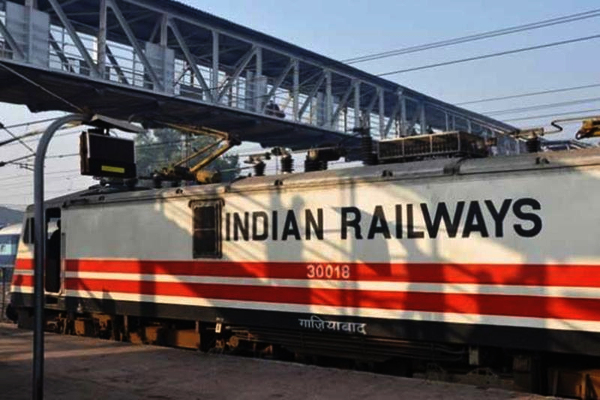
Indian Railways has approved a major ₹448-crore electric traction upgrade for two important railway corridors in South India, strengthening the backbone of passenger and freight movement across Telangana and Karnataka. The approved works cover the Mahbubnagar–Secunderabad–Medchal section of South Central Railway and the Bengaluru–Tumkur section of South Western Railway. Both routes are economically important, heavily used and directly connected to larger national corridors that carry people, goods, industrial supplies and long-distance traffic across southern and central India.
The project is focused on upgrading the existing 1×25 kV electric traction system to a modern 2×25 kV system. In simple terms, this means trains will receive a stronger, more stable and more efficient power supply. A railway line with better traction power can handle heavier trains, support higher traffic density and improve reliability during regular operations. For passengers, this can translate into smoother services and better punctuality. For industries, it can support faster movement of freight and stronger logistics connectivity.
The larger investment has two parts. The Mahbubnagar–Secunderabad–Medchal section has received approval for work worth ₹285.01 crore. This stretch is part of a major High-Density Network route and lies on the Dharmavaram–Dhone–Mahbubnagar–Secunderabad–Medchal–Mudkhed–Indore–Ajmer corridor. It is a significant rail artery because it links southern routes with central and northern India. Upgrading this section will strengthen long-distance passenger movement and improve the movement of goods through Telangana’s rail network.
The Bengaluru–Tumkur section has received approval for a ₹162.57-crore upgrade. This is one of the busiest railway corridors in Karnataka and is directly linked to the Bengaluru metropolitan region. The section forms part of the strategically important Highly Utilised Network Route-10, which connects Pune, Hubballi, Chikjajur, Birur, Tumkur, Bengaluru, Salem and Kanniyakumari. This makes it a crucial route for regional travel, intercity services, industrial freight and southern rail connectivity.
The Bengaluru–Tumkur corridor is especially important because Bengaluru’s growth has pushed transport demand far beyond the city centre. Tumkur and adjoining districts are increasingly tied to Bengaluru’s economic zone through daily travel, manufacturing, education, warehousing and logistics. A stronger railway system on this route can ease pressure on road transport and support more efficient movement between the capital city and surrounding growth centres.
The shift to 2×25 kV traction has technical importance. Electric trains require continuous and reliable power through overhead equipment. On busy corridors, the power demand rises when more trains operate, when freight loads become heavier and when passenger services become longer. A 2×25 kV system improves voltage stability and power efficiency across the route. It helps reduce operational strain and gives the railway network greater capacity to absorb future traffic.
This kind of upgrade also supports India’s freight ambitions. Railways remain one of the most efficient modes for moving bulk goods, industrial inputs, agricultural produce, cement, steel, coal, containers and manufactured products. Freight trains need dependable traction power, especially on busy corridors where passenger and goods trains share track capacity. By strengthening traction infrastructure, Railways is preparing these routes for heavier loads and higher traffic volumes.
For passengers, the benefits will come through improved operational reliability. A stronger power system helps maintain smoother train movement, reduces stress on traction infrastructure and supports better scheduling. On corridors that serve both metropolitan traffic and long-distance trains, even small gains in efficiency can improve the overall movement of services. This is important for commuters, students, workers, traders and families who depend on rail travel across Karnataka and Telangana.
The upgrade also reflects the wider transformation taking place in Indian Railways. The focus is moving beyond laying tracks alone. Modern rail expansion now includes electrification, station redevelopment, signalling improvement, dedicated freight planning, safety systems, high-capacity power supply and better integration with economic corridors. Traction upgradation is part of this deeper infrastructure approach, where the invisible systems behind train movement receive as much attention as visible station and track projects.
The Telangana section will strengthen a corridor that handles significant passenger and freight traffic. Secunderabad is one of the major railway hubs of South India, and its connectivity with Mahbubnagar and Medchal supports both regional and long-distance movement. As rail traffic grows, the power system must be capable of supporting more trains without compromising stability. The sanctioned upgrade addresses this requirement directly.
The Karnataka section has its own strategic value. Bengaluru’s railway network is under constant pressure because the city is a technology, manufacturing, education and services hub. The Bengaluru–Tumkur route supports metropolitan expansion and connects with wider routes running towards Hubballi, Pune, Salem and Kanniyakumari. Upgrading this section gives the region stronger rail capacity for the coming years.
The ₹448-crore approval should be seen as an investment in capacity, reliability and economic flow. Railway infrastructure works often create their biggest impact quietly, by reducing bottlenecks, improving scheduling, strengthening freight movement and making daily travel more dependable. These traction upgrades will help two important southern corridors carry the next phase of passenger and industrial growth with greater efficiency.
As India expands its rail network for a faster and more connected economy, projects like this become essential building blocks. The Mahbubnagar–Secunderabad–Medchal and Bengaluru–Tumkur upgrades will support regional mobility, industrial supply chains, freight movement and metropolitan connectivity. The result will be a stronger railway backbone for South India, built around better power, higher capacity and smoother train operations.
You may also like
-
Vietnam Expands Business and Investment Links Across India’s Major Economic Hubs
-
India’s GST Collections Rise 14.7% to ₹2.04 Lakh Crore in September
-
SberIndia Lending to Indian Companies Quadruples as India-Russia Trade Finance Expands
-
India Manufacturing PMI Rises to Seven-Month High of 55.1 in September
-
Nothing and Optiemus Announce $100 Million Joint Venture to Expand Smartphone Manufacturing in India
