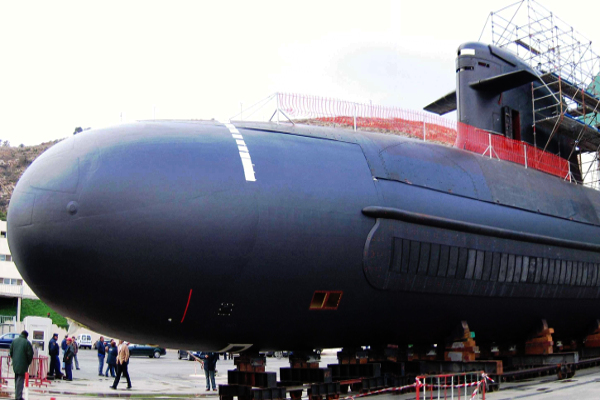
India’s long-delayed effort to acquire six advanced conventional submarines has entered one of its most important stages, with the approximately ₹70,000-crore Project 75(I) moving toward consideration by the Cabinet Committee on Security (CCS).
The programme is expected to see Mazagon Dock Shipbuilders Limited (MDL) build six German-designed submarines in India in partnership with ThyssenKrupp Marine Systems (TKMS). The new boats will feature an advanced fuel-cell-based Air Independent Propulsion system and are intended to substantially strengthen the Indian Navy’s conventional underwater warfare capability.
Recent reports indicate that the proposal is expected to come before the CCS following completion of several layers of technical, commercial and financial scrutiny. However, as of August 21, 2026, the government has not publicly announced final CCS approval for the acquisition. The programme should therefore be described as moving toward final approval rather than as an already sanctioned contract.
Six Advanced Conventional Submarines
Project 75(I), commonly known as P-75(I), calls for the indigenous construction of six modern diesel-electric attack submarines equipped with Air Independent Propulsion.
The Ministry of Defence formally issued the Request for Proposal for the project in July 2021 under India’s Strategic Partnership model. The original requirement included contemporary sensors and weapons, advanced torpedoes, modern missiles, countermeasure systems, shore support equipment, training, spares and engineering support.
At the centre of the requirement is a fuel-cell-based AIP system.
Conventional diesel-electric submarines normally have to periodically approach the surface or raise a snorkel to run diesel engines and recharge their batteries. This increases the possibility of detection by enemy aircraft, ships, satellites and other surveillance systems.
An AIP-equipped submarine can remain submerged for significantly longer periods while operating at low speeds, allowing it to preserve stealth during patrols, surveillance missions or when waiting in an ambush position.
That requirement became one of the defining technical elements of the P-75(I) competition.
MDL-TKMS Partnership Emerges as the Path Forward
The programme has gradually converged around a partnership between India’s state-owned Mazagon Dock Shipbuilders Limited and Germany’s TKMS.
TKMS confirmed in September 2025 that it and MDL had entered official contract negotiations with the Indian procurement authorities for six German-designed submarines under P-75(I). The German company also said that work under the programme’s Concept Design Agreement had been completed by August 31, 2025.
TKMS subsequently confirmed in 2026 that it remained in final contract negotiations with India for construction of the six submarines.
Under the proposed arrangement, the submarines would be built at MDL in India rather than imported as completed vessels.
TKMS would provide the submarine design, critical technologies and specialised systems while supporting the transfer of technology needed to establish the manufacturing capability in India.
This follows the fundamental structure envisaged when the Ministry of Defence launched P-75(I) under the Strategic Partnership model.
The government said in 2021 that the selected foreign original equipment manufacturer would help its Indian partner establish dedicated submarine manufacturing facilities while transferring submarine design and other technologies.
The Cost Has Grown Since the Programme Began
The current estimated programme value of around ₹70,000 crore is substantially higher than estimates made when the acquisition process began.
When the Defence Acquisition Council cleared the issue of the RFP in June 2021, the Ministry of Defence estimated the programme at approximately ₹43,000 crore.
The increase reflects the passage of several years as well as the complexity of the final package, imported technologies, weapons and sensor requirements, technology transfer, infrastructure, training and long-term support.
Recent reports place the prospective acquisition at approximately ₹70,000 crore. The final contract value could nevertheless depend on the equipment configuration and the outcome of negotiations.
P-75(I) Is More Than a Submarine Purchase
The programme has always been intended to create a domestic industrial capability rather than simply supply six submarines.
When the Ministry of Defence issued the RFP, it specifically identified P-75(I) as a major initiative to improve India’s indigenous submarine design and construction capabilities.
The foreign partner is expected to transfer technologies and help create manufacturing infrastructure that India can use throughout the life of the programme.
That industrial objective could become as important as the six submarines themselves.
Modern submarines are among the most complex military platforms to manufacture. Construction requires specialised expertise in pressure-hull fabrication, welding, hydrodynamics, acoustic management, propulsion, combat-management systems, sensors, weapons integration and underwater engineering.
Maintaining continuous submarine construction allows those skills to remain within the country’s industrial base instead of disappearing between individual procurement programmes.
India already possesses considerable experience in this field. MDL constructed the German-designed Shishumar-class Type 209/1500 submarines under technology transfer and later built the six Kalvari-class submarines under Project 75 with France’s Naval Group.
P-75(I) would represent another major technological step.
Fuel-Cell AIP Could Transform Conventional Operations
The TKMS proposal is particularly significant because Germany has extensive operational experience with fuel-cell AIP technology.
Fuel-cell systems generate electricity through an electrochemical reaction rather than conventional combustion. Their low acoustic signature makes them particularly attractive for submarine operations where avoiding detection remains critical.
A submarine equipped with AIP can remain below the surface much longer than a traditional diesel-electric submarine operating only on batteries.
This does not turn a conventional boat into a nuclear-powered submarine. Nuclear submarines retain much greater sustained speed and virtually unlimited propulsion endurance.
However, AIP can give a conventional submarine formidable endurance when operating slowly and silently in restricted maritime areas.
That combination is particularly useful in environments such as the northern Indian Ocean, Arabian Sea, Bay of Bengal and approaches to critical maritime chokepoints.
A Major Capability for Sea-Denial Operations
The six P-75(I) boats are expected to perform a broad range of missions.
They could undertake anti-surface warfare against hostile warships, anti-submarine warfare, intelligence gathering, surveillance, special operations support and covert patrols.
Their greatest strength would remain their ability to remain hidden.
A modern conventional submarine positioned along an adversary’s maritime route can force surface ships to devote significant resources to anti-submarine warfare even when the submarine’s location remains unknown.
This makes submarines powerful instruments of sea denial.
For India, strengthening this capability has become increasingly important as the Indian Ocean witnesses a greater presence of extra-regional navies and increasingly sophisticated underwater platforms.
Modern Weapons and Sensors Form Part of the Requirement
P-75(I) is not simply an AIP programme.
The Ministry of Defence’s original requirements specify contemporary equipment, weapons and sensors, including advanced torpedoes, modern missiles and state-of-the-art countermeasure systems.
These systems will determine much of the submarine’s real combat capability.
Modern sonar suites must detect targets while minimising the submarine’s own acoustic emissions. Combat-management systems combine information from sonar and other sensors before generating firing solutions.
Electronic surveillance equipment can monitor hostile emissions, while sophisticated decoys and countermeasures help the submarine defeat incoming weapons.
The torpedo and missile package will similarly influence the boat’s ability to engage both surface and underwater targets at distance.
Final weapon and sensor configurations will become clearer once contract negotiations conclude.
CCS Approval Would Clear a Major Remaining Hurdle
The Cabinet Committee on Security sits at the highest level of India’s national security decision-making structure and considers major defence acquisitions with substantial strategic and financial implications.
Moving P-75(I) toward CCS consideration therefore represents a critical stage after years of evaluation and negotiation.
The Finance Ministry has reportedly already cleared the approximately ₹70,000-crore proposal, paving the way for the case to proceed toward the CCS.
Once final government approval is received, attention would shift toward concluding the contract, finalising workshare arrangements and launching detailed production preparations.
Even after contract signature, submarine construction is inherently a long-term process. Design adaptation, technology transfer, infrastructure preparation, procurement of long-lead components, hull fabrication, integration and extensive harbour and sea trials can take several years.
P-75(I) is therefore principally about securing India’s conventional submarine strength for the next several decades.
Strengthening India’s Submarine-Building Ecosystem
One of the most important consequences of P-75(I) could be continuity for India’s submarine industrial base.
The Ministry of Defence envisaged the programme from the beginning as a mechanism for creating indigenous capabilities through technology transfer and high domestic participation.
Its 2019 Expression of Interest stated that all six submarines would be built in India and highlighted an option for additional submarines under the programme. The government also said the project was expected to support Indian suppliers and MSMEs involved in submarine systems, components and associated equipment.
Those industrial effects could extend beyond P-75(I).
India is simultaneously developing greater indigenous capability in submarine design, propulsion, sensors, weapons and underwater systems. Experience accumulated through P-75(I) could therefore complement future Indian-designed submarine programmes.
A Programme Entering Its Decisive Phase
Project 75(I) has travelled a long path.
The Defence Acquisition Council approved indigenous construction of six submarines under the Strategic Partnership model in January 2019. The Ministry of Defence issued the RFP in July 2021, and TKMS and MDL formally entered contract negotiations in September 2025.
The programme is now approaching what could become its most consequential decision point.
Once CCS grants final approval and the negotiations lead to contract signature, MDL and TKMS will begin one of India’s largest naval construction programmes.
For the Indian Navy, the immediate result would eventually be six highly capable AIP-equipped conventional submarines.
P-75(I) carries a wider ambition which is to deepen domestic mastery of submarine construction, absorb advanced German technologies and ensure that India possesses the industrial infrastructure required to design, build, maintain and upgrade increasingly sophisticated underwater combat platforms in the decades ahead.
You may also like
-
Indian Semiconductor Companies Propose New Manufacturing and Chip Design Investments in Madhya Pradesh
-
CSIR-CRRI Partners with Industry to Develop Advanced Indigenous Airport Runway and Pavement Materials
-
Paras Semiconductors Secures 43 Acres in Madhya Pradesh for Proposed ₹6,200 Crore Advanced Chip Packaging Facility
-
Indian Army Special Forces Depart for Indonesia for Exercise Garuda Shakti 2026
-
India to Train 600 Nigerian Army Soldiers in Specialised Jungle and Mountain Warfare
%20Moves%20Toward%20CCS%20Approval%20as%20India%20Closes%20In%20on%20Six%20German-Designed%20AIP%20Submarines)