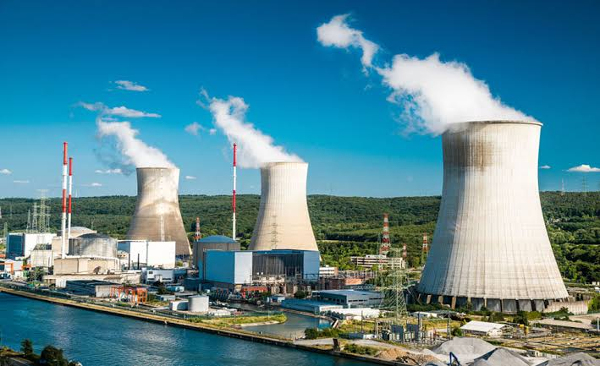
India’s indigenous nuclear manufacturing ecosystem has received another significant industrial boost, with Hyderabad-based MTAR Technologies Limited securing purchase orders worth ₹126.74 crore from Nuclear Power Corporation of India Limited (NPCIL) for specialised components required for the refurbishment of two Indian nuclear power reactors.
Critical Hardware at the Heart of a PHWR
Both RAPS-4 at Rawatbhata in Rajasthan and MAPS-2 at Kalpakkam in Tamil Nadu are 220 MWe Pressurised Heavy Water Reactors (PHWRs) operated by NPCIL. RAPS-4 entered commercial operation in December 2000, while MAPS-2 has been operating since March 1986. NPCIL’s current operating data confirms that both units remained operational during the April–July period of FY2026-27.
Coolant channels are among the most important precision-engineered assemblies in an Indian PHWR. The reactor contains horizontal channels through which nuclear fuel and pressurised heavy-water coolant are accommodated. These assemblies therefore have to maintain extremely demanding dimensional, mechanical and material standards while operating for long periods under high temperature, pressure and radiation conditions.
MTAR’s nuclear manufacturing portfolio includes coolant channel assemblies comprising end fittings, liner tubes, sealing plugs and shielding plugs. The company has developed specialised manufacturing capabilities for components that require very high positional and dimensional accuracy, and it supplies such hardware both for new PHWR construction and for refurbishment and maintenance of existing reactors.
The latest NPCIL contract should therefore be seen as more than an ordinary industrial fabrication order. Reactor refurbishment involves the replacement or renewal of selected systems and components so that ageing nuclear units can continue to operate safely and reliably within the regulatory framework. India has accumulated considerable indigenous experience in such work, including the technically demanding En-Masse Coolant Channel Replacement, or EMCCR, process, in which all coolant channels of a PHWR can be removed and replaced.
NPCIL has previously demonstrated this capability on several Indian reactors using domestically developed equipment, remote-handling techniques and manufacturing expertise. Its experience with coolant-channel replacement has progressively created an Indian industrial supply chain capable of producing highly specialised components that were once technologically difficult to manufacture domestically. NPCIL’s own technical documentation describes coolant-channel replacement as an important part of PHWR ageing management and life-extension capability.
MTAR’s Nuclear Order Book Crosses ₹775 Crore
The importance of the latest contract is also reflected in the rapid growth of MTAR’s civil nuclear business. Following the NPCIL order, Managing Director Parvat Srinivas Reddy said MTAR’s closing nuclear order book had risen to more than ₹775 crore, the highest level recorded in the company’s history.
The company has received several significant civil nuclear orders over recent months and expects continued opportunities as India’s nuclear construction, refurbishment and life-extension programmes expand. MTAR has been associated with India’s Department of Atomic Energy ecosystem for more than four decades and describes itself as a long-standing supplier to NPCIL.
MTAR’s involvement goes well beyond coolant channels. Its nuclear portfolio includes fuelling-machine heads, bridge-and-column assemblies, control plugs, grid plates, water-lubricated bearings and other precision systems used in reactor installations. The company is also working with the Bhabha Atomic Research Centre on a Channel Health Assessment System, demonstrating its gradual movement from build-to-print manufacturing toward more complex engineering and system-development activities.
RAPS-4 and MAPS-2 Highlight India’s Reactor Life-Cycle Capability
The selection of RAPS-4 and MAPS-2 also illustrates an increasingly important part of India’s nuclear strategy: maintaining and modernising the country’s existing reactor fleet while simultaneously constructing new generating capacity.
MAPS-2 represents an earlier generation of India’s indigenous PHWR programme and began commercial operation in 1986. RAPS-4, which began commercial operation in 2000, belongs to the later standardised 220 MWe PHWR fleet. The requirement for precision refurbishment components across reactors of different vintages demonstrates the need for a domestic manufacturing base capable of supporting nuclear plants over operating lives extending across several decades.
The current purchase orders should not, however, be interpreted as meaning that both reactors have already entered immediate refurbishment shutdowns. NPCIL’s latest generation statistics show RAPS-4 and MAPS-2 operating during FY2026-27. The MTAR contracts, whose execution extends to May 2028, relate to the supply of assemblies required for planned reactor refurbishment activities.
Building an Indigenous Nuclear Manufacturing Base
India’s civil nuclear programme is now entering a substantially larger phase. NPCIL has stated that the national objective is to reach 100 GW of nuclear generating capacity by 2047, with the corporation expecting to contribute up to around 54 GW and taking steps toward approximately 22 GW by 2031-32. Indigenous PHWRs are expected to provide an important part of this expansion.
Such growth will require far more than reactor construction. India will need a sustained industrial ecosystem capable of producing reactor components, maintaining existing stations, undertaking ageing-management programmes, manufacturing replacement equipment and supporting plants throughout operating lives that can span many decades.
Companies such as MTAR therefore occupy a strategically important layer between India’s nuclear research establishments and the operating reactor fleet. Their ability to repeatedly manufacture nuclear-grade components to extremely tight tolerances reduces dependence on overseas suppliers while preserving manufacturing knowledge inside the country.
The ₹126.74-crore NPCIL order for RAPS-4 and MAPS-2 is relatively modest when viewed against the enormous capital cost of India’s nuclear expansion programme. Its strategic importance lies elsewhere. It represents the steady localisation of the highly specialised components required not merely to build Indian reactors, but to maintain, refurbish and extend the productive lives of those reactors using an increasingly indigenous industrial base.
As India’s nuclear programme expands from a relatively small fleet into one of the country’s major long-term sources of low-carbon baseload electricity, this specialised manufacturing capacity will become increasingly important. MTAR’s record ₹775-crore-plus civil nuclear order book is an indication that this industrial transformation is already beginning to gather momentum.
You may also like
-
India’s Economic Warfare Challenge: Strategic Autonomy, Energy Security and the Rise of a Global Power
-
India-US Trade Deal Stalemate: Why Washington’s Tariff Pressure Has Failed to Secure an Agreement
-
US Double Standards in Foreign Policy: 16 Recent Cases Involving India, Russia, China and Global Trade
-
India’s Arctic Energy Ambitions: Russian Oil, LNG and a New Sea Route to Indian Ports
-
India and Russia Explore Joint Icebreaker Construction as Maritime Industrial Cooperation Expands
