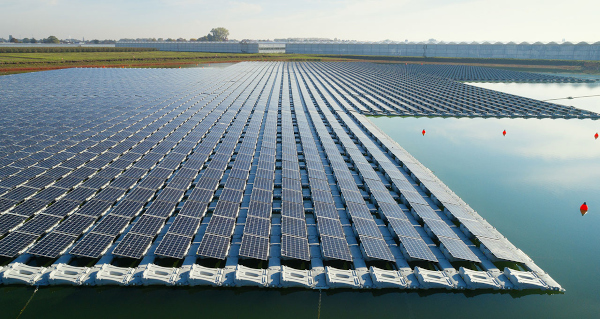
India’s solar journey has become one of the most remarkable energy transformations in the world. In just twelve years, the country’s solar capacity has risen from 2.8 gigawatts to 155 gigawatts. This is a leap of more than fifty-five times, showing how a once-small renewable segment has become a central pillar of India’s power strategy, climate action and energy security.
The rise of solar power reflects a deep national shift. India is no longer treating renewable energy as a supporting source of electricity. Solar energy has become part of the country’s development model. It powers homes, farms, industries, public buildings, railway stations, villages and large solar parks. It is helping India reduce dependence on fossil fuels while expanding electricity access across regions.
The scale of growth is important because solar energy directly supports India’s economic independence. Every unit of power generated from the sun reduces pressure on imported fuel, lowers exposure to global energy shocks and strengthens domestic energy planning. For a fast-growing economy, stable and affordable power is essential. Solar energy gives India a clean and scalable option that can grow with industrial demand, urban expansion and rural development.
The transformation also reaches ordinary households. Millions of homes are now connected to solar energy through rooftop systems, local installations and wider grid integration. This changes the relationship between citizens and electricity. A household that uses solar power becomes part of the national energy transition. Rooftop solar can reduce bills, improve energy confidence and make clean power visible in everyday life.
Agriculture is another major part of this story. Solar pumps, decentralised solar systems and renewable power for rural areas are changing the role of the Indian farmer. The farmer is no longer only a food producer. He is also becoming an energy participant. Solar power can reduce diesel use in irrigation, lower operating costs and create new income opportunities where surplus power is connected to the grid.
The rise from 2.8 GW to 155 GW also shows the success of policy direction, investment confidence and industrial scaling. Solar parks, rooftop schemes, domestic manufacturing, renewable purchase obligations, grid expansion and clean-energy finance have together created momentum. Large projects have brought scale, while smaller systems have taken solar closer to homes and farms.
This growth carries environmental value. Solar power helps reduce carbon emissions and supports India’s commitment to sustainable development. It gives the country a practical pathway to meet rising electricity demand while lowering the carbon intensity of growth. For a nation with a young population, expanding cities and a growing manufacturing base, clean power is both an environmental need and an economic asset.
India’s solar expansion also strengthens its global position. Countries around the world are searching for reliable models of clean-energy growth. India’s experience shows that renewable energy can be scaled in a large developing economy with massive demand, varied geography and complex infrastructure needs. This gives India diplomatic strength in climate negotiations and clean-energy partnerships.
The next phase will be equally important. India must continue expanding storage systems, solar manufacturing, grid stability, battery technology, recycling capacity and skilled manpower. Solar power grows stronger when generation is supported by storage, transmission and smart management. The future will depend on how well India connects solar capacity with round-the-clock reliability.
The solar rise also creates industrial opportunities. Domestic production of panels, cells, inverters, batteries, mounting systems and grid equipment can turn India into a clean-energy manufacturing hub. This will create jobs, reduce import dependence and support Make in India in the renewable sector. Energy transition can become an industrial mission as much as an environmental mission.
India’s jump from 2.8 GW to 155 GW is therefore more than a capacity statistic. It is a story of national ambition, policy execution, technological adoption and public participation. It shows a country using sunlight as a development resource. It shows farmers, households, industries and governments moving into a cleaner energy future together.
The sun has always been central to Indian civilisation. Today, it is becoming central to India’s modern economy. Solar power is lighting homes, energising farms, supporting industries and strengthening the country’s path toward energy independence. India’s solar revolution has moved from promise to performance, and its next chapter can make clean energy one of the strongest foundations of national growth.
You may also like
-
Vietnam Expands Business and Investment Links Across India’s Major Economic Hubs
-
India’s GST Collections Rise 14.7% to ₹2.04 Lakh Crore in September
-
SberIndia Lending to Indian Companies Quadruples as India-Russia Trade Finance Expands
-
India Manufacturing PMI Rises to Seven-Month High of 55.1 in September
-
Nothing and Optiemus Announce $100 Million Joint Venture to Expand Smartphone Manufacturing in India
