India’s e200X electric air taxi programme has moved another step away from the prototype stage and towards a certifiable aircraft, with Chennai-based The ePlane Company placing a firm order with Germany’s HENSOLDT for the avionics suite of its e200X electric vertical take-off and landing aircraft.
HENSOLDT announced the order on August 31, 2026, with further details emerging on September 1. The agreement is significant because the relationship between the two companies is no longer limited to development work. HENSOLDT says the avionics package is now moving into firm procurement and series maturity for the e200X programme.
The development comes as ePlane works through the Directorate General of Civil Aviation’s certification process and prepares a certification-conforming aircraft for flight testing, currently targeted for April 2027.
HENSOLDT to Supply the Aircraft’s Avionics Backbone
The e200X will use HENSOLDT systems for navigation, situational awareness and connectivity, functions that become particularly demanding when an aircraft is expected to operate regularly over congested cities.
The partnership between the two companies was first announced in February 2026. By the Farnborough International Airshow in July, ePlane was already presenting HENSOLDT as one of the key suppliers supporting the e200X. The latest order formalises that relationship for the aircraft programme.
The avionics package is intended to provide navigation and mission-management functions, landing assistance, traffic awareness, secure communications, onboard computing and flight-data recording.
For an electric air taxi, these are not peripheral systems. The proposed operating environment will involve repeated short flights, urban obstacles, conventional aircraft sharing nearby airspace and potentially a network of relatively small vertiports rather than large airports.
That places considerable demands on the aircraft’s ability to know precisely where it is, maintain awareness of nearby traffic and provide pilots with a clear picture of the surrounding airspace.
The Full-Scale e200X Now Exists
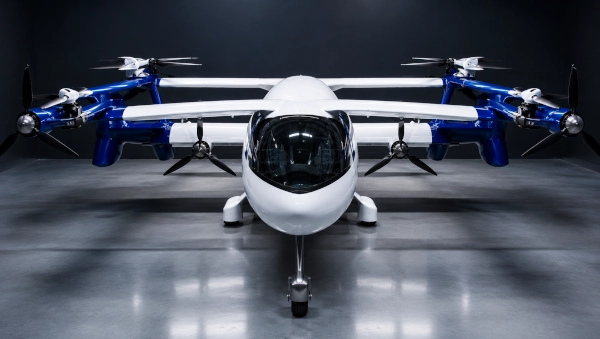
The programme crossed an important hardware milestone in July when ePlane unveiled PT-01, its first full-scale e200X prototype, at the company’s Chennai facility.
The aircraft has not yet entered flight testing.
According to ePlane CEO and IIT Madras professor Satyanarayanan Chakravarthy, structural and avionics testing on the prototype has already been completed. The company is working through high-voltage testing that extends through the electric motors and rotors, after which closed-loop flight-control testing is expected to follow.
The programme is currently in the second of four phases of DGCA type certification.
EPlane has prepared its proposed means of compliance and is aiming to complete a preliminary design review around mid-October. Component and ground testing are expected to continue into early 2027 before a certification-conforming prototype begins flight tests around April.
That distinction is important. PT-01 demonstrates the full-scale aircraft configuration, but the aircraft eventually used for certification testing must conform to the design and manufacturing standards agreed with the regulator.
Six Lift Rotors, Four Cruise Propellers
The e200X differs considerably from the multicopter-style air taxis often associated with urban aviation.
It uses a lift-plus-cruise configuration, with six rotors dedicated primarily to vertical flight and four separate propellers for forward flight.
During take-off and landing, the lift rotors generate the vertical thrust required to operate without a runway. Once the aircraft begins forward flight, the cruise propellers provide propulsion while the wing carries much of the aircraft’s weight.
EPlane calls its aerodynamic approach Synerglyft.
Instead of completely shutting down the vertical rotors during forward flight, the aircraft can operate them at lower power. The airflow produced by those rotors interacts with the wing and increases lift. The company argues that this allows the e200X to use a more compact wing than a conventional aircraft designed for the same low-speed operating regime.
The compact geometry is deliberate.
EPlane is designing the aircraft around short-distance operations in dense Indian cities, where finding large areas for aviation infrastructure would be considerably more difficult than developing smaller vertiports.
Building the Supply Chain Alongside the Aircraft
Certification involves much more than proving that an experimental aircraft can fly.
Every major system entering a production aircraft must have a traceable engineering, manufacturing and quality-assurance chain. EPlane has therefore spent 2026 assembling suppliers around the e200X.
At the Farnborough International Airshow in July, the company announced or reinforced partnerships covering several important parts of the aircraft.
SASMOS HET Technologies is working on the Electrical Wiring Interconnection System, including wiring architecture and high-voltage distribution. Ankit Aerospace will provide aerospace-grade fasteners. Azista Composites is supplying carbon-fibre and glass-fibre prepreg materials for the airframe and radome, while AMS Heli Design is working on modular interiors and seating. HENSOLDT provides the avionics and flight-radar element of that supplier network.
This supplier build-up shows where the e200X programme has reached.
Early electric-aircraft development is dominated by aerodynamics, batteries, motors and prototype flight control. A programme approaching certification has to confront a less visible problem: how to turn the prototype into an aircraft that can be manufactured repeatedly with components whose performance and production history can be documented for the aviation regulator.
Air Ambulance Could Come Before the Air Taxi
Although ePlane is widely associated with the idea of an Indian flying taxi, its first commercial use could be medical rather than passenger transport.
The company is currently prioritising an electric air-ambulance configuration before wider passenger operations.
EPlane has already announced a partnership with Apollo Hospitals around an emergency-response model combining the e200X with medical-delivery drones from its subsidiary Amber Wings. The drones could move items such as blood products, vaccines, organs and diagnostic samples, while the e200X would handle patient transport.
That is an interesting entry point for electric vertical aviation in India.
The commercial argument for replacing a road journey with an aircraft is strongest when time has an unusually high value. Medical emergencies offer exactly that situation, particularly in large cities where road congestion can make journey times unpredictable.
Passenger air-taxi operations could follow once the aircraft, vertiport network and regulatory framework mature.
Production Planned in India
EPlane is also preparing for manufacturing.
The company plans to establish a production facility in 2027, initially targeting roughly 80 aircraft annually. Its longer-term roadmap envisages stepping production through approximately 300 and 600 aircraft per year before potentially reaching around 900.
It is simultaneously trying to increase the Indian content of the aircraft.
Chakravarthy has said that localisation is intended partly to reduce production costs. EPlane is encouraging international suppliers either to establish manufacturing in the region or work with Indian partners as volumes grow.
That will become increasingly important if the e200X progresses from a small certification fleet into serial production.
An aircraft assembled in India from imported certified systems can establish a domestic aviation programme. A deeper industrial capability requires much more: local wiring systems, composites, fasteners, structures, propulsion components, electronics and eventually a larger portion of the avionics and powertrain supply chain.
The partnerships already announced around the e200X show that this process has begun.
Taking it forward
The e200X has passed the point where it exists largely as drawings, subscale demonstrators and aerodynamic calculations.
A full-scale airframe has been built. The DGCA type-certification process is underway. Suppliers for major aircraft systems are being locked in, and HENSOLDT’s avionics have now progressed from a development partnership to a firm order.
But the decisive stage still lies ahead.
Certification-conforming hardware has to be built, ground-tested and flown repeatedly. Batteries, motors, flight controls and electrical systems must demonstrate reliability under aviation conditions. Emergency procedures have to be validated, and manufacturing processes themselves must become repeatable enough for certified production.
You may also like
-
ICAR Scientists Develop Indigenous Protective Gloves for Cotton Farmers, Sign Commercial Manufacturing Agreement
-
India Moves Towards Five-Year Assured Orders for Defence Startups Under New Procurement Reforms
-
BHEL–Coal India Joint Venture Begins Construction of ₹25,016 Crore Indigenous Coal Gasification Project in Odisha
-
Zen Technologies Introduces Indigenous Hyper-Strike Falcon AI-Guided Counter-Drone Interceptor
-
L&T and Germany’s SCHOTTEL Expand Partnership for Controllable Pitch Propeller Systems in Indian Shipbuilding
