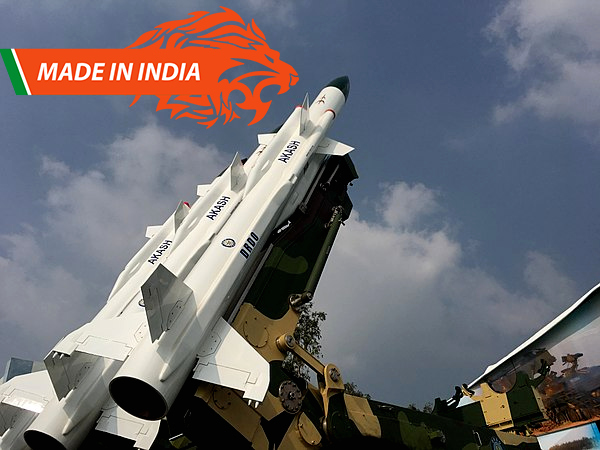
India’s defence-industrial transformation has entered a new phase, with domestic defence production rising to approximately ₹1.80 lakh crore in Financial Year 2025-26 and defence exports climbing to nearly ₹39,000 crore. The expansion marks a dramatic change from a decade ago, when domestic production was around ₹46,000 crore and annual defence exports were below ₹1,000 crore.
The government has now set its sights on the next milestone — ₹50,000 crore in annual defence exports by FY2028-29 — as India attempts to move beyond import substitution and establish itself as a competitive global producer of weapons, military platforms, components and defence technologies.
Raksha Mantri Rajnath Singh, outlining the progress of the sector on 27 August 2026, described the expansion of indigenous manufacturing as part of a broader effort to build a defence ecosystem capable not only of producing equipment within India but also maintaining, overhauling, upgrading and eventually replacing critical systems without excessive dependence on foreign supply chains.
From ₹46,000 Crore to ₹1.80 Lakh Crore in Defence Production
The scale of the transformation becomes particularly clear when viewed over the past decade.
India’s domestic defence production stood at around ₹46,000 crore in 2014. By FY2025-26, it had climbed to approximately ₹1.80 lakh crore, representing an expansion across public-sector defence manufacturers, private companies, shipyards, aerospace firms, electronics manufacturers, MSMEs and an increasingly active defence-startup ecosystem.
This growth encompasses far more than complete weapon systems. Modern defence production depends on a vast industrial network producing everything from engines, radars, electronic warfare equipment and ammunition to precision-machined components, composites, sensors, communication systems, software and specialised materials.
The strengthening of this supplier base is particularly important because genuine defence self-reliance cannot be achieved merely by assembling foreign-designed systems within the country. Strategic autonomy requires control over increasing portions of the supply chain, including critical subsystems and technologies.
Defence Exports Rise From Below ₹1,000 Crore to Nearly ₹39,000 Crore
The growth of India’s defence exports is perhaps an even more visible indication of the sector’s changing position.
From exports of less than ₹1,000 crore roughly a decade ago, India has now reached nearly ₹39,000 crore.
The change indicates that Indian defence manufacturing is progressively shifting from an industry created primarily to supply the domestic armed forces into one that increasingly has to meet international requirements as well.
Export customers evaluate equipment according to different operational conditions, procurement processes, financing arrangements, training requirements and long-term support commitments. Winning international contracts therefore requires companies to compete not just on price but also on reliability, delivery schedules, technology, after-sales support and the ability to sustain equipment throughout its service life.
For India, expanding defence exports consequently has strategic significance beyond the financial value of contracts. Every successful overseas programme potentially strengthens long-term military and political relationships while creating larger production runs for Indian factories.
₹50,000-Crore Export Target by FY2028-29
The government has now set a target of taking defence exports to ₹50,000 crore by Financial Year 2028-29.
Achieving that objective would place additional emphasis on securing international orders for Indian-built weapons, platforms, ammunition, electronics and supporting systems.
India has traditionally been one of the world’s major importers of military equipment. The emerging policy objective is not simply to reduce this dependence but gradually to reverse part of that equation by positioning Indian companies as suppliers to foreign armed forces.
That transition will require continued progress in product quality, certification, production capacity, delivery schedules, financing arrangements and long-term maintenance support.
Exports also place pressure on manufacturers to remain internationally competitive. A product developed for the Indian Armed Forces may meet domestic operational requirements, but foreign customers often demand different configurations, local support arrangements or integration with systems already in their inventories.
Indian manufacturers will therefore increasingly need to design products with exportability in mind from the beginning.
Self-Reliance Now Extends Beyond Manufacturing
One of the more important elements of India’s evolving defence policy is that Aatmanirbharta is increasingly being defined across the entire life cycle of military equipment.
Manufacturing a tank, aircraft, missile or warship domestically is only one part of defence independence.
Military platforms can remain in service for several decades. Throughout that period, they require spare parts, maintenance, repairs, upgrades, ammunition, software support and periodic overhaul.
A country that manufactures equipment locally but remains dependent on overseas companies for critical components or depot-level maintenance can still face serious vulnerabilities during prolonged military crises.
India is therefore placing greater emphasis on creating indigenous capabilities for manufacture, maintenance, repair, overhaul and technological upgrading.
The new ₹472-crore T-72 and T-90 overhaul project at Vehicle Factory Jabalpur illustrates this wider approach. While the project itself addresses an immediate requirement of the Army’s armoured fleet, it also represents the larger objective of building domestic capacity to sustain military equipment throughout its operational life.
Modern Conflicts Have Changed the Meaning of Defence Industrial Strength
The renewed emphasis on indigenous defence production is being shaped partly by lessons from recent conflicts.
Modern wars have demonstrated that advanced weapons alone do not guarantee military endurance. Nations also require factories capable of increasing output, secure sources of raw materials, trained workers, spare parts, maintenance infrastructure and resilient logistics networks.
A sophisticated weapons system becomes ineffective if a military cannot replace damaged components, replenish ammunition or restore platforms to combat service.
Rajnath Singh has consequently emphasised the importance of advanced technology, resilient supply chains, robust industrial capacity and continuous innovation in determining whether countries can withstand prolonged conflicts.
This places defence manufacturing much closer to the centre of national-security planning.
Industrial capacity becomes a form of strategic reserve. The ability to manufacture missiles, ammunition, vehicles, sensors and replacement components domestically determines how quickly a country can respond when operational consumption suddenly increases.
Private Industry Becoming Increasingly Important
India’s defence-industrial expansion is also changing the traditional structure of the sector.
For decades, defence production was dominated primarily by government-owned organisations and ordnance factories. These institutions remain central to major programmes, but private companies are increasingly participating in aerospace, shipbuilding, artillery, ammunition, missiles, electronics, drones and specialised military technologies.
Large Indian industrial groups now operate alongside hundreds of smaller manufacturers and technology companies.
At the same time, defence startups are entering fields such as unmanned aerial systems, artificial intelligence, autonomous platforms, electronic warfare, robotics, secure communications, space technologies and advanced materials.
This broadening of the industrial base is important because future military technology will increasingly develop at the intersection of traditional defence engineering and civilian high-technology sectors.
Artificial intelligence, semiconductor design, advanced computing, satellite communications, robotics and additive manufacturing all have applications extending far beyond defence. India’s ability to combine these capabilities with conventional weapons engineering could become an important competitive advantage.
MSMEs Form the Industrial Backbone
The growth of major defence programmes also creates substantial opportunities for micro, small and medium enterprises.
A modern military platform may contain thousands of individual components produced by specialised suppliers. Large defence manufacturers therefore depend upon extensive networks of companies providing castings, forgings, electronics, cables, hydraulic equipment, structural parts, precision-machined components and software.
Developing these supply chains domestically has two major advantages.
First, it reduces vulnerability to overseas supply disruptions. Second, it distributes the economic value of defence production across a much larger manufacturing ecosystem rather than concentrating it exclusively within a few large corporations.
MSMEs that successfully enter defence supply chains also acquire capabilities in precision engineering, testing, traceability and quality assurance that can often be applied to aerospace, automotive, energy and other high-value industries.
Defence manufacturing can therefore become an important driver of broader industrial capability.
Maintenance and Overhaul Are Becoming Strategic Industries
The growing emphasis on maintenance, repair and overhaul also creates another potentially important economic opportunity.
India operates a vast inventory of aircraft, helicopters, warships, submarines, armoured vehicles and other military systems. Keeping these platforms operational requires a sophisticated maintenance infrastructure.
Historically, imported systems sometimes involved substantial dependence on overseas manufacturers for major repairs, components or upgrades. Increasing domestic maintenance capability can reduce costs while improving turnaround times and operational availability.
It can also create export opportunities.
If India develops expertise in maintaining systems operated by several countries, domestic companies could eventually provide regional MRO services for foreign armed forces as well.
This would extend India’s defence-export model beyond selling equipment into providing decades of technical support.
Defence Exports Can Strengthen Strategic Partnerships
Defence exports differ fundamentally from most ordinary commercial exports because they frequently establish relationships lasting decades.
A country acquiring an Indian missile system, patrol vessel, radar or artillery weapon may require training, maintenance, ammunition, spare parts and upgrades throughout the platform’s operational life.
The original sale can therefore become the beginning of a much broader strategic relationship.
For India, this has particular relevance across the Indian Ocean Region, Southeast Asia, West Asia, Africa and other regions where many countries require reliable military equipment but may not need the most expensive systems offered by established global defence giants.
Indian equipment that combines competitive cost, operational reliability and dependable long-term support could find a growing market among such countries.
Defence exports can simultaneously expand India’s strategic partnerships and provide the domestic industry with larger production volumes.
Greater Production Scale Can Reduce Costs
An expanding export market also benefits India’s own Armed Forces.
Defence equipment is expensive partly because development and production costs must be spread across relatively small numbers of highly specialised systems. Larger production runs can help manufacturers improve efficiency, build more stable supplier networks and distribute fixed costs over more units.
If an Indian platform is ordered both domestically and internationally, the resulting production scale can strengthen the manufacturer while potentially lowering long-term sustainment costs for the Indian military.
Export success can therefore reinforce domestic self-reliance rather than competing with it.
It can also keep production lines active after major Indian orders have been completed, preserving specialised manufacturing skills that might otherwise disappear.
Technology Depth Will Determine the Next Phase
India’s defence sector has clearly expanded in scale, but the next stage will increasingly depend upon technology depth.
The most strategically important military systems contain specialised technologies that are difficult to develop and tightly controlled internationally. These include advanced propulsion systems, seekers, sensors, semiconductor components, electronic warfare technologies, high-performance materials and sophisticated manufacturing processes.
Indigenising these areas is considerably more difficult than producing structural components or assembling complete platforms.
The long-term test of defence self-reliance will therefore be whether Indian companies and research institutions can progressively master these critical technologies.
This is also where cooperation among DRDO laboratories, Defence Public Sector Undertakings, private manufacturers, universities and startups becomes especially important.
Defence Manufacturing as Part of National Industrial Strategy
India’s defence-production expansion increasingly intersects with the country’s broader ambitions in advanced manufacturing.
Aerospace machining, metallurgy, composite materials, electronics, semiconductors, robotics, artificial intelligence and precision engineering have both military and civilian applications.
Investment in these capabilities can therefore produce benefits far beyond defence.
The technological standards demanded by military programmes are particularly stringent. Components must survive vibration, extreme temperatures, shock, electromagnetic interference and prolonged operational use while maintaining exceptionally high reliability.
Companies capable of meeting these standards can potentially compete in other demanding sectors, including civil aerospace, energy and high-end industrial manufacturing.
A stronger defence-industrial ecosystem can therefore contribute to India’s larger objective of moving towards higher-value manufacturing.
From Import Dependence Towards an Exporting Defence Economy
India’s rise from approximately ₹46,000 crore in defence production in 2014 to around ₹1.80 lakh crore in FY2025-26, accompanied by an increase in exports from below ₹1,000 crore to nearly ₹39,000 crore, represents a structural shift in the country’s defence economy.
The challenge now is to sustain that momentum.
Reaching the ₹50,000-crore export target by FY2028-29 will require India to convert technological progress into reliable products, international contracts and enduring support relationships.
At the same time, the deeper measure of success will be whether the Armed Forces can increasingly depend upon an Indian industrial ecosystem during both peace and prolonged conflict.
That means producing weapons domestically, maintaining them within the country, securing critical components through resilient supply chains, upgrading platforms with Indian technologies and developing the next generation of systems at home.
India’s defence manufacturing transformation is therefore entering a stage where production volume, exports, technology ownership and strategic resilience are beginning to converge.
The rise to ₹1.80 lakh crore in production and nearly ₹39,000 crore in exports marks how far the sector has travelled. The ₹50,000-crore export target represents the next milestone in a considerably larger ambition — transforming India from a predominantly defence-importing nation into a self-sustaining defence-industrial power and increasingly significant supplier to the global market.
You may also like
-
India’s Economic Warfare Challenge: Strategic Autonomy, Energy Security and the Rise of a Global Power
-
India-US Trade Deal Stalemate: Why Washington’s Tariff Pressure Has Failed to Secure an Agreement
-
US Double Standards in Foreign Policy: 16 Recent Cases Involving India, Russia, China and Global Trade
-
India’s Arctic Energy Ambitions: Russian Oil, LNG and a New Sea Route to Indian Ports
-
Indian Navy Vice Chief Inspects Japan’s Mogami-Class Stealth Frigate as India-Japan Shipbuilding Cooperation Expands
