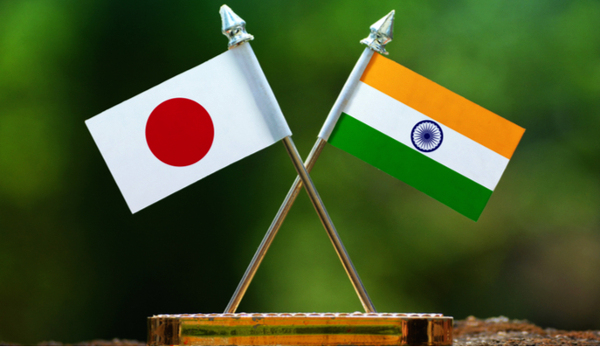
A group of Indian school students will visit Japan under the Sakura Science Programme 2026, giving young learners an opportunity to experience Japan’s advanced science, technology and innovation ecosystem. The Department of School Education and Literacy, Ministry of Education, flagged off the student group at a ceremony held at NCERT, New Delhi, on 23 May 2026.
The visit will take place from 24 May to 30 May 2026. The Indian delegation includes 56 school students and four supervisors. The students will participate in the programme along with young participants from Ghana, Nigeria and South Africa, making it a wider international learning exchange focused on science, exposure and cultural understanding.
The Indian group consists of 24 boys and 32 girls from government schools across 15 States and Union Territories. These include Assam, Dadra and Nagar Haveli and Daman and Diu, Goa, Gujarat, Haryana, Jharkhand, Karnataka, Madhya Pradesh, Maharashtra, Odisha, Punjab, Rajasthan, Tamil Nadu, Telangana and West Bengal. The students are recipients of scholarships under the National Means cum Merit Scholarship Scheme of the Government of India.
The Sakura Science Programme, formally known as the Japan Asia Youth Exchange Program in Science, is implemented by the Japan Science and Technology Agency. It was launched in 2014 to encourage scientific curiosity among young learners and to expose them to Japan’s research, technology and cultural environment. India has been participating in the programme since April 2016.
Under the initiative, selected students are invited to Japan for a week-long exposure visit. The programme allows them to observe scientific institutions, technology-driven systems and Japan’s cultural heritage. For students from government schools, such exposure can be especially valuable because it connects classroom learning with real-world scientific progress and global innovation practices.
So far, 674 Indian students and 96 supervisors have visited Japan under the Sakura Science Programme. The previous Indian batch participated in the programme in August 2025. The 2026 delegation continues this educational partnership and reflects the growing emphasis on international academic exposure for young learners.
The initiative also aligns with the National Education Policy 2020, which calls for learning to be holistic, integrated, enjoyable and engaging. NEP 2020 places strong emphasis on experiential learning, encouraging students to understand the relationship between different subjects through direct observation, exploration and practical exposure.
Educational visits of this nature help students move beyond textbook-based learning. A country like Japan offers a powerful learning environment because it combines advanced technology, disciplined public systems, deep scientific culture and a rich civilisational heritage. For Indian students, the visit can open new perspectives on innovation, research, sustainability, robotics, engineering and the role of science in national development.
The Sakura Science Programme 2026 therefore represents more than a student exchange. It is a platform for nurturing curiosity, confidence and global awareness among young Indians. By sending scholarship students from government schools to Japan, India is investing in a generation that can dream beyond local boundaries while remaining rooted in the country’s broader educational transformation.
You may also like
-
Gnani AI Launches Nationwide Challenge Offering Up to 100 Paid AI Internships
-
NMMSS Scholarship Application Deadline Extended to October 31, 2026
-
DGCA Introduces Training Framework for Gyroplane Pilots in India
-
DRDO CASDIC Opens 30 Paid Internships for Engineering and Science Students
-
Duryodhana Wins Shalya Through Hospitality: Gifts, Obligation and Political Leverage Before the Kurukshetra War
