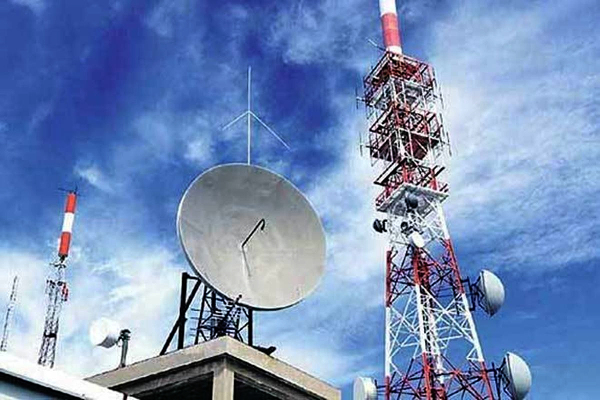
India has set an ambitious target of expanding its 5G subscriber base from 550 million to one billion by 2030, while strengthening domestic research, telecommunications manufacturing and technological capabilities for the next generation of mobile communications. Union Minister for Communications Jyotiraditya M. Scindia announced the target during the 10th edition of India Mobile Congress (IMC) 2026, inaugurated by Prime Minister Narendra Modi at Yashobhoomi in New Delhi on October 8, 2026.
The announcement reflects India’s transition from expanding mobile connectivity to developing indigenous telecommunications technologies capable of competing in international markets. Since the introduction of commercial 5G services in October 2022, India has achieved extensive network deployment, with 5G services reaching 99.9% of the country’s districts and approximately 550 million users adopting the technology.
Addressing the gathering, Scindia highlighted the expansion of India’s telecommunications infrastructure, increasing affordability of mobile data and growing capabilities of domestic technology companies. The Minister emphasised that India’s next phase of digital development would focus on developing advanced technologies, strengthening intellectual property creation and contributing to international telecommunications standards.
The Government’s wider ambitions extend beyond 5G connectivity. Through the Bharat 6G Vision, the Bharat 6G Alliance and industry-led research initiatives, India seeks to participate more actively in developing sixth-generation telecommunications technologies. The programme includes research in artificial intelligence-enabled networks, advanced wireless communications, satellite connectivity and other technologies expected to influence future digital infrastructure.
India Aims to Connect One Billion 5G Users by 2030
The Government’s target of one billion 5G users represents a major expansion of India’s digital connectivity ambitions. According to the Ministry of Communications, approximately 550 million people were using 5G services by October 2026, following the commercial introduction of the technology four years earlier.
Achieving the 2030 target would require adding approximately 450 million users over the coming years. This expansion would depend on continued network investment, affordable 5G-enabled devices, improved service availability and the development of digital applications that encourage greater adoption.
India’s existing telecommunications infrastructure provides a foundation for this growth. The Government reports that 5G services have reached 99.9% of the country’s districts, demonstrating the geographical scale of network deployment. However, district-level availability does not necessarily mean uninterrupted 5G coverage across every settlement, road or geographical area within those districts.
The next phase of expansion will therefore involve improving network depth and reliability alongside increasing the number of subscribers using 5G-enabled services. Better indoor coverage, additional network capacity and affordable devices can help extend the benefits of high-speed mobile connectivity to more households and businesses.
The one-billion-user figure remains a government target rather than a guaranteed outcome. Its achievement will depend on infrastructure investment, market adoption and the ability of telecommunications companies to deliver reliable services at competitive prices.
India Deploys 5.5 Lakh 5G Base Stations Across the Country
Prime Minister Narendra Modi highlighted the rapid development of India’s mobile network infrastructure during the inauguration of India Mobile Congress 2026.
According to the Prime Minister’s address, India had established approximately 5.5 lakh 5G base stations, supporting the expansion of next-generation mobile connectivity across the country. He also stated that mobile internet speeds had increased approximately tenfold since 2022, reflecting the improvements associated with the deployment of advanced network infrastructure.
The expansion of 5G base stations has allowed telecommunications operators to provide high-speed mobile services across a growing number of urban and rural locations. Unlike earlier mobile technologies, 5G networks are designed to support higher data rates, lower communication delays under suitable conditions and greater network capacity.
These capabilities can benefit applications ranging from high-definition video communication and cloud services to industrial automation and connected infrastructure. However, the actual performance experienced by consumers depends on network configuration, spectrum availability, device compatibility, local congestion and signal conditions.
India’s large-scale deployment provides an important foundation for future digital services, while the continued development of supporting infrastructure will remain essential for improving connectivity quality and extending coverage.
India’s Telecom Subscriber Base Crosses 1.35 Billion
India’s wider telecommunications ecosystem has expanded considerably since the first India Mobile Congress was organised in 2017.
Speaking at IMC 2026, Jyotiraditya Scindia stated that the country had more than 1.35 billion telecommunications subscribers and 1.09 billion broadband connections. These figures demonstrate the scale of India’s communications market and the growing importance of broadband access in everyday economic and social activities.
Telecommunications subscriptions should not be interpreted as the number of unique individuals connected to networks, because some customers maintain multiple connections. Nevertheless, the figures illustrate the extensive reach of mobile and broadband infrastructure across the country.
Broadband connectivity now supports numerous activities, including education, digital payments, electronic commerce, government services, professional communication and access to information. Its expansion has also contributed to the development of digital businesses and technology-enabled services in different parts of India.
The Government’s focus is increasingly shifting towards improving the quality, affordability and reliability of these connections while extending advanced services to underserved communities.
Mobile Data Costs Fall from ₹268 to ₹8 per GB
One of the most significant changes in India’s telecommunications sector has been the reduction in mobile data prices.
Jyotiraditya Scindia stated that the cost of one gigabyte of mobile data had declined from approximately ₹268 in 2014 to ₹8 in 2026. The reduction has made mobile internet services substantially more affordable and helped encourage widespread adoption of digital applications.
The Minister also highlighted the increase in average monthly data consumption, which rose from approximately 0.26 GB per user a decade earlier to more than 36 GB by 2026. This growth reflects changing consumer behaviour as mobile devices increasingly support video communication, entertainment, financial transactions, online learning and professional activities.
Lower data prices have played an important role in making internet-based services accessible to a wider population. Affordable connectivity allows individuals and small businesses to participate in digital activities without facing the high usage costs that previously limited internet adoption.
The expansion of data consumption also creates greater demands on telecommunications infrastructure. Operators must continue investing in network capacity, fibre connectivity, spectrum efficiency and supporting systems to accommodate increasing traffic while maintaining service quality.
India Seeks Global Leadership in 6G Technology Development
While expanding 5G services, India is preparing for the development of sixth-generation mobile communication technologies.
The Bharat 6G Vision seeks to establish India as an important contributor to future telecommunications research, international standards and intellectual property development. The Government has identified participation in global technology development as a priority rather than remaining primarily dependent on technologies developed elsewhere.
In March 2026, Jyotiraditya Scindia informed Parliament that India aimed to contribute approximately 10% of global 6G patents. The Ministry of Communications has also emphasised the country’s ambition to contribute to international 6G standards through research, innovation and cooperation with global telecommunications organisations.
Sixth-generation networks remain under research and standardisation. Their eventual capabilities, commercial deployment schedules and operating requirements will depend on continuing technological development and international agreement on standards.
India’s present efforts therefore concentrate on building research expertise, developing intellectual property and participating in the organisations responsible for shaping future wireless communication technologies.
Bharat 6G Alliance Connects Industry, Researchers and Startups
The Bharat 6G Alliance serves as an important institutional platform for India’s next-generation telecommunications ambitions.
The alliance brings together telecommunications operators, equipment manufacturers, technology companies, startups, academic institutions and research organisations. Its purpose is to encourage cooperation across the research and innovation ecosystem while supporting India’s participation in global 6G development.
According to information presented by the Ministry of Communications in March 2026, the alliance had expanded to 85 member organisations as of March 15, 2026. This represented substantial growth from its earlier membership and demonstrated increasing participation by institutions involved in telecommunications research.
The alliance supports cooperation in areas such as network architecture, wireless technologies, telecommunications standards and emerging applications. By connecting academic research with industrial development, it seeks to improve the opportunities for translating scientific advances into commercially relevant technologies.
An important objective is to strengthen India’s contribution to global standards-setting processes. Participation in standardisation allows Indian researchers and companies to help shape technical requirements that future telecommunications equipment and services must satisfy.
The development of domestic intellectual property can also improve India’s position in the international telecommunications technology ecosystem.
Indian Research Institutions Expand 6G Patent Development
Intellectual property development has become an important measure of India’s progress towards advanced telecommunications capabilities. Unlike earlier phases of mobile network expansion, the Government wants Indian companies and research institutions to contribute technologies that can become part of internationally accepted standards.
In March 2026, the Ministry of Communications informed Parliament that India had contributed approximately 4,000 patents towards its wider 6G ambitions. The Government also identified a target of securing a 10% share in global 6G patents, reflecting its intention to strengthen domestic research and technology ownership.
The India Brand Equity Foundation report refers to approximately 7,700 patent filings associated with the Bharat 6G Alliance ecosystem, including around 4,400 international filings. These figures should be distinguished from granted patents and patents incorporated into international standards. The earlier official parliamentary statement confirms the Government’s research ambitions, but does not independently establish the precise October figures quoted in the IBEF report.
Patent applications reflect research and invention activity, while granted patents provide legal protection for qualifying inventions. Standard-essential patents represent a more specialised category involving technologies necessary for implementing particular technical standards. India’s technological progress will therefore depend not only on the number of filings but also on the quality, relevance and international acceptance of its innovations.
The Government’s emphasis on research participation is intended to strengthen India’s position in future telecommunications technologies while creating opportunities for domestic manufacturers, researchers and technology developers.
Artificial Intelligence and Advanced Wireless Networks Shape India’s 6G Research
The India Mobile Congress 2026 showcased several technologies associated with the development of future communication networks.
Jyotiraditya Scindia highlighted demonstrations involving AI-native pre-6G networks, sovereign cloud infrastructure, terahertz communications and integrated sensing and communication technologies. These research areas demonstrate how future wireless systems may combine advanced radio technologies with computing, sensing and intelligent network management.
Artificial intelligence is expected to play an increasingly important role in managing telecommunications infrastructure. AI-enabled systems can assist network operators in examining traffic patterns, allocating resources and identifying technical problems. Researchers are also investigating approaches in which AI capabilities become an integral part of network architecture rather than an additional software function.
Terahertz communication research explores the use of extremely high-frequency electromagnetic waves for potential high-capacity wireless applications. However, such frequencies present significant engineering challenges involving propagation losses, signal attenuation and equipment design.
Integrated sensing and communication represents another emerging research area in which wireless infrastructure may perform communication and environmental sensing functions. Potential applications are being investigated across connected infrastructure, industrial systems and mobility technologies.
These developments remain at different stages of research and demonstration. Their presentation at IMC 2026 highlights India’s participation in emerging technologies rather than confirming their readiness for widespread commercial deployment.
Indigenous Telecom Manufacturing Becomes a National Priority
The Government’s telecommunications strategy increasingly emphasises domestic design, research and manufacturing alongside network expansion.
Addressing India Mobile Congress 2026, Prime Minister Narendra Modi highlighted India’s transition from consuming imported technologies towards creating products and developing intellectual property domestically.
The Prime Minister emphasised that India’s future manufacturing capabilities should include ownership of the technologies and designs incorporated into products. This approach aims to strengthen the country’s position in international value chains while encouraging Indian companies to develop proprietary technologies.
Telecommunications manufacturing involves a broad industrial ecosystem that includes radio equipment, optical networking products, electronic components, communication software and specialised computing systems.
Developing these capabilities domestically can create opportunities for engineering companies, electronics manufacturers, research institutions and startups. It also allows Indian enterprises to participate more extensively in advanced product development rather than concentrating exclusively on assembly activities.
The Ministry of Communications has identified indigenous innovation, industrial collaboration and international market access as important elements of the sector’s next phase of growth.
India’s Mobile Phone Manufacturing Industry Expands Its Global Presence
India’s growing mobile phone manufacturing industry forms an important part of its wider electronics and telecommunications ecosystem.
The IBEF report states that the value of domestic mobile phone production has increased substantially since 2014, reaching approximately ₹5.99 lakh crore. It also places mobile phone exports at nearly ₹2.76 lakh crore, reflecting the expansion of India’s electronics manufacturing capabilities.
These figures illustrate the scale of the manufacturing growth described by IBEF. However, the principal official Ministry of Communications release from October 8 focuses on digital connectivity and technology development rather than independently presenting these particular manufacturing values.
The growth of mobile phone production has been supported by expanding manufacturing capacity, investments by domestic and international companies, and policies encouraging electronics production in India.
A stronger mobile manufacturing ecosystem can also contribute to telecommunications development by improving the availability of devices and encouraging investment in related components and technologies.
For 5G adoption, the availability of affordable compatible smartphones remains particularly important. Expanding the domestic electronics industry can support the market conditions required for wider access to next-generation mobile services.
BharatNet Supports Digital Connectivity in Rural India
Rural broadband connectivity remains central to India’s efforts to extend digital services beyond major cities and established commercial centres.
The BharatNet programme seeks to strengthen broadband infrastructure across rural India, particularly through connectivity to gram panchayats and villages. Its implementation supports the development of digital services in areas where conventional telecommunications infrastructure may require additional investment.
The IBEF report identifies government funding of approximately ₹1.43 lakh crore for BharatNet, reflecting the scale of public investment associated with rural digital connectivity.
Improved broadband infrastructure can support schools, healthcare facilities, local administrations, businesses and households. It can also provide essential connectivity infrastructure for digital public services and commercial telecommunications networks.
Although BharatNet is primarily associated with broadband infrastructure, its development can complement the expansion of mobile services where suitable transmission and backhaul connections become available.
The integration of fibre networks, wireless technologies and local connectivity solutions will remain important for improving digital access in remote and underserved areas.
Digital Payments Demonstrate India’s Expanding Connectivity Ecosystem
The expansion of telecommunications infrastructure has supported the development of India’s digital payments ecosystem.
The Unified Payments Interface has become an important platform for electronic transactions, allowing individuals and businesses to transfer money through participating banks and payment applications.
The IBEF report states that UPI processes transactions valued at approximately ₹323.17 lakh crore annually. This figure illustrates the scale of digital financial activity now supported by India’s communications and banking infrastructure.
Affordable mobile data, widespread smartphone use and digital banking services have contributed to the accessibility of electronic payments. The growth of digital transactions has also created opportunities for businesses to accept payments without relying exclusively on cash or conventional card-based systems.
Telecommunications networks provide the connectivity required for payment applications, banking interfaces and related financial services.
As 5G adoption expands, reliable and secure digital connectivity will continue to support financial services alongside other technology-enabled economic activities.
India Strengthens Participation in International Telecommunications Standards
India’s telecommunications ambitions extend beyond domestic network deployment to participation in international standardisation.
Global technical standards are important because they allow telecommunications devices, networks and services developed by different manufacturers to operate together.
The International Telecommunication Union and the 3rd Generation Partnership Project play major roles in international telecommunications development and standardisation.
India has increased its participation in these processes through government agencies, research institutions and industry representatives.
In March 2026, the Ministry of Communications confirmed that India’s proposal concerning ubiquitous connectivity had received acceptance within international standardisation processes involving 3GPP and the ITU.
Ubiquitous connectivity seeks to improve communication availability across different environments and geographical locations, including areas that may be difficult to serve through conventional terrestrial networks alone.
The Government’s emphasis on international standards reflects its intention to contribute directly to future telecommunications technologies while supporting compatibility with the global communications ecosystem.
India Mobile Congress 2026 Showcases Emerging Telecom Technologies
The 10th edition of India Mobile Congress took place from October 7 to 10, 2026, at Yashobhoomi in New Delhi under the theme “Scale Without Boundaries.”
Organised jointly by the Department of Telecommunications and the Cellular Operators Association of India, the event brought together policymakers, technology companies, telecommunications operators, startups, investors and research institutions.
The 2026 edition focused on moving technological innovations from research laboratories and demonstration projects towards practical applications across industry and society.
The programme covered artificial intelligence, advanced telecommunications networks, satellite connectivity, cloud infrastructure, industrial robotics, smart mobility and other emerging technologies.
The Department of Telecommunications’ pre-event projections anticipated more than 1.5 lakh attendees, over 500 exhibitors and partners, more than 600 startups and participation from numerous international organisations.
These projections reflected the scale of the event’s ambitions, while the actual participation and commercial outcomes require separate post-event assessment.
Four Pillars Guide India Mobile Congress 2026
The Government organised IMC 2026 around four major themes intended to connect technological innovation with economic development and public benefit.
Srishti — Building the Future focused on emerging technologies, research and the creation of advanced digital infrastructure. This included developments in artificial intelligence, telecommunications networks and other technologies expected to influence future connectivity.
Samvardhan — Fueling Growth emphasised entrepreneurship, investment, manufacturing and industry-led technological development. The objective was to strengthen the connection between innovation and the creation of commercially viable products and services.
Sashakt — Expanding Opportunities concentrated on using digital technologies to improve access to services and create opportunities for citizens, enterprises and communities.
Suraksha — Strengthening Trust addressed the importance of security, resilience and reliability in digital infrastructure. As connectivity expands across essential services, the protection of telecommunications networks and user information becomes increasingly important.
Together, these priorities reflected India’s intention to combine technological advancement with wider economic participation and secure digital development.
Department of Telecommunications Showcases Secure and Inclusive Digital Services
The Department of Telecommunications presented several citizen-focused initiatives at India Mobile Congress 2026 through its pavilion centred on the Samridh Gram concept.
The exhibition highlighted the role of telecommunications infrastructure in expanding rural connectivity and improving access to digital services.
Among the initiatives presented were Sanchar Saathi, which supports telecommunications-related consumer protection, and the Financial Fraud Risk Indicator, designed to help strengthen safeguards against digital financial fraud.
The pavilion also showcased initiatives associated with the Telecommunication Engineering Centre and other technology development activities.
These demonstrations illustrated the expanding responsibilities of telecommunications infrastructure beyond conventional voice communication and internet access.
As digital services become more deeply integrated into financial transactions, government administration and everyday economic activity, network security and consumer protection remain essential components of telecommunications development.
The Government’s approach seeks to strengthen these capabilities while encouraging innovation and wider connectivity.
India’s Next Telecom Decade Focuses on Developing Technology for the World
Jyotiraditya Scindia presented India’s telecommunications transformation as a progression from expanding connectivity to developing technologies for global markets.
The first India Mobile Congress in 2017 concentrated on connecting more people to digital networks. Over the following decade, India expanded its mobile subscriber base, introduced 5G services and strengthened its telecommunications infrastructure.
The next phase aims to increase domestic participation in product design, telecommunications research, intellectual property creation and technology manufacturing.
For Indian startups and research institutions, this approach creates opportunities to develop products and technologies relevant to international telecommunications requirements.
For manufacturers, stronger domestic research capabilities can support the development of equipment and components with greater technological value.
The Bharat 6G Vision provides a long-term research direction, while India’s target of one billion 5G users by 2030 establishes a measurable objective for the continued expansion of advanced mobile connectivity.
India Moves Towards One Billion 5G Users and Greater Global Telecom Leadership
India’s target of one billion 5G users by 2030 marks an important new phase in the country’s telecommunications development. With approximately 550 million users, 5.5 lakh 5G base stations and network availability extending to 99.9% of districts, the country has established a substantial foundation for expanding advanced mobile connectivity.
The reduction in data costs and growth of broadband subscriptions have contributed to the development of digital services across education, financial transactions, commerce and public administration. Continued investment in network infrastructure and affordable devices will be essential for bringing more users into the 5G ecosystem.
At the same time, the Bharat 6G Vision reflects India’s ambition to move beyond large-scale technology adoption towards research, innovation and participation in global telecommunications standards.
The expansion of domestic telecommunications manufacturing, industry-led research and international technological cooperation can strengthen India’s position within the global communications industry.
By combining wider 5G access with indigenous technological development and sustained investment in 6G research, India is working towards a future in which it becomes not only one of the world’s largest telecommunications markets but also an important developer, manufacturer and exporter of advanced communication technologies.
The coming years will be important for converting these ambitions into improved connectivity, competitive Indian technologies and greater participation in the global digital economy.
References
1. Press Information Bureau, Government of India
Ministry of Communications
Prime Minister Shri Narendra Modi Inaugurates 10th Edition of India Mobile Congress 2026
Published: October 8, 2026, 4:53 PM
Release ID: 2320798
https://www.pib.gov.in/PressReleseDetailm.aspx?PRID=2320798
2. Press Information Bureau, Government of India
Ministry of Communications
Union Minister of Communications Shri Jyotiraditya M. Scindia Unveils Theme for 10th Edition of India Mobile Congress 2026: Scale Without Boundaries
Published: July 29, 2026
Release ID: 2291464
https://www.pib.gov.in/PressReleasePage.aspx?PRID=2291464
3. Press Information Bureau, Government of India
Ministry of Communications
Under the Leadership of Prime Minister Shri Narendra Modi, India Will Achieve Global Leadership in 6G: Union Minister Jyotiraditya M. Scindia
Published: March 25, 2026
Release ID: 2245282
https://www.pib.gov.in/PressReleasePage.aspx?PRID=2245282
4. Press Information Bureau, Government of India
Ministry of Communications
India Endorses the Call to Action for 6G Leadership and Security
Published: September 9, 2026
Release ID: 2308285
https://www.pib.gov.in/PressReleseDetailm.aspx?PRID=2308285
5. Press Information Bureau, Government of India
Ministry of Communications
Union Minister Jyotiraditya M. Scindia Holds Media Interaction at India Mobile Congress 2026; Calls for Taking Indian Technologies to the World
Published: October 9, 2026
Release ID: 2321510
https://www.pib.gov.in/PressReleasePage.aspx?PRID=2321510
6. Department of Telecommunications, Government of India
Bharat 6G Vision and Telecommunications Development Initiatives
https://dot.gov.in
You may also like
-
Indian Banks Expected to Record 25.4% Profit Growth in Q2 FY27 as Lending Expands and Margins Prepare for Recovery
-
GHCL Begins Production at 2,800-Tonne Bromine Manufacturing Facility in Gujarat
-
BHEL Awards ₹52.68 Crore Indigenous Gas Turbine Component Contract to Azad Engineering
-
India Tightens Scrutiny of Satellite Internet Security as Government Clarifies Starlink Licensing Rules
-
PM Dhan-Dhaanya Krishi Yojana Completes One Year: Gaya, Nagaur and Umaria Emerge as Best-Performing Districts
