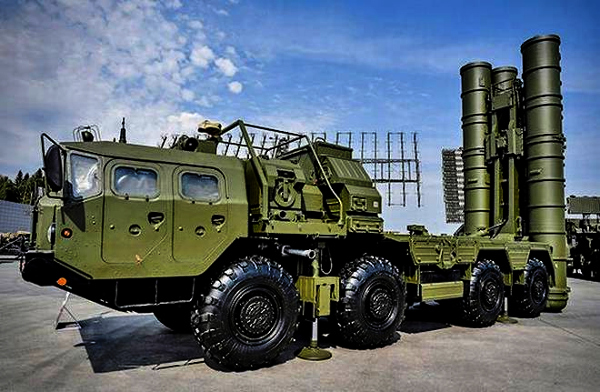
India’s plan to expand its long-range air-defence network has entered a more substantive procurement stage, with Russia submitting its detailed response for the supply of additional S-400 Triumf long-range surface-to-air missile systems to the Indian Air Force. The proposal is now under examination by the Ministry of Defence as New Delhi moves ahead with one of its most consequential air-defence acquisitions in recent years.
The development was reported on 30 August 2026, with defence sources indicating that the Russian response to the Indian requirement had been received and was being processed. The proposed acquisition has been estimated in defence reporting at more than ₹50,000 crore, although the Ministry of Defence has not publicly released a final contract value or detailed squadron configuration for the new procurement.
The latest step follows the formal approval granted earlier this year by the Defence Acquisition Council, which on 27 March 2026 accorded Acceptance of Necessity for further procurement of the S-400 Long Range Surface-to-Air Missile System for the Indian Air Force. That decision established the official Indian requirement and moved the programme into the acquisition process.
From Requirement to Russian Proposal
The current procurement has developed through a sequence of identifiable stages rather than emerging as a sudden post-conflict purchase. India formally cleared the requirement for additional S-400 systems in March 2026, after which discussions with Russia progressed on the supply of a further batch.
Russia subsequently acknowledged the negotiations publicly in May 2026. The Russian Federal Service for Military-Technical Cooperation confirmed that India had expressed interest in additional S-400 systems and that discussions between the two countries were underway.
The receipt of Russia’s detailed response therefore represents the next important procedural step. The focus now shifts from the broad requirement and bilateral negotiations to evaluation of the commercial, technical and contractual elements of the Russian proposal.
S-400 Already Forms Core of India’s Long-Range Air Defence
The S-400 has already become one of the most important components of India’s ground-based air-defence architecture. India signed its original agreement with Russia in October 2018 for five S-400 squadrons, beginning a programme intended to provide the Indian Air Force with a long-range capability against aircraft, cruise missiles and other aerial threats.
Four squadrons from the original order have already entered Indian service, while the remaining unit is expected to complete the initial acquisition programme. Their deployment has allowed the Indian Air Force to establish long-range defensive coverage over strategically important sectors and integrate the S-400 into a broader network of radars, command systems and shorter-range air-defence weapons.
The additional procurement therefore represents an expansion of an existing operational capability rather than the introduction of an entirely new missile system. This has important implications for training, logistics, maintenance, command integration and missile inventory management because the Indian Air Force already operates the platform and has developed experience around its deployment.
Operation Sindoor Reinforced the Operational Importance of Long-Range Air Defence
The S-400 received renewed attention after Operation Sindoor in May 2025, when India employed its layered air-defence network during the military confrontation with Pakistan. The operation demonstrated the growing importance of long-range sensors, rapid command-and-control networks and surface-to-air missile systems in protecting airspace against complex aerial threats.
Senior Indian Air Force officers have subsequently spoken about the operational performance of the S-400 during the confrontation. Western Air Command chief Air Marshal Jeetendra Mishra stated in August 2026 that the system had been employed against Pakistani aerial platforms at very long ranges, including an engagement involving a surveillance aircraft at approximately 314 kilometres.
He also described engagements against Pakistani fighter aircraft during the operation. These operational claims have strengthened the perception within Indian defence circles that long-range air defence will remain a central requirement in any future high-intensity air campaign.
Strategic Value Lies in Depth and Reach
The importance of the S-400 lies not simply in the range of individual missiles but in the defensive depth it brings to an integrated air-defence network. A long-range system allows the Indian Air Force to detect, track and engage selected aerial threats well before they reach critical military installations, air bases, command centres and other strategic infrastructure.
This capability becomes especially important across India’s western and northern theatres, where air operations can involve combat aircraft, airborne surveillance platforms, stand-off weapons, unmanned systems and cruise missiles. Long-range surface-to-air missiles force hostile aircraft to alter flight profiles, stand farther away from defended areas and devote greater resources to suppression and electronic-warfare missions.
The effect is therefore wider than the destruction of individual targets. A credible long-range air-defence system changes the operational calculations of an opposing air force and complicates planning for deep strikes, airborne surveillance and other missions close to defended airspace.
A Layered Network Rather Than a Single-System Defence
India’s air-defence architecture is increasingly being developed as a layered network in which different systems address different ranges and threat categories. The S-400 occupies the long-range end of this structure, while other Indian and imported systems provide medium- and short-range protection.
The Indian Air Force also operates and is introducing systems such as Akash-family surface-to-air missiles and other air-defence platforms for protection against aircraft, missiles and unmanned aerial threats. Sensors, command-and-control networks and airborne surveillance assets provide the information required to connect these weapons into a wider air-defence picture.
Expanding the S-400 inventory therefore increases the geographical depth of the upper layer of this network. It also enables a larger number of strategically important regions to receive persistent long-range air-defence coverage instead of concentrating the capability around a limited number of sectors.
Additional Missiles Also Form Part of the Readiness Equation
The effectiveness of any air-defence system depends on more than the number of launchers deployed. Missile stocks, reload availability, maintenance capacity, radar coverage, trained personnel and secure communications are equally important in determining how long a defensive network can sustain operations during an extended conflict.
India has therefore also been working to strengthen the missile inventory associated with its S-400 fleet. Defence reporting has indicated plans for the procurement of a substantial additional quantity of S-400 interceptor missiles to reinforce operational reserves.
Larger stocks are particularly important during a high-intensity campaign in which air-defence units may face repeated waves of aircraft, unmanned platforms and stand-off weapons. The combination of additional firing units and deeper missile reserves would provide the Indian Air Force with greater endurance and operational flexibility.
Project Kusha Developing the Indigenous Long-Range Layer
The expansion of the S-400 fleet is taking place alongside India’s indigenous effort to build its own long-range air-defence capability under Project Kusha. The programme is intended to create an Indian family of extended-range surface-to-air missile systems capable of forming an important part of the country’s future integrated air-defence network.
Project Kusha reflects a parallel defence strategy in which immediate operational requirements are met through proven systems while domestic technologies are developed for long-term strategic autonomy. Indigenous development also gives India greater control over production, upgrades, missile stocks, software, integration and lifecycle support.
The programme has already progressed through developmental testing and is expected to become an increasingly important component of India’s future long-range air-defence structure. The S-400 and Project Kusha therefore belong to different stages of the same broader effort to create greater depth, survivability and redundancy in national air defence.
Russia Remains an Important Air-Defence Partner
The latest proposal also underlines the continuing importance of Russia in India’s high-end air-defence ecosystem. Despite the diversification of Indian defence procurement over the past two decades, Russian-origin platforms remain deeply embedded across the Army, Navy and Air Force.
The S-400 acquisition is particularly significant because it represents one of the most advanced Russian defence systems currently in Indian service. Operational familiarity with the platform, an established training structure and existing maintenance arrangements provide a substantial foundation for further procurement.
At the same time, India has steadily increased emphasis on indigenous production and technology development across missiles, radars, electronic warfare and command systems. The emerging model therefore combines selected foreign acquisitions with a growing domestic air-defence industrial base.
Long-Range Air Defence Has Become a Central Warfare Requirement
Recent conflicts have demonstrated that modern air defence must contend with a much wider range of threats than conventional combat aircraft alone. Cruise missiles, one-way attack drones, reconnaissance UAVs, stand-off weapons, electronic warfare systems and airborne surveillance platforms have dramatically increased the complexity of airspace defence.
This environment places a premium on layered sensors, long-range engagement capability, large missile inventories and distributed command networks. No single interceptor or radar can provide comprehensive protection against the full range of threats encountered in a modern air campaign.
India’s decision to reinforce the S-400 component therefore forms part of a broader transition towards increasingly dense and networked air defence. The experience of Operation Sindoor has further highlighted the operational value of maintaining multiple defensive layers capable of functioning simultaneously across a large battlespace.
A Major Step in India’s Air-Defence Expansion
The receipt of the Russian proposal marks an important advance in the acquisition process that formally began with the Defence Acquisition Council’s approval on 27 March 2026. It follows Russia’s confirmation in May that negotiations were underway and moves the programme into detailed governmental evaluation.
The procurement is significant not only because of its reported financial scale but because of the capability involved. Additional S-400 units would expand the reach and geographical coverage of the Indian Air Force’s existing long-range defensive network while building on a platform already integrated into Indian service.
At the same time, India continues to develop Project Kusha and other indigenous missile, radar and command systems, creating a progressively broader domestic technological base for air defence. The combination of expanded S-400 capacity, deeper interceptor inventories and indigenous long-range systems illustrates the direction of India’s air-defence modernisation: greater range, more layers, stronger redundancy and increasing integration across the national battlespace.
You may also like
-
BEML Secures ₹75.58 Crore Export Order for Heavy Mobility Military Vehicles in Southeast Asia
-
Project Seabird Expands at Karwar as Indian Navy Inaugurates New Infrastructure with Over 90% Indigenous Content
-
DRDO Seeks Semi-Autonomous Guided Installation Vehicle and Specialised Pod Storage System
-
Indian Navy to Commission Indigenous Anti-Submarine Warfare Ship Mangrol on October 12
-
OBSC Perfection Secures ₹8.9 Crore Israeli Defence Order for Precision Fuze Components
