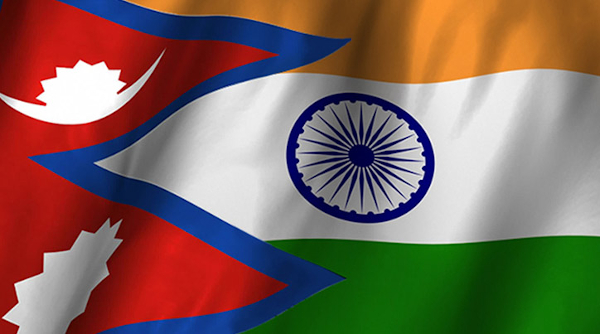
India’s engagement with Nepal has entered an important new phase with National Security Advisor Ajit Doval holding talks with Nepal’s Foreign Minister Shisir Khanal in New Delhi. The meeting carries significance because it comes at a sensitive moment in India–Nepal relations, when Kathmandu’s new political leadership is shaping its foreign policy direction and New Delhi is working to preserve strategic trust with one of its closest neighbours.
Nepal is not an ordinary neighbour for India. It shares an open border, deep civilisational links, religious routes, family connections, trade channels, security concerns and hydropower potential with India. The relationship touches daily life across Bihar, Uttar Pradesh, Uttarakhand, West Bengal, Sikkim and Nepal’s southern plains. A shift in political tone in Kathmandu therefore has direct meaning for India’s neighbourhood policy.
The Doval–Khanal engagement shows that India is choosing direct dialogue, institutional contact and early outreach. Instead of allowing recent tensions to define the relationship, New Delhi appears focused on rebuilding confidence through practical cooperation. The talks reportedly covered security, border management, connectivity, intelligence coordination, energy cooperation, trade, investment and development projects. These are the working pillars of the India–Nepal partnership.
Security cooperation remains central to the relationship. The open border is a symbol of trust, but it also requires constant coordination. Movement of people, goods and pilgrims is part of the shared social fabric. At the same time, illegal activities, smuggling networks, fake currency routes, trafficking channels and cross-border criminal movements can misuse openness. Strong communication between security agencies helps preserve the open-border model while protecting national interests.
The meeting also has a strategic Himalayan dimension. Nepal sits between India and China, making its foreign policy choices important for the larger regional balance. India’s objective is to keep Nepal anchored in a relationship of trust, development and mutual respect. Connectivity projects, energy trade and infrastructure cooperation give this relationship a practical foundation. When roads, transmission lines, rail links and trade corridors expand, strategic trust gains physical form.
Energy cooperation is one of the strongest opportunities in the relationship. Nepal has major hydropower potential, while India has a large energy market. Cross-border electricity trade can bring revenue to Nepal and clean power to India. Transmission infrastructure, power purchase agreements and joint hydropower development can turn geography into prosperity. This makes energy diplomacy one of the most productive areas for the next phase of India–Nepal ties.
Connectivity is another crucial pillar. India and Nepal need faster movement across borders through roads, railways, inland trade routes and integrated check posts. Better connectivity supports commerce, tourism, pilgrimages, education, healthcare access and emergency response. It also helps border communities that depend on daily movement for livelihood. A strong connectivity framework can reduce procedural delays and make the border an economic bridge.
The timing of the talks is important because Nepal’s new leadership has introduced a more assertive tone on foreign policy. Recent comments on the India–Nepal border dispute and suggestions of external involvement created unease in New Delhi. India’s position has remained consistent: boundary questions should be handled bilaterally. The Doval–Khanal meeting therefore becomes a channel to restore seriousness, reduce noise and bring the conversation back to established mechanisms.
This is where Doval’s role becomes important. As National Security Advisor, he brings a security-and-strategy lens to diplomacy. His engagement with Nepal’s foreign minister indicates that India is treating the relationship as a priority issue involving security, development and regional stability together. It also shows that India wants to engage Kathmandu’s new power structure early rather than wait for misunderstandings to deepen.
People-to-people relations form the deeper strength of the partnership. India and Nepal share temples, traditions, languages, family networks, military service links and cultural memory. The Gorkha connection with the Indian Army, the pilgrimage circuits of Pashupatinath, Janakpur, Ayodhya and Kashi, and the everyday movement of students, workers and traders give the relationship a civilisational depth that formal diplomacy cannot replace. Any political strain must be managed with this social foundation in mind.
The roundtable engagement in New Delhi also points to a wider effort to combine policy dialogue with civilisational outreach. India’s approach to Nepal works best when strategic interests and cultural bonds move together. Development projects can build trust, but cultural respect gives the relationship emotional durability. The future of India–Nepal ties will depend on balancing both.
The larger message from the meeting is clear. India is recalibrating its Nepal outreach through early contact, strategic clarity and practical cooperation. The aim is to prevent legacy disputes from overpowering shared development priorities. Border concerns, security issues and political sensitivities require calm handling. Trade, energy, connectivity and people-centric projects require forward movement.
For Nepal, stable relations with India bring economic access, energy opportunity, healthcare support, education links, jobs, transit routes and disaster-response cooperation. For India, a stable Nepal strengthens Himalayan security, regional connectivity and neighbourhood confidence. The relationship serves both sides when it is managed through direct dialogue and mutual sensitivity.
The Doval–Khanal talks therefore mark an important moment in the current phase of India–Nepal relations. They show that New Delhi is prepared to engage Nepal’s new leadership with seriousness and speed. They also show that India wants the relationship to move beyond friction and return to its natural strengths: geography, culture, security, trade and shared prosperity.
India and Nepal have passed through many political cycles, but the foundation of the relationship has remained strong. The task now is to protect that foundation from short-term turbulence and build a modern partnership suited to a changing Himalayan region. The New Delhi talks offer an early signal that both sides have an opportunity to reset the tone, deepen trust and give the relationship a more practical direction.
You may also like
-
Tarang Shakti Delegates from 28 Countries Visit HAL and BEL to Explore India’s Defence Manufacturing Ecosystem
-
Swiss President Guy Parmelin to Visit India as EFTA Economic Partnership Deepens
-
India and Brazil Move to Expand Mercosur Trade Pact Beyond 450 Tariff Lines
-
India and Qatar Accelerate FTA and Investment Treaty Talks
-
India and Russia Review Bilateral Ties and International Developments in Moscow
