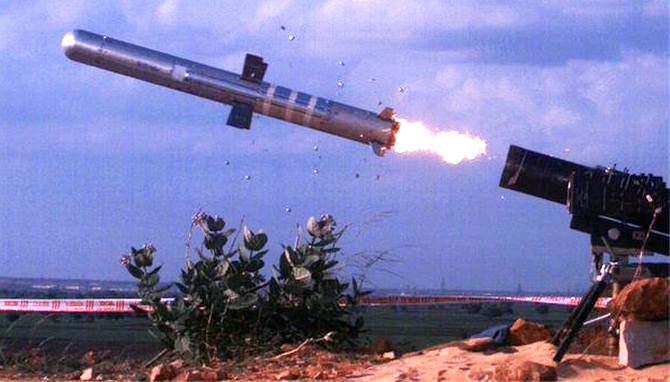
India’s missile manufacturing ecosystem is entering a decisive new phase. For decades, Bharat Dynamics Limited carried the central burden of producing guided missiles for the armed forces. That role gave India a stable public-sector backbone in strategic weapon manufacturing. The new policy direction expands that foundation into a wider industrial network where private defence companies, public-sector units, DRDO laboratories and specialist suppliers work together from development to production.
The change is significant because tactical missiles have become one of the most important instruments of modern warfare. These weapons shape battles through speed, precision, range and controlled escalation. They can strike enemy air-defence radars, destroy armour, hit command centres, attack naval targets, intercept aircraft and give small drones a lethal punch. In a battlefield filled with sensors, drones, electronic warfare and rapid mobilisation, a country needs missiles in numbers, variants and launch platforms. A single production channel creates pressure on timelines. A wider production base gives the armed forces faster access to tested systems and gives industry the confidence to invest in specialised manufacturing.
Bharat Dynamics Limited remains a crucial pillar in this structure. Its experience in guided missiles, anti-tank weapons, air-defence systems and integration work gives India a proven production base. The reform expands the national missile ecosystem around this legacy. Instead of concentrating every major tactical missile programme around one primary production centre, DRDO can now distribute projects across capable public and private partners. This creates parallel capacity, reduces bottlenecks, encourages technological competition and builds a deeper supplier base for seekers, propulsion units, warheads, launchers, composites, electronics, control systems and testing equipment.
The Development-cum-Production Partner model is central to this shift. Under this approach, industry enters the programme during development rather than waiting for a finished design. The partner works with DRDO through design refinement, prototype realisation, trials, quality checks and eventual production. This changes the rhythm of defence manufacturing. A company that participates during development understands the system, its tolerances, its integration challenges and its production engineering requirements. When the user trials are completed, the production line can move faster because the manufacturing partner has grown with the weapon.
This is especially important for systems such as Pralay, NASM-SR, Rudram, VSHORADS, long-range glide bombs and UAV-launched precision-guided munitions. Each weapon fills a different tactical requirement. Pralay gives India a mobile, high-precision conventional strike missile for battlefield and theatre-level targets. NASM-SR strengthens helicopter-launched naval attack capability against hostile surface targets. Rudram brings air-launched strike power against enemy radar and air-defence nodes. VSHORADS gives troops a man-portable shield against low-altitude aerial threats. Long-range glide bombs increase the reach of fighter aircraft against hardened ground targets. UAV-launched precision munitions bring missile capability to unmanned platforms and give frontline formations a compact strike option.
The private-sector opening also reflects the changing character of Indian defence production. India’s defence manufacturing base is already expanding, and private companies have gained experience in artillery, ammunition, drones, composites, electronics, radars, loitering munitions, space systems and armoured platforms. Companies such as Adani Defence, Bharat Forge, ICOMM and Solar Defence represent different industrial strengths. Some bring aerospace manufacturing and missile-subsystem experience. Some bring metallurgy, forging, precision engineering and mass production. Some bring electronics, structures, communications and infrastructure-grade manufacturing capacity. Missile production needs this diversity because every missile is a system of systems.
The battlefield reason behind this reform is clear. Modern wars consume missiles quickly. Precision weapons decide the opening phase of conflict by striking radars, logistics hubs, ammunition dumps, bridges, runways, mobile launchers and command posts. Air defence units need interceptors in adequate numbers. Naval forces need anti-ship weapons across helicopters, ships and aircraft. Drone units need small precision munitions that can destroy armour and field positions. A country with many missile types also needs industrial surge capacity. The ability to manufacture at scale becomes as important as the ability to design a successful weapon.
This wider production model also strengthens conventional deterrence. When an adversary knows that India can develop, test, manufacture and replenish tactical missiles through multiple domestic channels, the cost of aggression rises. Deterrence comes from readiness as much as technology. A missile that exists only as a successful prototype gives limited military value. A missile that enters production, reaches units, integrates with platforms and receives steady upgrades becomes a real instrument of power.
The reform has a strong economic dimension as well. Missile manufacturing creates high-value industrial work. It draws in MSMEs, start-ups, electronics firms, composite manufacturers, software developers, explosives specialists, testing laboratories and precision-machining units. Every missile programme creates a supply chain around materials, actuators, batteries, seekers, datalinks, navigation modules, propellants, launch containers and ground-support equipment. Once these chains mature, they support future systems across air defence, anti-armour warfare, naval strike, drone warfare and long-range fires.
This model also supports export potential. Countries across Asia, Africa and the Middle East are looking for reliable, affordable and combat-relevant defence systems. India’s missile export success with systems such as BrahMos has already shown the diplomatic value of indigenous weapon production. Tactical missiles, air-defence systems, guided munitions and drone-launched weapons can form the next export layer if production capacity, certification, quality assurance and after-sales support mature together.
The biggest challenge will be execution discipline. Missile systems demand extreme reliability. Private participation must come with strict quality control, secure supply chains, cyber-safe design environments, classified data protection, materials traceability and rigorous testing. The armed forces will need confidence that every missile from every approved line performs exactly as required in field conditions. The solution lies in strong certification, deep DRDO supervision, transparent competition, production audits and long-term upgrade planning.
This reform should be seen as an industrial expansion of India’s missile power. BDL remains an important national asset. BEL, HAL, DRDO laboratories, private companies and MSMEs now form a larger circle around India’s tactical missile ambitions. The country is moving from a limited production-centre mindset to an ecosystem mindset. That ecosystem can build, test, upgrade, scale and export advanced weapons with greater speed.
India’s security environment demands such a shift. The northern and western fronts require precision, mobility and rapid response. The Indian Ocean requires strong naval strike capability. Drone warfare requires miniaturised precision weapons. Air defence requires layered protection against aircraft, drones, cruise missiles and loitering threats. A diversified missile industry gives India the industrial depth to support all these missions.
The opening of tactical missile production to private industry marks a structural turning point. It links battlefield urgency with industrial policy. It gives DRDO a larger production network. It gives the armed forces a path toward faster induction. It gives private industry a serious role in high-end weapon systems. Above all, it strengthens India’s journey toward self-reliant military power, where design, development, production and future upgrades remain inside the country’s own strategic ecosystem.
Reference :
- Ministry of Defence — Draft Defence Acquisition Procedure 2026
https://mod.gov.in/sites/default/files/DRAFT-DAP-2026_0.pdf - Bharat Dynamics Limited — Official Website / About BDL
https://bdl-india.in/en - PIB — DRDO celebrates 68th Foundation Day
https://www.pib.gov.in/PressReleaseIframePage.aspx?PRID=2210663 - PIB — DRDO successfully conducts salvo launch of two Pralay missiles
https://www.pib.gov.in/PressReleasePage.aspx?PRID=2210128 - PIB — DRDO conducts successful flight-trials of VSHORADS
https://www.pib.gov.in/PressReleasePage.aspx?PRID=2233776 - PIB — DRDO & IAF conduct successful flight-tests of RudraM-II Air-to-Surface Missile
https://www.pib.gov.in/PressReleasePage.aspx?PRID=2268099 - PIB — Defence production soars to an all-time high of Rs 1.51 lakh crore in FY 2024-25
https://www.pib.gov.in/PressReleasePage.aspx?PRID=2154551 - Adani Defence & Aerospace — Missiles portfolio
https://www.adanidefence.com/missiles - SSBCrack — Defence Ministry opens tactical missile production to private sector
https://www.ssbcrack.com/2026/06/defence-ministry-opens-tactical-missile-production-to-private-sector-ends-bdls-exclusive-role.html - Republic World — India ends BDL monopoly, opens tactical missile production to private firms
https://www.republicworld.com/defence/india-ends-bdl-monopoly-opening-indigenous-tactical-missile-production-to-private-defence-firms-under-major-new-reforms-2026-06-07-127288
You may also like
-
Astra Microwave Expands Counter-Drone Capabilities with Layered Detection and Neutralisation Systems
-
MDL Begins Development of Indigenous Lithium-Ion Battery System for Project-75(I) Submarines
-
Tarang Shakti Delegates from 28 Countries Visit HAL and BEL to Explore India’s Defence Manufacturing Ecosystem
-
India’s 114 Rafale Fighter Jet Programme Moves Towards Final Decision with Focus on Indigenous Integration
-
Embraer and Mahindra Identify Nagpur as Potential C-390 Millennium Assembly Hub in India
