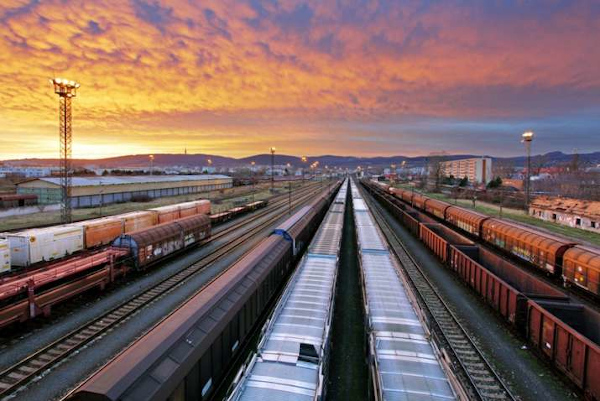
India has completed one of the largest railway freight infrastructure programmes in its history, with the Eastern and Western Dedicated Freight Corridors now fully commissioned across a combined 2,843 route kilometres.
The completion milestone comes with the formal dedication of three important sections of the Western Dedicated Freight Corridor, covering a combined 326 route kilometres and developed at a cost of more than ₹20,700 crore. The sections are Sanand (North)–Makarpura, New Umbergaon–New Saphale and New Saphale–Jawaharlal Nehru Port Terminal.
Prime Minister Narendra Modi’s September 8 programme in Vadodara includes the dedication of these sections and the flagging off of freight services from New Sanand (North), New Makarpura, New Umbergaon and New JNPT. The Prime Minister’s Office described the event as marking the completion of the Western Dedicated Freight Corridor project and bringing the entire DFC network into operation across its full length.
The milestone completes a freight railway system deliberately separated from India’s heavily used passenger network and designed to carry longer, heavier and faster goods trains between major industrial centres, inland freight terminals and ports.
A 2,843-km Freight Railway Backbone
The operational DFC network consists of two corridors.
The Eastern Dedicated Freight Corridor, running from Ludhiana to Sonnagar, extends for 1,337 km, while the Western Dedicated Freight Corridor, connecting Dadri with Jawaharlal Nehru Port Terminal, extends for 1,506 km.
Together, they account for the full 2,843-km first-phase DFC network now commissioned by the Ministry of Railways.
Earlier in 2026, the Ministry of Railways placed the combined cost of the Eastern and Western DFC projects at approximately ₹1,24,005 crore. The Eastern corridor had already been fully commissioned, while the final 102-route-km Vaitarna–JNPT portion of the Western corridor remained under completion at the beginning of the year.
The importance of the latest completion lies particularly in taking the Western DFC directly to JNPT, one of India’s most important container gateways.
According to the Prime Minister’s Office, direct connectivity with the Jawaharlal Nehru Port Authority is expected to accelerate movement of export-import cargo, strengthen links between ports and industrial centres, reduce logistics costs and help ease congestion on Mumbai’s conventional railway network.
For freight originating in northern and western India’s industrial and consumption centres, the Western DFC now provides a dedicated high-capacity rail route all the way to the country’s principal western maritime gateway.
Built for Freight Rather Than Passenger Trains
The Dedicated Freight Corridors are fundamentally different from conventional Indian Railways routes.
They were engineered specifically for heavy freight movement, with infrastructure allowing a maximum permissible train speed of 100 kmph, axle loads of 25 tonnes, long-haul trains carrying up to around 13,000 tonnes, and longer formations than those normally accommodated on the conventional network.
The Western DFC has another particularly important capability: double-stack container operations.
By placing one container above another, a single freight train can carry significantly more containerised cargo without requiring a proportional increase in train movements. This makes the Western corridor particularly suited to the large flows of container traffic linking ports such as JNPT and Gujarat’s maritime gateways with inland logistics centres and northern India.
The system also uses modern railway infrastructure including automatic signalling, high-capacity electric traction, digital traffic control and communications systems.
The original operational objective was to raise average freight speeds dramatically compared with conventional mixed-traffic lines, where freight trains must frequently give way to faster passenger services. Railway documents have placed the DFC design objective for average freight movement at roughly 65–70 kmph, while permitting maximum speeds of 100 kmph.
Removing freight trains from crowded passenger routes also creates capacity elsewhere.
The Ministry of Railways says shifting freight onto the Eastern and Western DFCs has opened additional paths on the conventional railway system, enabling Indian Railways to operate more passenger as well as freight services while improving overall network reliability.
Already Handling More Than 443 Trains a Day
The DFC network was carrying substantial traffic even before the formal dedication of the latest sections.
In an official update issued on August 7, 2026, the Ministry of Railways said an average of approximately 443 trains per day were being operated on the Dedicated Freight Corridors.
The Railways reported steadily rising freight volumes, higher average speeds, quicker turnaround times and improved reliability on the commissioned sections. Traffic includes containers, coal and other bulk commodities.
The 443 figure should therefore be understood as a recent system-wide operating average rather than the number of trains handled after the September 8 completion ceremony.
The scale of operations can also be seen in train interchanges between DFCCIL and the wider Indian Railways network.
On January 5, 2026, DFCCIL handled a record 892 train interchanges in a single day with five Indian Railways zones, surpassing the previous record of 865 set one day earlier. The Railways attributed this capacity to improved traffic regulation, automated signalling, digital control rooms, high-powered locomotives and better management of feeder routes and yards.
These interchange figures are different from the average number of trains operating on the DFC itself, but they demonstrate the growing integration between the dedicated corridors and the national railway system.
Why the JNPT Connection Is Especially Important
The Western Dedicated Freight Corridor was conceived around India’s western ports and the enormous volume of cargo moving between them and the northern hinterland.
DFCCIL’s original planning documents identified container traffic between western ports and inland container depots as a core traffic base for the corridor, alongside petroleum products, fertilisers, coal, foodgrains, cement, salt, iron and steel.
Until the final approach to JNPT was completed, freight still depended on conventional railway infrastructure for part of its journey into the Mumbai port region.
Direct DFC connectivity changes that.
Container trains can now use a purpose-built freight route extending from the National Capital Region through Haryana, Rajasthan and Gujarat into Maharashtra and directly towards the JNPT logistics system.
The government expects this to improve evacuation of import containers from the port and movement of export cargo towards it while reducing pressure on railway routes in the Mumbai metropolitan region.
It also strengthens the connection between the freight corridor and the industrial belts developing along western India, including regions linked to the Delhi-Mumbai Industrial Corridor.
A Project Conceived to Break a Capacity Bottleneck
The origins of the Dedicated Freight Corridor programme go back two decades.
The Dedicated Freight Corridor Corporation of India Limited, or DFCCIL, was incorporated on October 30, 2006 as a wholly owned Ministry of Railways special-purpose vehicle responsible for planning, financing, constructing, maintaining and operating dedicated freight corridors.
The immediate problem was congestion.
Indian Railways’ Golden Quadrilateral and its diagonals connect the country’s largest metropolitan and industrial centres but carried a disproportionately large share of freight traffic. Passenger and freight trains had to compete for the same track capacity.
Dedicated freight routes offered a way to separate the two types of traffic.
The objective was not merely to build another railway line. DFCCIL was tasked with creating infrastructure capable of carrying more freight per train, cutting transportation costs, increasing reliability and allowing Indian Railways to win back freight that had progressively shifted to road transport.
The programme eventually evolved into the presently commissioned 1,337-km Eastern DFC and 1,506-km Western DFC.
Construction proceeded section by section over several years.
For example, the Sanand North–Makarpura section, one of the stretches being formally dedicated in the September 2026 programme, had already been completed and commissioned during FY2023-24. This illustrates an important distinction between the physical commissioning of DFC sections and their subsequent formal dedication to the nation.
By March 2025, 2,741 km, or 96.4% of the network, was operational, leaving the difficult final approach towards JNPT among the last major pieces to be completed.
By August 2026, the Ministry of Railways officially stated that both the Eastern and Western corridors had been commissioned.
The September 8 dedication therefore represents the formal culmination of a project whose constituent sections progressively entered service over several years.
Freight Loading Has Reached a Record 1.67 Billion Tonnes
The completion of the DFC network comes as Indian Railways is handling historically high freight volumes.
Railway freight loading increased from 1,098 million tonnes in 2014-15 to a record 1,670 million tonnes in 2025-26.
The Ministry reported the following progression:
| Financial Year | Freight Loading |
|---|---|
| 2014-15 | 1,098 MT |
| 2015-16 | 1,104 MT |
| 2016-17 | 1,109 MT |
| 2017-18 | 1,162 MT |
| 2018-19 | 1,223 MT |
| 2019-20 | 1,210 MT |
| 2020-21 | 1,233 MT |
| 2021-22 | 1,418 MT |
| 2022-23 | 1,512 MT |
| 2023-24 | 1,591 MT |
| 2024-25 | 1,617 MT |
| 2025-26 | 1,670 MT |
The Railways said the 2025-26 performance made Indian Railways the second-largest freight-carrying railway system in the world.
During 2025-26 alone, freight loading increased 3.25% over the previous year, with strong growth in commodities including fertilisers, pig iron and finished steel, iron ore and cement.
The DFC cannot alone be credited for all of that growth, since freight performance also depends on the wider railway network, economic activity, terminals, wagons and customer demand. However, the Ministry identifies the corridors as an important element in creating additional freight capacity and improving the speed and reliability of rail logistics.
Freight Reform Goes Beyond the DFC
The government is simultaneously expanding the infrastructure feeding traffic into the railway system.
Under the Gati Shakti Multi-Modal Cargo Terminal policy, 142 cargo terminals had been commissioned by August 2026 with estimated capacity of 224 million tonnes per annum.
The Ministry said these terminals had attracted approximately ₹10,000 crore in private investment and handled about 146 million tonnes of freight during 2025-26.
Railways is also encouraging private investment in rolling stock.
Around 275 rakes of special-purpose wagons and 397 rakes of general-purpose wagons were operational under various investment schemes, along with approximately 54 industry-owned rakes used for automobile transportation.
These programmes are intended to provide specialised capacity for commodities including cement, oil, steel, fly ash, iron ore and coal.
Another initiative, the Joint Parcel Product–Rapid Cargo Service, combines rail transport with first-and-last-mile logistics and permits parcel capacity to be booked through aggregators using the Virtual Aggregation Platform.
CONCOR is using the system for door-to-door parcel services on the Delhi–Kolkata and Mumbai–Kolkata sectors and has also been conducting a door-to-door logistics pilot at Sonik Goods Shed.
Together, these measures show that the Dedicated Freight Corridors are intended to function as the high-capacity trunk routes within a much broader logistics network rather than as isolated railway lines.
Next Step: A 2,052-km Dankuni–Surat Freight Corridor
Completion of the Eastern and Western DFCs does not mark the end of India’s dedicated freight corridor programme.
The Union Budget 2026-27 announced a new corridor linking Dankuni in West Bengal with Surat in Gujarat.
Railway Minister Ashwini Vaishnaw subsequently said the proposed route would extend for approximately 2,052 km, passing through West Bengal, Odisha, Chhattisgarh, Madhya Pradesh and Maharashtra before reaching Gujarat.
The proposed corridor is intended to create a new east-west freight axis and integrate with the existing Western DFC near Surat, providing industries in eastern and central India with improved access to ports on the western coast.
The Ministry confirmed in July and August 2026 that work on preparation or updating of the Detailed Project Report had already been taken up.
That is an important distinction: the Dankuni–Surat corridor has been announced and its DPR work is underway, but it has not yet reached construction or commissioning.
The existing operational DFC network remains the 2,843-km system comprising Ludhiana–Sonnagar and Dadri–JNPT.
A Structural Change in Indian Freight Rail
The completion of the DFC system changes the architecture of railway freight movement in India.
For decades, long-distance freight trains shared the same tracks with passenger and express services. That model limited freight speeds, consumed valuable paths on high-density routes and created operational compromises between passenger punctuality and cargo movement.
The Dedicated Freight Corridors create a parallel high-capacity system built specifically for goods.
On the Western DFC, double-stack container trains can move between inland logistics centres and western ports. Heavy-haul trains can carry higher loads. Faster and more predictable freight operations reduce wagon turnaround times, while shifting goods trains away from conventional routes releases capacity for passenger services.
The final connection to JNPT is particularly consequential because it closes the gap between the dedicated freight railway and one of India’s principal maritime gateways.
The result is a continuous freight artery stretching from the National Capital Region through western India’s major industrial states to the Mumbai port system.
After nearly two decades of planning, land acquisition, financing, engineering and phased construction, the 2,843-km Eastern and Western Dedicated Freight Corridor network is now complete.
Its next test will no longer be construction.
It will be how effectively India uses that infrastructure to raise rail’s share of freight, reduce logistics costs, increase port connectivity and support the much larger volumes of cargo expected from a growing industrial economy.
You may also like
-
ICAR Scientists Develop Indigenous Protective Gloves for Cotton Farmers, Sign Commercial Manufacturing Agreement
-
BHEL–Coal India Joint Venture Begins Construction of ₹25,016 Crore Indigenous Coal Gasification Project in Odisha
-
PM Modi to Inaugurate RBI’s Tier IV Data Centre and Cybersecurity Training Institute in Bhubaneswar
-
India Creates 11 Crore Digital Farmer IDs Five Months Ahead of Target, Strengthening AgriStack Infrastructure
-
Chak-Hao Black Rice of Manipur and Nagaland: The Aromatic Purple Heritage Grain with GI Recognition
