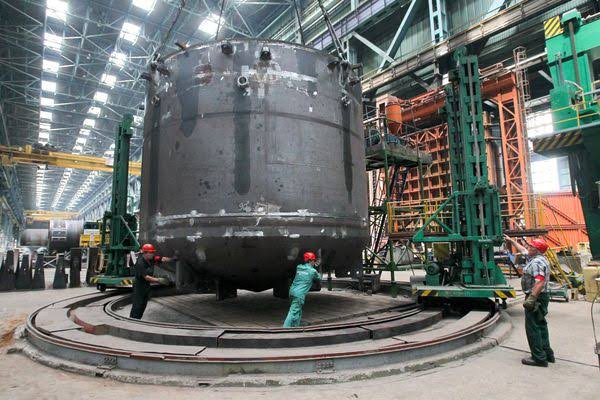
India is accelerating one of the world’s most distinctive nuclear-energy strategies, combining indigenous reactor development, a closed nuclear fuel cycle, fast breeder technology and a long-term transition towards thorium-based power. The effort is increasingly important to the country’s plans for reliable low-carbon electricity, energy security and technological self-reliance as electricity demand expands alongside industrial growth.
Unlike nuclear programmes built primarily around imported enriched-uranium technology, India’s programme was conceived around the country’s own resource position. Limited domestic uranium reserves and comparatively abundant thorium deposits led Indian scientists to develop a three-stage nuclear power programme intended to extract progressively greater amounts of energy from available nuclear materials while ultimately opening the way for large-scale utilisation of thorium.
That strategy is now entering an important technological phase. India operates 24 nuclear power reactors with an installed capacity of 8.78 GW, while additional reactors are under construction and a much larger expansion is planned under the Nuclear Energy Mission. The long-term objective is to build 100 GW of nuclear generating capacity by 2047, transforming nuclear power from a relatively small part of India’s electricity system into a major component of its clean baseload capacity.
Nuclear Power as Reliable Baseload for a Growing Economy
India’s electricity system is simultaneously expanding renewable generation and searching for dependable sources capable of operating continuously. Solar and wind power will remain central to the energy transition, but their output varies with weather and time of day. Nuclear plants, once operating, can supply electricity continuously for long periods and therefore provide an important source of stable baseload generation.
This characteristic becomes increasingly significant as India’s economy electrifies. Industrial complexes, hospitals, transport systems, data infrastructure, communication networks and other critical services require reliable electricity irrespective of variations in renewable generation.
Nuclear power also produces electricity with very low operational carbon emissions. For India, this creates a strategic intersection between three objectives: reducing dependence on fossil fuels, maintaining grid reliability and moving towards the country’s net-zero emissions objective for 2070.
The Government’s nuclear roadmap envisages the existing capacity rising substantially during the next decade as projects already under implementation are completed. Additional indigenous Pressurised Heavy Water Reactors, larger reactor technologies, Small Modular Reactors and eventually wider public and private participation are expected to contribute to the longer-term 100 GW objective.
Why India’s Nuclear Programme Developed Differently
India’s nuclear strategy is closely linked to its geology.
The country possesses uranium resources, but many deposits are comparatively low grade and domestic availability alone is insufficient for the scale of nuclear generation envisaged over the long term. India therefore supplements domestic uranium production through imports.
Thorium presents an almost opposite situation. India possesses substantial thorium-bearing mineral resources, particularly in monazite-rich coastal sands found across parts of Kerala, Tamil Nadu, Andhra Pradesh and Odisha, among other regions.
Thorium-232, however, cannot simply be loaded into a conventional reactor and used in the same manner as fissile uranium-235. Thorium is a fertile material rather than a fissile fuel. When it absorbs neutrons inside an appropriate reactor environment, it can eventually be converted into uranium-233, which is capable of sustaining nuclear fission.
That scientific reality gave rise to India’s three-stage programme: use uranium first, employ the plutonium recovered from irradiated fuel to establish fast breeder reactors, and ultimately use the fissile material produced through these stages to unlock thorium as a major energy resource.
Stage One: Pressurised Heavy Water Reactors Build the Foundation
The first stage is centred on Pressurised Heavy Water Reactors, or PHWRs, which have become the backbone of India’s indigenous nuclear power programme.
PHWR technology is particularly suited to India’s strategy because these reactors can operate using natural uranium rather than requiring enriched uranium. Heavy water acts as both moderator and coolant in the reactor system, allowing efficient neutron utilisation.
As the natural uranium undergoes fission and produces electricity, some uranium-238 atoms absorb neutrons and are eventually transformed into plutonium-239. Instead of treating the resulting spent nuclear fuel purely as waste, India reprocesses it and recovers plutonium and other useful nuclear materials.
This is central to the concept of India’s closed nuclear fuel cycle. Material emerging from one stage becomes fuel for the next, allowing the country to extract considerably greater energy from its original uranium resources.
India has progressively expanded the size and domestic content of its PHWR programme, culminating in the development of the indigenous 700 MWe PHWR design. Ten additional indigenous PHWR units have been approved for construction in fleet mode, allowing standardisation of design, procurement and manufacturing across multiple reactors.
Stage Two Arrives With the Prototype Fast Breeder Reactor
One of the most important developments in India’s nuclear programme occurred on 6 April 2026, when the indigenous 500 MWe Prototype Fast Breeder Reactor at Kalpakkam in Tamil Nadu achieved first criticality.
Criticality means that the reactor has achieved a controlled and self-sustaining nuclear chain reaction. It is a fundamental milestone between construction and subsequent power operation.
The achievement effectively opened the technological pathway towards the second stage of India’s nuclear programme. The PFBR was designed through the Indira Gandhi Centre for Atomic Research, while Bharatiya Nabhikiya Vidyut Nigam Limited constructed and commissioned the reactor at the Kalpakkam Nuclear Complex.
Fast breeder reactors differ fundamentally from conventional thermal reactors. The PFBR initially uses uranium-plutonium mixed oxide fuel, incorporating plutonium recovered from the spent fuel of India’s first-stage reactors.
A breeder reactor is designed not merely to consume nuclear fuel but to create additional fissile material while operating. Neutrons released during fission can convert fertile uranium-238 into plutonium-239. Future configurations can also support the conversion of thorium into uranium-233.
The result is a reactor system capable of extracting far more energy from nuclear resources than would be possible through a once-through fuel cycle.
The significance is also industrial. Nearly 90 per cent of PFBR equipment and systems were manufactured domestically through collaboration between IGCAR and Indian industry, demonstrating that the programme is building capabilities extending far beyond reactor physics into specialised metallurgy, precision engineering, pumps, control systems, instrumentation and nuclear-grade manufacturing.
The Government has also initiated pre-project activities for two additional 500 MW Fast Breeder Reactors, indicating that the PFBR is intended to serve as the technological foundation for a broader fast-reactor programme rather than remaining a standalone demonstration.
Stage Three: Unlocking India’s Thorium Resources
The third stage represents the ultimate objective envisaged in India’s original nuclear strategy.
Once sufficient quantities of uranium-233 have been produced using thorium, reactors specifically designed around the thorium–uranium-233 fuel cycle could progressively increase the role of thorium in power generation.
This pathway is particularly attractive to India because thorium resources could provide an indigenous fuel base capable of supporting nuclear generation over extremely long periods. Reaching that stage, however, requires the technological and material foundation established through the first two stages.
That is why the PFBR milestone is strategically important. Fast breeder technology provides the bridge between India’s established uranium-based PHWR programme and the future utilisation of thorium.
The three stages are therefore interconnected rather than separate reactor programmes: natural uranium supports PHWRs; recovered plutonium feeds fast breeder reactors; breeder technology helps create the fissile inventory needed for the eventual thorium cycle.
Small Modular Reactors Add a New Path
Alongside the long-established three-stage strategy, India is entering another major field of reactor development — Small Modular Reactors, or SMRs.
SMRs generally produce up to about 300 MWe and are designed around smaller reactor modules that can potentially be manufactured in a more standardised manner and deployed incrementally. Their smaller size opens possibilities that are difficult to address with conventional gigawatt-scale nuclear plants.
The Nuclear Energy Mission announced in the Union Budget 2025–26 allocated ₹20,000 crore for the research, design, development and deployment of indigenous SMR technologies. India aims to have at least five indigenous SMRs operational by 2033.
BARC is currently developing several concepts. These include the 220 MWe Bharat Small Modular Reactor, the 55 MWe SMR-55, and a High-Temperature Gas-Cooled Reactor of up to 5 MW thermal capacity that could provide process heat and be coupled with an appropriate thermochemical system for hydrogen production.
The potential applications extend beyond conventional grid electricity. Smaller reactors could eventually be considered for captive industrial power, replacement or repurposing of retiring fossil-fuel generating sites, remote applications and energy-intensive industrial facilities requiring continuous electricity or process heat.
The high-temperature reactor programme is particularly significant because it links nuclear technology to another emerging energy field: low-carbon hydrogen production.
Recovering Fuel Instead of Treating It Entirely as Waste
India’s nuclear strategy also differs from many once-through fuel-cycle systems in its approach to spent nuclear fuel.
Spent fuel discharged from a reactor still contains substantial quantities of usable nuclear material. India’s closed fuel-cycle philosophy involves reprocessing this material to recover uranium and plutonium for further use.
This approach is essential to the three-stage programme because the plutonium recovered from PHWR fuel becomes a resource for fast breeder reactors.
Materials that cannot be reused must still be handled under stringent radioactive-waste-management systems. India has developed vitrification technology, through which high-level radioactive waste is incorporated into a stable glass matrix. The vitrified material can then be contained for safe long-term storage and subsequent management.
The combination of reprocessing, recycling and vitrification is intended both to recover valuable nuclear material and to reduce the volume of waste requiring long-term isolation.
Policy Reform Opens Nuclear Sector to Wider Participation
Technology alone will not be sufficient for India to move from less than 9 GW today to 100 GW by 2047. Achieving that scale will require new financing structures, larger manufacturing capacity, faster project execution and participation by companies beyond the traditional government nuclear establishment.
The SHANTI Act, 2025 — Sustainable Harnessing and Advancement of Nuclear Energy for Transforming India Act — has altered this framework by permitting private-sector participation in specified nuclear activities under licensing and regulatory oversight.
The legislation also gives the Atomic Energy Regulatory Board statutory status, strengthening the institutional framework that will oversee a larger and more diverse nuclear sector.
Government planning indicates that NPCIL and conventional public-sector development alone will not account for the entire 100 GW target. Other central and state public-sector enterprises, state governments, private companies and joint ventures are expected eventually to participate through different business models and reactor technologies.
That transition could have implications well beyond electricity generation. A much larger domestic nuclear programme would require an expanded ecosystem producing reactor vessels, pumps, steam generators, control systems, nuclear-grade materials, specialised forgings, instrumentation, electronics and safety equipment.
From Indigenous Reactors to a Complete Nuclear Technology Ecosystem
India’s nuclear programme is increasingly evolving from a collection of individual power projects into a broader technology ecosystem.
The indigenous PHWR programme provides the established foundation. Fast breeder technology is opening the second stage of the fuel cycle. Research into uranium-233 and thorium maintains the pathway towards the third stage. Small Modular Reactors introduce an entirely new class of applications, while high-temperature reactor research could connect nuclear power with industrial heat and hydrogen production.
Behind these reactor programmes lies another strategic objective: developing domestic expertise across the entire nuclear fuel cycle, from fuel fabrication and reactor design to reprocessing, waste immobilisation, advanced materials and regulatory systems.
The achievement of first criticality at the Kalpakkam PFBR in April 2026 was therefore more than the commissioning milestone of a single reactor. It demonstrated that a nuclear strategy conceived by Dr Homi J. Bhabha more than seven decades ago is moving into its second technological stage.
The challenge ahead is scale. Moving from 8.78 GW today to 100 GW by 2047 will require a pace of reactor construction and industrial mobilisation far greater than anything India has previously attempted. Yet the underlying technological pieces are becoming increasingly visible: large indigenous PHWRs, fast breeder reactors, closed-cycle fuel technologies, Small Modular Reactors and an eventual pathway towards thorium.
You may also like
-
Larsen & Toubro and Spain’s Navantia Partner to Develop Four Amphibious Assault Ships for Indian Navy
-
Punjab’s Rail Coach Factory Advances Vande Bharat Manufacturing as 16-Coach Trainset Undergoes 180 kmph Trial
-
Gujarat’s Svaayatt Systems Proposes Nine-Drone Autonomous Swarm for Indian Armed Forces
-
EndureAir and Maraal Aerospace Partner to Develop Indigenous High-Altitude Pseudo-Satellite for India
-
Serum Institute of India-Manufactured Ebola Vaccine Enters Clinical Trial in Uganda
