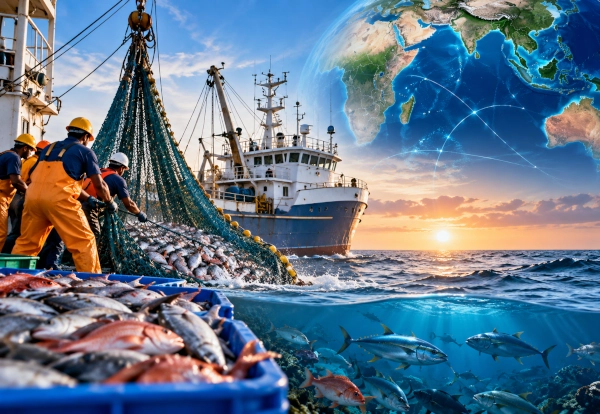
India has approved its accession to the Southern Indian Ocean Fisheries Agreement (SIOFA), marking an important step towards expanding the country’s fishing operations into international waters and strengthening its participation in global fisheries management.
The Ministry of Fisheries, Animal Husbandry and Dairying announced the decision on October 14, 2026. The move will enable India to pursue authorised fishing opportunities involving high-value marine resources in the Southern Indian Ocean while participating more actively in international conservation and fisheries governance.
The decision builds on India’s Guidelines for Sustainable Harnessing of Fisheries in the High Seas, issued in December 2025, which established a regulatory framework for Indian-flagged fishing vessels operating beyond national maritime boundaries.
India Moves Towards Full Membership in SIOFA
The Southern Indian Ocean Fisheries Agreement is a regional fisheries management framework established to promote the conservation and sustainable utilisation of fishery resources in the high seas of the Southern Indian Ocean.
India has participated in SIOFA as a Cooperating Non-Contracting Party since 2022. This arrangement has allowed the country to engage with the organisation while providing limited participation in its decision-making processes.
The government’s latest approval initiates India’s transition towards becoming a full Contracting Party. Full membership will strengthen India’s ability to participate in decisions concerning the management, conservation and sustainable harvesting of marine resources.
It will also provide greater opportunities for Indian representatives to participate in SIOFA’s Scientific Committee and Compliance Committee, which play important roles in fisheries assessment, conservation measures and regulatory oversight.
New Fishing Opportunities for Indian Vessels
India’s accession will create opportunities for Indian-flagged vessels and fishing enterprises to undertake authorised fishing operations within SIOFA’s area of competence.
The agreement covers commercially valuable marine resources, including squid, toothfish, alfonsino and other non-highly-migratory fish stocks found in the Southern Indian Ocean.
Its conservation framework extends to fish, molluscs, crustaceans and certain other marine species. Highly migratory species covered by separate international arrangements, including tuna and tuna-like fish, fall outside SIOFA’s principal mandate.
Access to these resources will allow Indian fishing enterprises to explore commercial opportunities beyond traditional fishing grounds while operating under internationally recognised conservation and management rules.
The initiative also offers opportunities to expand India’s presence in distant-water fisheries, a segment in which several established international fishing fleets already operate.
Building on India’s High-Seas Fisheries Guidelines
In December 2025, the Government of India introduced guidelines governing fishing and related activities undertaken by Indian-flagged vessels on the high seas.
The framework establishes requirements for vessel authorisation, registration, monitoring, operational safety and compliance with international fisheries conservation measures.
Under these guidelines, Indian-flagged fishing vessels must obtain a valid Letter of Authorisation (LOA) before undertaking high-seas fishing operations.
The authorisation process operates through the government’s ReALCRaft registration platform. Eligible vessels must also comply with relevant Regional Fisheries Management Organisation requirements and obtain an International Maritime Organization identification number.
These provisions create a regulatory foundation for expanding India’s distant-water fishing activities while maintaining accountability and responsible resource management.
India’s accession to SIOFA complements this framework by establishing a recognised basis for participation in the management of fisheries resources across the agreement’s geographical jurisdiction.
Strengthening India’s Participation in International Fisheries Governance
The Southern Indian Ocean contains valuable fisheries resources that require cooperation among participating countries to ensure sustainable harvesting.
Regional fisheries management organisations coordinate scientific assessments, conservation measures, monitoring systems and regulations governing fishing activities in international waters.
India has been a Contracting Party to the Indian Ocean Tuna Commission (IOTC) since 1996. That organisation primarily manages tuna and tuna-like species across its area of competence.
SIOFA provides a complementary framework covering other fisheries resources in the Southern Indian Ocean.
Through full participation in SIOFA, India will gain greater access to scientific information, fisheries research programmes and stock assessments.
The government expects this involvement to strengthen India’s contribution to international fisheries management while supporting the responsible development of its distant-water fishing industry.
Scientific Research and Sustainable Marine Resource Management
Scientific assessment forms an important part of modern fisheries management. Understanding the distribution, abundance and reproductive characteristics of marine species helps authorities establish appropriate conservation measures.
Participation in SIOFA will provide Indian institutions with opportunities to contribute to research concerning fisheries resources in the Southern Indian Ocean.
India will also be able to participate more actively in scientific discussions and assessments used to determine sustainable harvesting practices.
These activities support efforts to prevent overfishing, protect marine biodiversity and ensure the long-term availability of commercially important fish stocks.
The agreement also emphasises cooperation against illegal, unreported and unregulated fishing, which threatens marine ecosystems and undermines legitimate fishing operations.
India’s involvement will strengthen international cooperation in monitoring fishing activities and enforcing conservation requirements.
Maritime Monitoring and High-Seas Inspection
An additional component of India’s participation concerns maritime surveillance and compliance.
SIOFA has adopted a High Seas Boarding and Inspection (HSBI) Scheme, designed to strengthen monitoring and enforcement of fisheries regulations within its jurisdiction.
The scheme provides a framework for participating countries to cooperate in inspecting fishing vessels and verifying compliance with applicable conservation measures.
According to the Ministry of Fisheries, India’s involvement in this mechanism will support its regional maritime priorities and contribute to strengthening fisheries-related maritime security.
Greater participation in internationally coordinated monitoring can also help protect legitimate fishing enterprises from unfair competition arising from illegal fishing operations.
Expanding India’s Blue Economy and Marine Fisheries Industry
The government’s decision forms part of India’s wider strategy to develop its Blue Economy by expanding the sustainable use of marine resources.
According to the Department of Fisheries, Indian fishing vessels currently operate largely within a limited range of the country’s Exclusive Economic Zone. The government has identified the development of distant-water fishing capabilities as an important opportunity for expanding marine fisheries.
High-seas operations require specialised fishing vessels, navigation equipment, onboard processing systems, cold-storage facilities and logistical support.
The expansion of these capabilities can create opportunities for Indian shipbuilders, marine equipment manufacturers, seafood processors, exporters and fishing enterprises.
Access to additional marine resources can also support diversification within India’s seafood industry and strengthen its participation in international seafood markets.
The development of distant-water fisheries will complement the country’s established coastal and deep-sea fishing activities while creating opportunities for technological modernisation.
Supporting Fishing Communities and Seafood Exports
India’s participation in SIOFA is expected to create new economic opportunities for fishing enterprises and associated industries.
The development of internationally compliant fishing operations can encourage investment in modern vessels, seafood preservation technologies, processing facilities and marine logistics.
Improved access to commercially valuable species can also support product diversification and the development of new export markets.
The government’s high-seas fisheries framework permits eligible Indian operators to undertake fishing activities through ownership, chartering, leasing and joint-venture arrangements, subject to regulatory requirements.
These arrangements provide different opportunities for enterprises seeking to develop distant-water fishing capabilities.
The initiative will also support the wider fisheries value chain, including vessel maintenance, cold-chain infrastructure, seafood processing and export-oriented businesses.
India Strengthens Its Presence in the Southern Indian Ocean
The approval of India’s accession to SIOFA represents an important development in the country’s maritime and fisheries strategy.
By moving towards full participation in the agreement, India is strengthening its position in international fisheries governance while creating opportunities to develop a responsible distant-water fishing industry.
The initiative combines commercial opportunities with scientific cooperation, conservation responsibilities and maritime monitoring.
Together with the high-seas fisheries guidelines introduced in December 2025, the decision provides a stronger institutional foundation for expanding Indian fishing operations beyond traditional fishing grounds.
India’s growing participation in Southern Indian Ocean fisheries management will support the sustainable development of marine resources, strengthen its Blue Economy and open new avenues for Indian fishing enterprises in international waters.
References
- Press Information Bureau, Ministry of Fisheries, Animal Husbandry and Dairying — October 14, 2026: Central Government Approves India’s Accession to Southern Indian Ocean Fisheries Agreement (SIOFA)
- Department of Fisheries, Government of India — December 9, 2025: Guidelines for Sustainable Harnessing of Fisheries in the High Seas by Indian-Flagged Fishing Vessels, 2025
- Department of Fisheries, Government of India: Official Fisheries Policy and International Cooperation Documents
- Press Information Bureau — October 8, 2026: India’s WTO Fisheries Ratification: A Pragmatic Step, with More to Negotiate
You may also like
-
India’s Trout Production Grows Sixfold as Himalayan Coldwater Aquaculture Expands
-
Indian Health-Tech Startup Kubo Care Develops Radar-Based Technology for Elderly Care
-
Indian Startup Pramatra Space Develops Chip-Based Quantum Security for Space and Ground Networks
-
India Develops First Riverine Lighthouses on Brahmaputra to Strengthen Inland Waterway Navigation
-
Indian Railways Introduces Kerala’s First Vistadome Coach on Scenic Punalur–Sengottai Route
