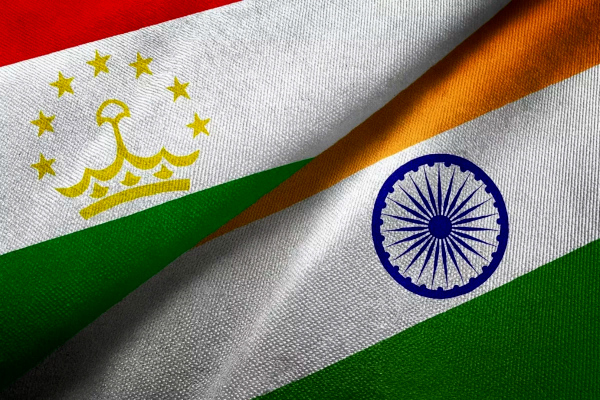
India and Tajikistan have reaffirmed their shared commitment to combating terrorism through closer intelligence cooperation, stronger institutional coordination and sustained action against cross-border terror networks. The two countries held the fifth meeting of the India-Tajikistan Joint Working Group on Counter Terrorism in Dushanbe, marking another important step in their security partnership.
The dialogue brought together officials from relevant ministries and agencies of both countries. The Indian side was led by Dr. Vinod Bahade, Joint Secretary for Counter Terrorism in the Ministry of External Affairs, while the Tajik side was led by Sherali Jonon, Head of the Department of Asia-Pacific Countries in Tajikistan’s Ministry of Foreign Affairs.
The discussions focused on the evolving threat from terrorism in South Asia, Central Asia and the wider region. Both sides exchanged assessments on terrorist groups operating globally and regionally, with particular attention to cross-border terrorism, radicalisation, terror financing, drug trafficking and the movement of foreign terrorist fighters.
India and Tajikistan strongly condemned terrorism in all its forms and manifestations. The two sides underlined that terrorism remains a direct threat to peace, security and stability, and that selective approaches to terrorism weaken the global fight against extremist violence.
A major area of focus was the need for coordinated action against terrorists and terror groups listed under the United Nations Security Council’s 1267 Sanctions Committee. This reflects India’s consistent position that internationally designated terrorist entities must face firm, verifiable and sustained action.
The meeting also addressed the misuse of technology for terrorist purposes. With extremist networks increasingly using encrypted platforms, digital propaganda, drones, online recruitment channels and informal financial routes, India and Tajikistan agreed on the importance of stronger information sharing and capacity building.
For India, the dialogue carries strategic importance because Tajikistan occupies a critical position in Central Asia and shares a long border with Afghanistan. Stability in Tajikistan and the wider Central Asian region has a direct bearing on regional security, counter-radicalisation efforts and the fight against narcotics-linked terror financing.
For Tajikistan, cooperation with India offers access to a trusted partner with long experience in counter-terrorism, border security, financial tracking, cyber monitoring and institutional capacity development. India’s growing security engagement with Central Asian countries reflects its broader commitment to regional stability and responsible security partnerships.
The two sides also discussed ways to strengthen cooperation through training, exchange of expertise, capacity building and regular engagement between security agencies. Such cooperation is especially important at a time when terrorism is becoming more networked, transnational and technology-enabled.
The Dushanbe dialogue highlights the maturity of India-Tajikistan relations. While the partnership has strong historical and cultural foundations, security cooperation has become one of its most important modern pillars. Both countries understand that terrorism, extremism and narcotics trafficking cannot be addressed in isolation. They require coordinated regional responses, trusted information networks and long-term institutional engagement.
The fifth counter-terrorism dialogue therefore reinforces a clear strategic message: India and Tajikistan are committed to working together against terrorism, strengthening regional security and ensuring that extremist networks find no safe space, no financial pipeline and no political cover.
As threats evolve across borders and digital platforms, the India-Tajikistan counter-terrorism partnership is expected to gain greater relevance in the years ahead. The Dushanbe meeting has added momentum to this cooperation and reaffirmed the role of both nations as responsible partners in the fight against terrorism.
You may also like
-
Bengaluru Startup Paar Autonomy Develops AI-Powered Drone Systems for GPS-Denied Environments
-
Sigma Advanced Systems Secures Fresh ₹973 Crore NATO Artillery Ammunition Order
-
India Advances Indigenous Defence and Space Technologies Through Naval Innovation, Drones and Advanced Electronics
-
Thales Seeks Indian Partnerships for Next-Generation Missiles, Radars and Electronic Warfare Systems
-
Indian and Australian Armies Conduct Jungle and Coastal Warfare Drills in AUSTRAHIND 2026
