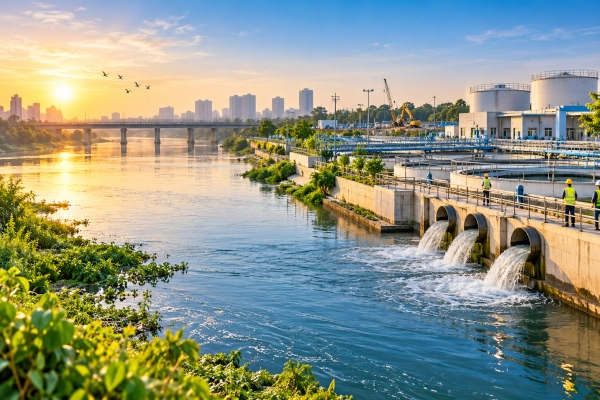
New Delhi, October 22, 2026: Union Home Minister Amit Shah inaugurated and laid the foundation stones for 43 water supply, sewage treatment and infrastructure projects worth ₹8,941.22 crore in Delhi, marking a major expansion of efforts to rejuvenate the Yamuna River. The projects aim to prevent untreated sewage from entering the river, strengthen wastewater management and improve essential water infrastructure across the national capital.
The initiative forms part of the government’s broader programme to restore the Yamuna’s water quality and modernise Delhi’s ageing sewerage network. Speaking at the event, Amit Shah reiterated the government’s commitment to cleaning the river by May 2029, while emphasising cooperation between the Central Government, Delhi and neighbouring states.
43 Projects to Strengthen Delhi’s Water and Sewerage Infrastructure
The Delhi Jal Board’s infrastructure programme comprises 43 projects with a combined investment of ₹8,941.22 crore. Of these, 10 projects worth ₹2,827.11 crore were inaugurated, while foundation stones were laid for another 33 projects valued at ₹6,114.11 crore.
The investments cover new sewage treatment plants, modernisation of existing facilities, decentralised wastewater treatment systems, sewerage networks, pumping stations and improvements to drinking-water infrastructure. The government intends to increase wastewater treatment capacity while extending sewerage services to residential areas that currently lack adequate infrastructure.
Delhi Chief Minister Rekha Gupta said the government was pursuing a scientific approach to Yamuna rejuvenation by improving sewage collection, treatment and disposal. The programme seeks to intercept wastewater before it enters the river and expand opportunities for treating and reusing the collected water.
Major Expansion of Sewage Treatment Capacity
One of the major components of the programme is the ₹1,161-crore sewage treatment project at Okhla, with a capacity of 124 million gallons per day (MGD). The facility represents a substantial addition to Delhi’s wastewater treatment infrastructure and will support efforts to reduce untreated sewage discharge into the Yamuna.
The government has also identified eight existing sewage treatment plants for modernisation at an estimated cost of ₹1,041 crore. These upgrades will increase their combined treatment capacity from 78.2 MGD to 140.8 MGD, improving wastewater management for an estimated 78.5 lakh residents.
Expanding treatment capacity is essential because Delhi’s sewage generation has exceeded the effective treatment capacity available in parts of the city. Modernising existing facilities and developing additional treatment infrastructure will help close this gap and strengthen the city’s ability to manage wastewater.
Decentralised Sewage Treatment for Villages and Residential Colonies
The programme includes 29 decentralised sewage treatment plants and sewage pumping stations, involving an investment of approximately ₹3,113.67 crore. These facilities will serve 358 unauthorised colonies and 113 villages across areas including Narela, Bawana, Kanjhawala, Bijwasan and Tikri Kalan.
The projects are expected to benefit approximately 36.29 lakh residents by improving sewage collection and treatment in areas where conventional sewerage infrastructure remains inadequate. Decentralised treatment allows wastewater to be processed closer to where it is generated, reducing dependence on distant treatment facilities.
The government also plans to expand Delhi’s sewerage network by approximately 1,034 kilometres, with an investment of around ₹1,691 crore. The additional pipelines will connect more households to organised wastewater collection systems and reduce the discharge of domestic sewage into open drains.
Drinking Water and Drainage Infrastructure to Receive Investment
Alongside Yamuna rejuvenation, the infrastructure programme includes improvements to Delhi’s drinking-water supply. A new water treatment facility at Chandrawal, with a planned capacity of 477 million litres per day, will replace ageing infrastructure and strengthen water supply reliability.
The Chandrawal project involves an investment of approximately ₹298.3 crore and is expected to serve around 22 lakh residents. The modernisation will improve the efficiency of water treatment and support the long-term development of the capital’s municipal water infrastructure.
Another project involves the development of a 4.5-kilometre trunk drain at Mundka, with an estimated investment of ₹225.02 crore. Improvements to drainage infrastructure will complement sewage management efforts by strengthening the city’s capacity to handle wastewater and stormwater.
Preventing Untreated Sewage from Entering the Yamuna
The central objective of the rejuvenation programme is to reduce the volume of untreated wastewater entering the Yamuna. The river’s passage through Delhi faces severe pollution pressures from domestic sewage, industrial effluents, inadequate wastewater treatment and discharges from major urban drains.
Although the Yamuna flows through Delhi for only about 22 kilometres, this stretch accounts for a disproportionately large share of the river’s pollution burden. The government is therefore prioritising sewage interception, treatment capacity expansion and improvements to drainage systems rather than relying exclusively on surface-cleaning operations.
The broader rejuvenation strategy includes intercepting major drains, upgrading sewage treatment facilities and strengthening water-quality monitoring. These interventions are intended to improve the river’s ecological condition while supporting better sanitation and wastewater management throughout the capital.
Government Sets May 2029 Target for Yamuna Rejuvenation
Union Home Minister Amit Shah announced that the government was working towards cleaning the Yamuna by May 2029. He emphasised coordination between the Central Government, Delhi, Uttar Pradesh and Haryana to address pollution affecting the river.
The government has adopted a phased approach that combines sewage infrastructure development, treatment capacity expansion and improvements to riverbank conditions. Delhi Water Minister Parvesh Sahib Singh Verma stated that the effects of ongoing interventions should become increasingly visible as treatment projects are completed over the next two to two-and-a-half years.
The May 2029 deadline represents the government’s stated target rather than a confirmed date for achieving prescribed river-water quality standards. Actual improvements will depend on the completion and operation of treatment facilities, effective sewage interception and sustained pollution monitoring.
Public Participation Through Chalo Yamuna Campaign
The infrastructure programme is accompanied by efforts to encourage public participation in river conservation. On October 18, more than 35,000 volunteers participated in the Chalo Yamuna cleanliness campaign across approximately 70 locations along the river.
The initiative brought together residents, students, voluntary organisations and government agencies to remove accumulated waste from riverbanks and ghats. The campaign collected approximately 86.6 tonnes of waste, including plastic, dry refuse, vegetation and water hyacinth.
Such activities complement long-term infrastructure development by addressing visible waste accumulation and promoting public awareness. However, sustained improvements in the Yamuna’s water quality will depend primarily on preventing untreated sewage and other pollutants from entering the river.
Towards a Cleaner Yamuna and Better Urban Water Management
The ₹8,941-crore investment represents an important expansion of Delhi’s water and sewerage infrastructure. By combining new treatment facilities, upgraded plants, expanded sewer networks and decentralised wastewater management, the programme addresses several underlying sources of pollution affecting the Yamuna.
The projects will also improve sanitation services in residential colonies and villages, strengthen drinking-water infrastructure and create opportunities for greater wastewater reuse. Their benefits extend beyond river rejuvenation to public health, urban services and environmental management.
With implementation now underway across multiple infrastructure projects, Delhi is advancing an integrated approach to restoring the Yamuna. The investment establishes a foundation for cleaner waterways, stronger municipal infrastructure and a healthier urban environment.
References
- DD News, October 19, 2026: Amit Shah to Launch Sewerage Infrastructure Projects in Delhi on Oct 22.
https://ddnews.gov.in/en/amit-shah-to-launch-sewerage-infrastructure-projects-in-delhi-on-oct-22/ - United News of India, October 22, 2026: Delhi Gets 43 Water & Sewerage Projects Worth Rs 8,941 Crore; Amit Shah Reiterates Resolve to Make Yamuna Clean by May 2029.
https://test.uniindia.com/news/india/admin-delhi-water-sewer-projects-amit-shah/4016792.html - The Indian Express, October 22, 2026: Cleaner Yamuna, Better Water Supply: Amit Shah Unveils Rs 8,941-Crore Projects for Delhi.
https://indianexpress.com/article/cities/delhi/amit-shah-delhi-projects-yamuna-cleanup-water-supply-10932422/ - Hindustan Times, October 19, 2026: Amit Shah to Launch ₹8,941-Crore Projects on Oct 22, Says Parvesh Verma.
https://www.hindustantimes.com/cities/delhi-news/amit-shah-to-launch-rs-8941-crore-projects-on-oct-22-says-parvesh-verma-101792408638205.html
You may also like
-
India Proposes Mandatory Advanced Emergency Braking Systems for New Cars from October 2030
-
CCPA Removes 3,940 Explosive Substance Listings from Seven Online Platforms, Imposes ₹30 Lakh in Penalties
-
NTPC Explores Russian Nuclear Technology Cooperation as India Targets 30 GW Capacity by 2047
-
Centre Prepares Nationwide Khet Bachao Abhiyan to Promote Scientific Farming and Protect Soil Health
-
Government Caps Trade Margins on 137 Anti-Cancer Medicines, Prices to Fall by Up to 70% from November 9
