Kerala-based deep-tech company Genrobotics is expanding into India’s strategic technology sector with a new production facility in Thiruvananthapuram dedicated to robotics, artificial intelligence, defence, aerospace and space applications.
The new facility at KINFRA International Apparel Park in Menamkulam, near Thumba, marks an important transition for a company that first became widely known for using robotics to eliminate hazardous manual sanitation work. Genrobotics is now applying its experience in rugged robotics, autonomous mobility, artificial intelligence and sensor systems to technologies designed for some of the most demanding environments on Earth and in space.
The Menamkulam facility was inaugurated on August 20, 2026, by A.P.M. Mohammed Hanish, Additional Chief Secretary for Industries, Government of Kerala. Senior representatives from the Kerala State Industrial Development Corporation and Kerala Industrial Infrastructure Development Corporation were also present.
Unlike a conventional assembly plant, the new centre has been conceived as an R&D-led production facility. Research, engineering and manufacturing are intended to operate closely together so that new robotic systems can move more rapidly from prototype development into production.
Its principal focus will be robotics for defence and space applications, while the company’s broader capabilities extend into aerospace technology. Genrobotics has also strengthened its aerospace team by inducting senior professionals with experience at the Indian Space Research Organisation, providing additional engineering expertise as it enters complex space and strategic technology programmes.
The move represents a considerable expansion of Genrobotics’ original mission. Founded in Kerala in 2017, the company established its reputation through the Bandicoot robotic system, designed to reduce the need for people to enter hazardous manholes and confined sanitation environments.
Bandicoot demonstrated an engineering philosophy that has remained central to Genrobotics: dangerous work should increasingly be performed by machines rather than placing humans directly in hazardous environments. Technologies developed for sanitation required robots to function in difficult, unpredictable surroundings involving restricted spaces, poor visibility and potentially toxic conditions.
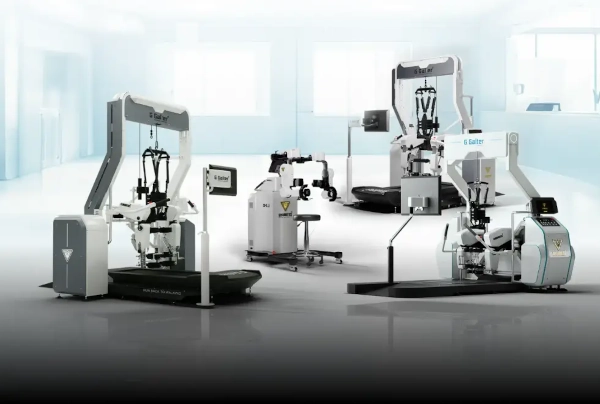
Genrobotics subsequently expanded into medical and mobility robotics, including its G-Gaiter robotic gait-training systems, before moving into industrial and other specialised applications. The defence and space vertical represents the next stage of that technological progression.
The underlying engineering requirements are more closely connected than they might initially appear. A robot intended for a sewer, battlefield or extraterrestrial environment must possess mechanical reliability, sensor awareness, autonomous control and the ability to continue operating where human access is dangerous or difficult.
Genrobotics is now adapting these competencies to strategic applications involving autonomous navigation, sensor fusion, robotic manipulation and operation in environments where conventional human intervention carries significant risk.
One of the company’s emerging defence systems is its Universal Autonomous Rover, a modular unmanned ground platform intended for demanding terrestrial and extraterrestrial applications. The company envisages variants for missions ranging from reconnaissance and explosive-ordnance disposal to planetary exploration.
The rover architecture combines autonomous mobility with artificial-intelligence-based sensor fusion and secure communications. Genrobotics is also developing the platform around swarm capability, potentially allowing multiple robotic vehicles to cooperate during area surveillance or other missions.
Autonomous ground systems are becoming increasingly important to modern armed forces. Robots can potentially conduct reconnaissance ahead of soldiers, inspect dangerous locations, approach suspected explosive devices, transport sensors and operate in environments exposed to enemy fire.
The ability to navigate without continuous human control is particularly valuable in military situations where communications may be disrupted or satellite navigation unavailable. Genrobotics says its research includes SLAM-based navigation for GPS-denied environments, an important capability for robotic systems expected to operate independently in contested terrain.
The company’s expansion into space robotics is equally ambitious.
Genrobotics is developing the Garuda Space Arm, an autonomous robotic manipulation system intended for space-debris removal and future on-orbit servicing operations. The system is being designed with seven degrees of freedom, machine-vision capabilities and specialised soft-capture mechanisms intended to interact with objects in orbit without causing damaging impacts.
The proposed architecture combines inertial measurement sensors, LiDAR and stereo vision to identify and approach objects in space. A dual-arm configuration is intended to provide greater manipulation flexibility and fault tolerance.
The larger objective extends beyond simply removing debris. Genrobotics envisages robotic systems eventually contributing to satellite inspection, repair, refuelling and on-orbit assembly.
These capabilities are emerging as an important frontier in the global space industry. Satellites traditionally operate until their fuel is exhausted or a major component fails, after which they become unusable objects in orbit. Autonomous servicing spacecraft could eventually extend satellite lifetimes, repair damaged systems or reposition spacecraft rather than allowing expensive assets to be abandoned.
The increasing amount of orbital debris makes robotic capture technology equally important. Defunct satellites, spent rocket stages and fragments travel through orbit at extremely high velocities, creating risks for operational spacecraft and future human missions.
India’s expanding space programme and plans for the Bharatiya Antariksha Station could eventually create a domestic requirement for sophisticated robotic manipulation, inspection and servicing technologies. Indian capability in this area would therefore have applications extending well beyond any individual startup or spacecraft.
Genrobotics’ decision to locate its new strategic production unit near Thumba, one of the historic centres of India’s space programme, also places the company within Kerala’s growing aerospace and deep-tech ecosystem.
The Menamkulam unit is only one component of a much larger manufacturing expansion being undertaken by the company in Kerala. Genrobotics’ largest production facility, under development at Palakkad, is nearing completion and will concentrate primarily on sanitation and medical technologies.
The company is also developing a new headquarters-cum-R&D centre at Chanthavila in Thiruvananthapuram. Once the Menamkulam, Palakkad and Chanthavila facilities are fully operational, they are expected to add approximately one lakh square feet of infrastructure to the company’s Kerala operations.
This distributed model allows different facilities to specialise in different technology sectors while drawing upon a common foundation of robotics and artificial-intelligence research.
The Palakkad facility can support volume manufacturing of established sanitation and medical products, while Menamkulam can concentrate on defence, aerospace and space systems requiring tighter integration between research, prototyping and production. The Chanthavila centre is expected to provide additional headquarters and advanced research capacity.
For Kerala, the expansion is also significant because sophisticated hardware companies have traditionally faced greater challenges scaling production compared with software startups. Robotics requires mechanical fabrication, precision components, electronics, sensors, testing infrastructure, supply chains and manufacturing space in addition to software development.
Genrobotics’ growth therefore illustrates the emergence of a deeper hardware-manufacturing ecosystem within the state.
The company now maintains production facilities not only in Thiruvananthapuram and Palakkad but also at the Andhra Pradesh MedTech Zone in Visakhapatnam, reflecting the widening industrial footprint needed to support its specialised technology businesses.
The transition into defence and space also reflects a wider transformation taking place across India’s startup ecosystem. Young technology companies that initially developed products for commercial or social applications are increasingly applying their engineering expertise to strategic sectors.
Artificial intelligence, autonomous navigation, robotics, advanced sensors, machine vision and rugged electronics are inherently dual-use technologies. Innovations developed for industrial inspection, agriculture or hazardous-environment operations can frequently be adapted for defence and aerospace requirements.
This creates an opportunity for India’s defence-industrial ecosystem to draw technological capability from a much wider base than traditional military manufacturers alone.
For Genrobotics, the progression is particularly notable because the company’s earliest challenge was a deeply social one: preventing sanitation workers from having to physically enter dangerous manholes. The same fundamental philosophy is now being extended towards soldiers, explosive-ordnance specialists, industrial workers and eventually astronauts.
Whether the danger is toxic gas beneath a city, an explosive device on a battlefield or a piece of debris travelling through orbit, the engineering principle remains similar — send the machine into the hazardous environment while keeping the human operator at a safer distance.
The Menamkulam facility therefore represents more than another manufacturing expansion. It marks Genrobotics’ transition from a company primarily associated with sanitation and medical robotics into a multi-domain Indian deep-tech manufacturer working across industrial, defence, aerospace and space robotics.
Its success in these new sectors will depend on extensive testing, qualification and eventual acceptance by strategic users, and several of its defence and orbital systems remain emerging technologies rather than mature deployed platforms. The distinction is important in sectors where prototypes must pass demanding validation before operational adoption.
Nevertheless, the industrial direction is clear. Genrobotics is building the research teams, manufacturing infrastructure and specialised technology divisions required to compete in much more complex strategic markets.
From Bandicoot robots operating beneath Indian cities to autonomous rovers designed for hostile terrain and robotic arms intended to work around spacecraft, the company’s evolution demonstrates how indigenous robotics expertise can move across seemingly unrelated industries.
The opening of the new Thiruvananthapuram facility places that evolution on a larger manufacturing foundation and adds another Indian company to the growing effort to develop sovereign robotics and autonomous-system capabilities for defence, aerospace and space.
You may also like
-
India’s Economic Warfare Challenge: Strategic Autonomy, Energy Security and the Rise of a Global Power
-
India-US Trade Deal Stalemate: Why Washington’s Tariff Pressure Has Failed to Secure an Agreement
-
US Double Standards in Foreign Policy: 16 Recent Cases Involving India, Russia, China and Global Trade
-
India’s Arctic Energy Ambitions: Russian Oil, LNG and a New Sea Route to Indian Ports
-
India and Russia Explore Joint Icebreaker Construction as Maritime Industrial Cooperation Expands
