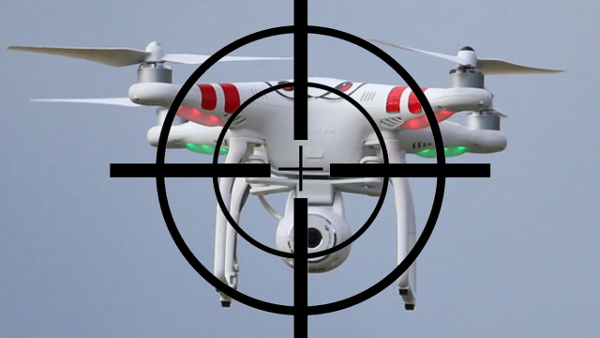
India’s D4 Counter-Drone System represents a layered indigenous response to one of modern warfare’s fastest-moving tactical problems: the proliferation of micro and small unmanned aerial vehicles in surveillance, harassment, sabotage, and precision attack roles. BEL’s official product description states that the system, developed by DRDO and productionised by BEL, is already operationally proven and is capable of real-time search, detection, tracking, and neutralisation of flying drones in the micro and small UAV classes, while also presenting optical, thermal, and RF spectrum data on the operator interface. That combination matters because counter-drone warfare depends far less on a single sensor or weapon and far more on how quickly a system can assemble, classify, and act on a fast-changing air picture close to the defended asset.
Technically, D4 is built as a multi-sensor, multi-effect architecture. BEL’s published configuration lists a radar for drone detection and tracking, an EO system with CCD camera, IR camera, and laser rangefinder for precision visual tracking, a direction-finding counter-drone system for detecting the drone communication channel, an RF detection and jamming layer, GPS jamming/spoofing for soft kill, a laser directed-energy weapon for hard kill, and a command-and-control centre with power source for full-system operation. In parallel, DRDO’s official material identifies the development structure behind the system: LRDE, Bengaluru as the nodal laboratory, with DLRL, Hyderabad; CHESS, Hyderabad; and IRDE, Dehradun as participating laboratories. That lab mix explains the system’s character—radar, electronic warfare, electro-optics, and high-energy subsystems fused into a single counter-UAS grid.
BEL’s land-based Anti-Drone System – Soft & Hard Kill page gives the clearest glimpse of the published performance envelope. It describes the radar as an active phased-array system that produces a 3D air situation picture, with 360-degree azimuth coverage and elevation coverage from -5 degrees to 50 degrees. The same page lists detection brackets by target size: Nano RPA (RCS 0.001) at 2 km, Micro RPA (RCS 0.01 m²) from 250 m to 4 km, and Small/Hybrid RPA (RCS 0.05 m²) from 250 m to 8 km. BEL also states that the passive subsystem uses wide-band SDR receivers, works in urban and rural environments, provides about 2 km typical coverage for commercial, tactical, and large drones, and offers omnidirectional 360-degree azimuth coverage. This tells us that D4 is designed to work across both active and passive sensing modes, which improves resilience in cluttered environments and broadens the probability of first detection.
Its engagement logic follows a classic layered kill chain. BEL states that the system’s RF counter-drone segment includes an RF sensor, a satellite navigational jammer, and an RF jammer, while the EO system slews its thermal/day camera package toward the detected target for confirmation and tracking. BEL’s drone-detection radar note adds more numerical clarity: the integrated counter-drone arrangement combines 360-degree radar coverage with micro-drone detection up to 4 km, EO/IR detection up to 2 km in select azimuth direction under clear weather, RF communication detection up to 3 km, and RF/GNSS jamming up to 3 km. For the terminal layer, BEL says the laser-based hard-kill system is used to neutralise micro-drones between 150 m and 1 km. The same BEL note explicitly says soft kill includes jamming and spoofing, including the ability to misdirect enemy drones. In operational terms, that means D4 can first sense emissions, then track kinetically relevant motion, then deny command/navigation links, and finally burn through the target when an irreversible kill is preferred.
The system’s service record also says a great deal about its maturity. PIB’s Ministry of Defence release on the Naval Anti-Drone System (NADS) states that the Indian Navy signed a contract with BEL on 31 August 2021 for the first indigenous comprehensive naval anti-drone system with both soft-kill and hard-kill capability. PIB further states that the NADS can instantly detect and jam micro-drones, uses a laser-based kill mechanism, offers 360-degree coverage, and exists in static and mobile versions. The same release records earlier deployment for the Republic Day Parade, the Prime Minister’s Independence Day address at Red Fort, and the Modi-Trump roadshow in Ahmedabad. DRDO’s July 2024 newsletter adds another operational marker: the D4 Anti-Drone System was deployed during the new government swearing-in ceremony at Rashtrapati Bhavan on 9 June 2024 to protect the red-zone airspace against rogue drones. A system trusted for such high-visibility security envelopes is clearly positioned far beyond the laboratory stage.
An especially interesting extension of this architecture is BEL’s separate public listing for a 2 kW Directed Energy Weapon (DEW) System. BEL describes it as a laser-based DEW intended to counter drones and UAVs, with salient features that include portable and modular construction, tripod mounting, configurability to other platforms, and design to MIL-STD requirements. That product page suggests an important trend in India’s counter-drone evolution: the directed-energy component is moving toward more modular deployment formats, which can support fixed-site defence, mobile force protection, rapid setup around vital points, and tailored anti-UAS packages built around mission profile rather than a single rigid configuration.
From a defence-technology standpoint, D4 stands out because it brings together the four essential ingredients of a credible counter-UAS system: persistent surveillance, multi-sensor confirmation, electronic attack, and precision hard kill. The radar layer builds the air picture, the EO/IR chain sharpens classification, the RF and GNSS layers attack the drone’s control and navigation logic, and the laser closes the engagement loop against targets that still remain inside the defended envelope. In Indian conditions—where strategic sites, border sectors, naval bases, ceremonial venues, and dense urban zones all present different threat geometries—this kind of layered architecture offers tactical flexibility with an indigenous supply chain behind it. That is exactly why D4 deserves attention as one of India’s more consequential under-publicised defence technologies.
References:
- Bharat Electronics Limited (BEL). “Anti-Drone System.”
https://bel-india.in/product/anti-drone-system/ - Bharat Electronics Limited (BEL). “Anti Drone System – Soft & Hard Kill.”
https://bel-india.in/product/anti-drone-system-soft-hard-kill/ - Bharat Electronics Limited (BEL). “2kW Directed Energy Weapon (DEW) System.”
https://bel-india.in/product/2kw-directed-energy-weapon-dew-system/ - Press Information Bureau, Ministry of Defence. “Indian Navy signs contract with BEL for supply of Naval Anti drone system.” 31 August 2021.
https://www.pib.gov.in/PressReleasePage.aspx?PRID=1750830 - Bharat Electronics Limited (BEL). “Indian Navy signs contract with BEL for supply of Naval Anti drone system.” 31 August 2021.
https://bel-india.in/news-bel/indian-navy-signs-contract-with-bel-for-supply-of-naval-anti-drone-system/ - Bharat Electronics Limited (BEL). “BEL develops customisable drone detection radar with 360-degree coverage.”
https://bel-india.in/news-bel/bel-develops-customisable-drone-detection-radar-with-360-degree-coverage/ - DRDO Newsletter, July 2024. “Deployment of Anti Drone System-D4 during new government swearing-in-ceremony.”
https://www.drdo.gov.in/drdo/sites/default/files/publication-document/NL_Jul2024.pdf - DRDO Newsletter, February 2026. “D4 Counter Drone System developed by LRDE, DLRL, CHESS and IRDE.”
https://www.drdo.gov.in/drdo/sites/default/files/publication-document/NL_Feb2026.pdf
You may also like
-
Indian Navy Vice Chief Inspects Japan’s Mogami-Class Stealth Frigate as India-Japan Shipbuilding Cooperation Expands
-
Philippine Marine Wargames Reportedly Show BrahMos Can Penetrate Chinese Destroyer Air Defences
-
Safran Signs 18 Agreements with Indian Aerospace Suppliers, Expanding Make in India Manufacturing Partnerships
-
Indian Army’s Vajra Corps Certifies First Batch of Drone Operators, Strengthens Battlefield Surveillance
-
India to Seek 35% Increase in Defence Modernisation Budget for FY 2027–28
