Research

News on Science, Technology and Research in India

Cabinet Approves Deep Ocean Mission

The Cabinet Committee on Economic Affairs chaired by Prime Minister Shri Narendra Modi, has approved the proposal of Ministry of Earth Sciences (MoES) on “Deep Ocean Mission”, with a view to explore deep ocean for resources and develop deep sea technologies for sustainable use of ocean resources.

New Precision Iodine Value Analyzer Gets Recognition by FSSAI

In one of its initiatives to encourage the manufacturing industry in India, CSIR-Central Scientific Instruments Organisation (CSIO) had developed and transferred the technology of “Precision Iodine Value Analyzer (PIVA)”, an instrument for the measurement of the degree of unsaturation (Iodine Value) in vegetable oils. This indigenous food testing equipment – PIVA was recognized by FSSAI during World Food Safety Day.

Researchers Find An Improved Method of Imaging Objects Through Fog

Research by a team has offered a solution for improving the image quality without heavy computations. The team from the Raman Research Institute (RRI), Bengaluru, an autonomous institute of the Department of Science and Technology; Space Applications Centre, Indian Space Research Organisation, Ahmedabad; Shiv Nadar University, Gautam Buddha Nagar; and Université Rennes and Université Paris-Saclay, CNRS, France, modulated the light source and demodulated them at the observer’s end to achieve sharper images. The research was published in the journal ‘OSA Continuum’.

Cancer Causing Virus Affects the Glial Cells in Central Nervous System: Study by DST Supported FIST Facility

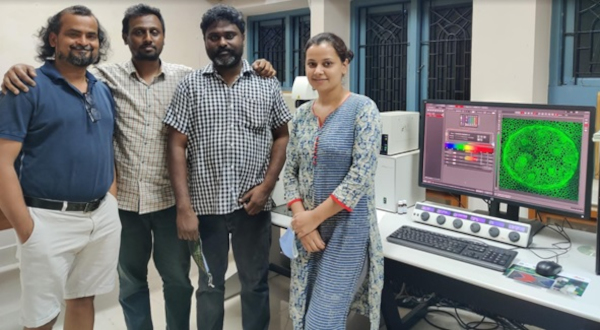
Scientists’ teams from the Departments of Physics (led by Dr. Rajesh Kumar) and Biosciences and Biomedical Engineering (Dr. Hem Chandra Jha) at IIT Indore along with their collaborator, Dr. Fouzia Siraj, at National Institute of Pathology (ICMR), New Delhi, used Raman Spectroscopy System supported by “Fund For Improvement of S&T Infrastructure (FIST)” scheme of Department of Science and Technology to trace the propagation mechanism of the virus. Research scholars Ms. Deeksha Tiwari, Ms. Shweta Jakhmola, and Mr. Devesh Pathak also contributed to this study published recently in the journal ‘ACS Omega’.

3-D Seismic Data can Help Apprehend Precursors of Marine Geohazards from Interactions Between Seabed & Marine Sediments

Scientists from Wadia Institute of Himalayan Geology (WIHG), an autonomous institute under the Department of Science and Technology, Govt. of India, and scientists from Norway and Switzerland used high-resolution 3D seismic data to unravel geomorphology of recurrent cases of movement of soil, sand, regolith, and rock downslope like a solid in Taranaki basin off New Zealand. This is technically called mass wasting of sediments. The study led by Prof. Kalachand Sain was published in the journal ‘Basin Research’.

Scientists Identify Genes to Improve Fertilizer Nitrogen Use Efficiency in Rice

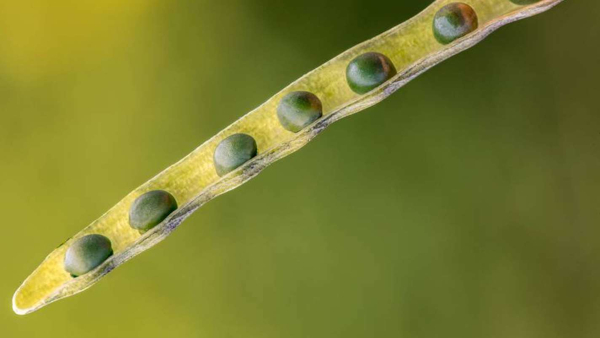
In a major boost to the scientific efforts for crop improvement to save nitrogenous pollution and fertilizers worth billions, Indian biotechnologists identified candidate genes for nitrogen use efficiency (NUE) in rice. This was accomplished by Prof. Nandula Raghuram, Dr. Supriya Kumari and Dr. Narendra Sharma from the School of Biotechnology, Guru Gobind Singh Indraprastha University, New Delhi.

Novel Technique Could Help Detect Tropical Cyclones for Bay of Bengal Basin Earlier than Satellites

A team of Scientists including Jiya Albert, Bishnupriya Sahoo, and Prasad K. Bhaskaran from IIT Kharagpur, with support from the Department of Science & Technology, Government of India under the Climate Change Programme (CCP), devised a novel method using Eddy detection technique to investigate the formative stages and advance detection time of tropical cyclogenesis in the North Indian Ocean region. The research was published in the journal ‘Atmospheric Research’ recently.

Researchers Develop Hydrogen-Fuelled Spark-Ignition Engine Generator for Zero-Emissions

Researchers at the Engines and Unconventional Fuels Laboratory, IIT Delhi developed a new technology and built “Hydrogen fuelled Spark-Ignition Engine Generator” in collaboration with Kirloskar Oil Engines Limited (KOEL), and the Indian Oil R&D Centre for the utilization of hydrogen in internal combustion engines for zero-emission with higher thermal efficiency. A dedicated lubricating oil for the engine was also developed by the IOCL.