Research

News on Science, Technology and Research in India

A Star with A Heartbeat & Without A Magnetic Field Discovered

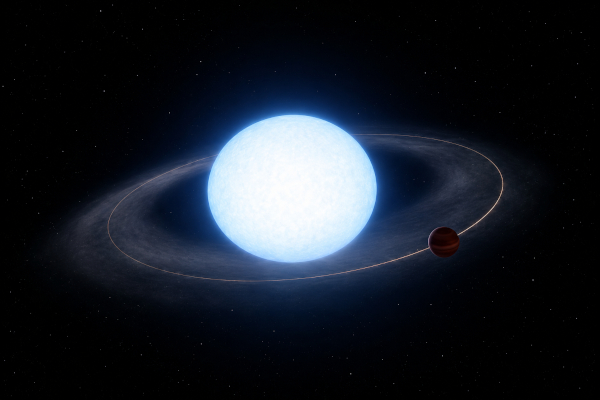
A group of Indian and international scientists have spotted a peculiar binary star that shows heartbeat but no pulsations contrary to the norm of binary stars of sporting both heartbeats as well as pulsations. This star is called HD73619 in Praesepe (M44), located in the Cancer constellation, one of the closest open star clusters to the Earth.

New Study Raises Prospect of Zika Virus Therapy

In the new study, a team of researchers led by Prof. Sunit K. Singh, Professor of Molecular Immunology & Virology at the Molecular Biology Unit at BHU’s Institute of Medical Sciences, has found that the virus interacts with a set of cells called microglial cells, which protect the brain from infections and that a protein in the virus called ZIKV-NS1 plays an important role in its replication and immune evasion.

Swarnajayanti Fellow Working to Develop Technology for Prediction and Control of Vapor Explosion Induced Accidents in Boilers

Artificial Intelligence and machine learning may soon be used to develop indigenous technology for prediction and control of vapor explosion-induced accidents in boilers so as to prevent such mishaps. A staggering 23,000 boiler accidents have been recorded worldwide over the past 10 years, wherein India alone accounts for the 34% of global deaths.

TDB Supports Development and Production of Receiver Modules Essential for An App that Provides Navigation Support

India will soon develop and manufacture receiver modules essential for the NavIC (NAVigation with Indian Constellation), an application developed by ISRO for constellation of seven satellites that, together, provide navigation support over India and 1,500 km around it. Support for scaling up this technology, which is also essential for GPS (Global Positioning Systems)s will be a significant step in positioning India as a global hub for Electronics System Design and Manufacturing following the vision of the Prime Minister.

Scientists Trace First Clue to Understand Transient High Energy Pulses from Magnetars Several Thousand Times to That of the Sun

Scientists have found the first clues to understand violent short duration flares from a compact star of rare category called magnetar located thirteen million light years away. These compact stars with the most intense magnetic field known, of which only thirty have been spotted so far in our galaxy, suffer violent eruptions that are still little known due to their unexpected nature and their short duration. Scientists have long been intrigued by such short and intence bursts — transient X-ray pulses of energies several times that of the Sun and length ranging from a fraction of a few millisecond to a few microseconds.