Microchip Developed By Heritage Institute of Technology Becomes the First of Its Kind in India Developed By Any Engineering College
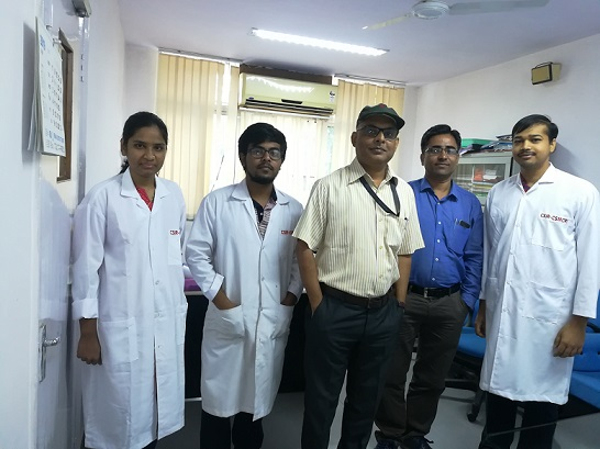
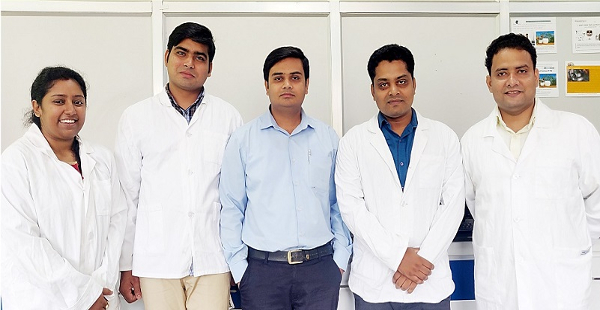
Proud to state that Heritage Institute of Technology (HITK) completed 32Kb Memory IP Design of
News on Science, Technology and Research in India
Proud to state that Heritage Institute of Technology (HITK) completed 32Kb Memory IP Design of
Muntjacs, or Muntiacus in Latin, are a group of leaf-eating deer species found in south and southeast Asia. Until the 1980s, only a handful of species were known from this ancient lineage. But towards the end of the 20th century scientists and naturalists, aided by information from local communities, came across several species of muntjacs in China, Vietnam, Myanmar and eastern Arunachal Pradesh in India.
The space agency has announced that India’s second visit to the Moon under the Chandrayaan-2 mission will most likely be launched between July 9-16 this year.
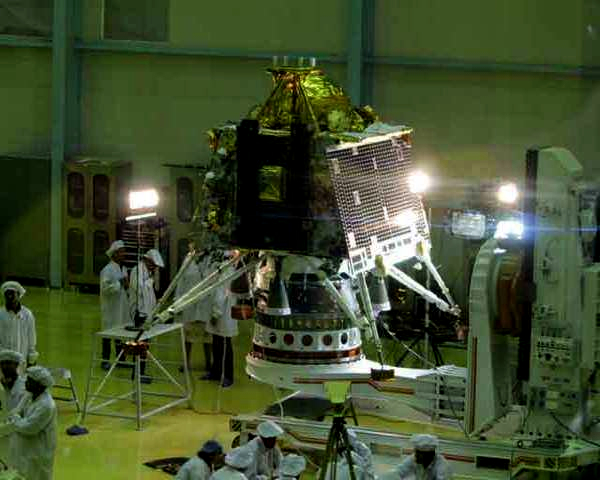
The Indian Space Research Organisation’s (ISRO) second mission to the Moon entails an orbiter, a lander and moon rover. The expected soft landing on the moon is likely to take place on September 6, 2019. India’s moon rover has been named “Pragyan” or “Knowledge”, since India hopes to understand the geology of Earth’s closest celestial neighbour through a series of unique experiments.
The Rs. 800-crore mission will be launched using the Geosynchronous Satellite Launch Vehicle Mk III (GSLV Mk III) from Sriharikota.
According to a statement by ISRO, Chandrayaan-2 has three modules — Orbiter, Lander (Vikram) and Rover (Pragyan). The Orbiter and Lander modules will be interfaced mechanically and stacked together as an integrated module and accommodated inside the GSLV MK-III launch vehicle.
The Rover is housed inside the Lander. After a launch into the earth-bound orbit by GSLV MK-III, the integrated module will reach the Moon’s orbit using Orbiter propulsion module. The Lander will then separate from the Orbiter and soft land at the predetermined site close to lunar South Pole. After this, the Rover will roll out to carry out scientific experiments.
Instruments have also also mounted on the Lander and Orbiter for scientific experiments.
India’s maiden mission to the Moon took place in 2008 under the Chandryaan-1 mission which also involved hard landing the Moon Impact Probe (MIP) on the lunar surface on November 14, 2008.
Chandrayaan-1 gave the first ever signatures of the presence of water molecules on the lunar surface.
The second mission was first delayed because a joint collaboration between India and Russia on the lander unit failed to take off after the Russian lander developed problems. India then had to develop the entire lander module on its own which it named the “Vikram” — after Vikram A Sarabhai, also known as the father of the Indian space programme.
Later, the Geosynchronous Satellite Launch Vehicle Mk-II saw two failures in 2010. The ISRO then found out that the re-configured lander “Vikram” had become too heavy to be lofted using the GSLV Mk-II. When the Geosynchronous Satellite Launch Vehicle Mk-III, also known as the “Bahubaali” became available, the agency decided to use the India’s heaviest launcher for the Chandrayaan-2 mission.
The space agency plans to release the lander once it is in the Moon orbit and make a soft landing near the South Pole of the Moon. No other nation has landed on the near side of the South Pole of the Moon yet.
If India succeeds to make a soft landing on the Moon, it will become the forth country after Russia, USA and China to have achieved this feat.
Chandrayaan-2 is ISRO’s first mission to land on any celestial body.
The company’s Faridabad-based R&D Centre’s intellectual property portfolio comprises 794 active patents, of which 542 patents were granted abroad and 252 in India, IOC said in a statement.
The PSLV rocket is expected to fly on May 22 carrying RISAT 2BR1, officials of Indian Space Research Organisation (ISRO) told IANS on condition of anonymity.
Isolated from India’s West Coast, the fungi can potentially help degrade polythene
It was her ground-breaking research on the importance of mother’s milk that prompted baby food companies in the UK to first start carrying this message. Now most companies in the world do it.
In this episode of Rag Rag Mein Ganga, you get to see the colors & flavours of the Kanpur city, situated on the banks of the Mighty Ganges. See Rajeev Khandelwal explore the city which is called as the Manchester of India, and its various nuances.
The cheap portable ‘Foldscope’, created by an Indian scientist, is being promoted by the central government
He told News18, “This research has elements of past. Like in the eastern world, we have the concept of ‘ananda,’ through heartfulness meditation we connect to that source of happiness. It is the opposite of pressure and anxiety. We hear of mindfulness, but with this, I have brought the aspect of heartfulness meditation.”