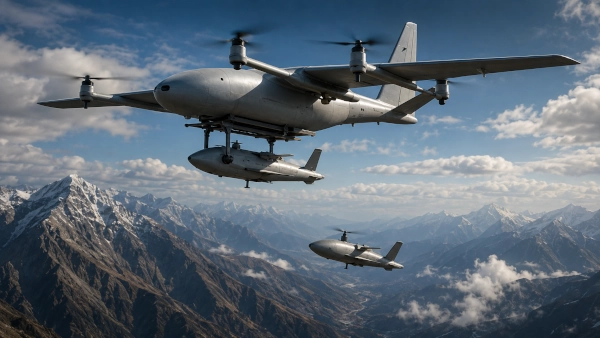
Air-Launched UAV Under Project ALE, Opening New Frontier in Autonomous Warfare
Indigenous UAV-to-UAV deployment could allow Indian forces to push reconnaissance, electronic warfare and autonomous systems deeper into contested battlespaces
News on Indian Economy
Indigenous UAV-to-UAV deployment could allow Indian forces to push reconnaissance, electronic warfare and autonomous systems deeper into contested battlespaces
Its flagship F77 platform combines a large structural battery pack, high-output electric drivetrain, connected-vehicle systems and aviation-inspired industrial design. At the experimental end of its development programme, the F99 Factory Racing Platform explores 400-volt architecture, carbon-fibre construction, active aerodynamics and electric-superbike levels of performance.
Delhi-based defence technology company VEDA Aeronautics is developing an underwater decoy for the Indian Navy, with plans to subsequently evolve the platform into a miniature underwater attack drone, opening a potentially important new front in India’s development of autonomous naval warfare systems.
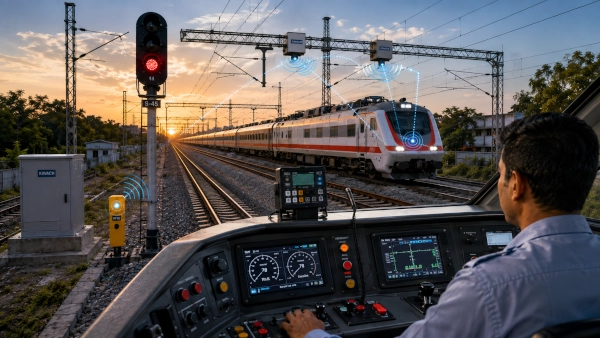
Developed in India for Indian operating conditions, KAVACH 4.0 is being rapidly expanded across high-density railway corridors to prevent signal violations, control overspeeding and reduce collision risks
P2P payments to remain free; any future merchant discount rate will be threshold-based, nominal and decided by NPCI-led steering committee
The 18-metric-tonne consignment, sourced directly from Makhana growers in Darbhanga district, was processed and packed at the BIADA Industrial Area in Bihta, Bihar, before beginning its journey to Australia.
A government does not necessarily need to occupy another country to alter its choices. Access to financial markets can be restricted. Banks can be threatened with exclusion from the dollar system. Defence purchases can trigger sanctions. Development assistance can be conditioned. Technology can be withheld. Foreign civil-society organisations, media institutions and advocacy networks can be financially supported.
More recently, AjnaLens devices were also reported among the surveillance technologies deployed by police personnel around Jantar Mantar in New Delhi in July 2026, bringing the technology back into public attention — this time accompaginning to move out of police control rooms and CCTV monitoring centres and directly onto the faces of officers in the field.
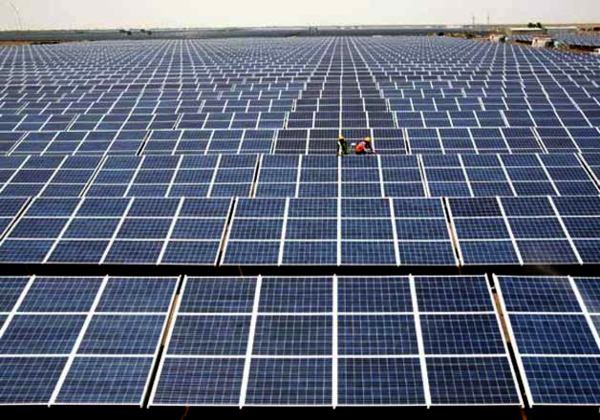
The new capacity became commercially operational from 00:00 hours on August 8, 2026, according to a regulatory disclosure made by the Maharatna public sector company to the stock exchanges on August 7.
According to the latest figures reported by states and Union Territories, around 15.89 crore of India’s 19.36 crore rural households had access to tap-water supply as of July 18, 2026. This represents national coverage of 82.09 per cent.