Economy

News on Indian Economy

India Post Reports 16% Revenue Growth; Sets Strategy for Future Expansion

The Minister announced that India Post recorded a 16% increase in revenue, reaching ₹15,296 crore, up from ₹13,218 crore the previous year. He described the year as “historic,” noting both strong financial results and ongoing structural transformation. The Department achieved 88% of its ₹17,546 crore target, with most postal circles performing in the 80–90% range and several exceeding 90%.

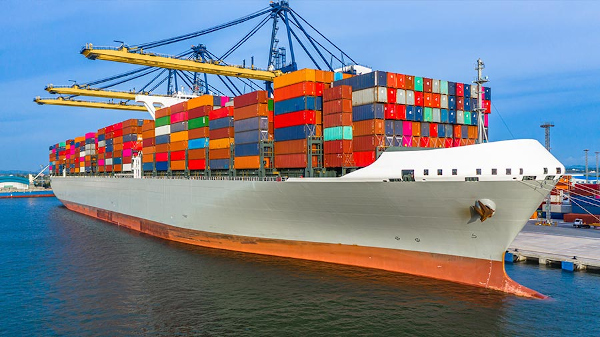
Direct India–Vietnam–Thailand Shipping Link Begins at GTI Mumbai Terminal

The first vessel call was handled at GTI’s Mumbai terminal, where officials from GTI, Interasia Lines and the vessel’s master marked the occasion with a plaque exchange. GTI is a 74:26 joint venture between APM Terminals and Container Corporation of India, and the new service adds to its effort to position itself as a stronger gateway for regional trade flows.

India Eyes 100 GW Nuclear Power Capacity by 2047 in Major Long-Term Energy Push

The push comes as India looks for reliable low-carbon baseload power to support rising electricity demand over the next two decades. According to the Union government’s implementation report on budget announcements, the development of at least 100 GW of nuclear energy by 2047 is considered essential for India’s energy transition, and a formal roadmap for reaching that level has already been prepared and circulated for stakeholder discussions.

Air China Restarts Beijing–New Delhi Flights as India–China Air Links Recover

The return of the route is significant because direct flights between the two countries had been suspended since 2020, when the Covid-19 pandemic and the subsequent deterioration in bilateral ties after the Galwan Valley clash froze passenger connectivity. The broader reopening began in late 2025, when India and China moved to restart direct services after more than five years of disruption.

MSME Ministry Trains Over 2,500 Artisans in AI Under PM Vishwakarma Scheme

The training programme was designed as a hands-on exercise, with sessions delivered in simple language and adapted to local contexts so that artisans from diverse trades could use the technology in practical ways. Participants were introduced to AI platforms such as ChatGPT, Indus and Google Gemini, with the focus placed on real-world applications rather than abstract technical instruction.