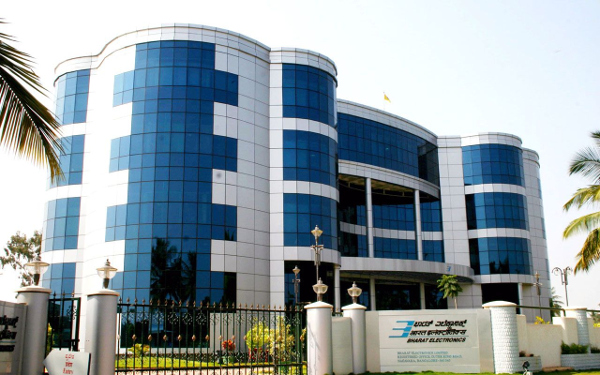
India’s battlefield modernisation has taken a major step forward with Bharat Electronics Limited receiving a major order for the Ground Based Mobile ELINT System, known as GBMES, for the Indian Army. The contract reflects the growing importance of electronic intelligence, mobile battlefield surveillance and indigenous electronic warfare systems in India’s defence planning. In modern war, victory depends on who detects first, understands first, moves first and strikes first. GBMES strengthens that chain by giving the Army a mobile system capable of reading the invisible electronic activity of the battlefield.
The system has been designed and developed by DLRL Hyderabad and manufactured by Bharat Electronics Limited. This makes the project a strong example of India’s defence research and production ecosystem working together. DLRL brings deep expertise in electronic warfare and signal intelligence. BEL brings manufacturing capacity, system integration strength and long experience in delivering advanced electronic systems to the armed forces. Together, they create a platform that supports the Army’s need for indigenous, mobile and networked intelligence systems.
Electronic intelligence is one of the most decisive domains of modern warfare. Every modern military platform emits signals. Radars search the skies. Air defence systems track targets. Communication networks pass commands. Drones send data. Artillery units coordinate fire. Aircraft, missiles, surveillance assets and command posts all create electronic signatures. A system like GBMES studies this electronic environment and turns enemy emissions into military information. This gives commanders a clearer picture of the battlefield.
The role of GBMES becomes especially important in a fast-moving land war. A mobile ELINT system can move with formations, operate from different locations and support commanders close to the operational theatre. Mobility gives the Army flexibility. The system can be positioned according to threat direction, terrain, operational priority and tactical requirement. This makes it more useful than a fixed sensor that remains tied to one location.
The system is capable of detecting, classifying and locating different types of radars. This is a critical ability because radar is the nervous system of modern air defence and surveillance. Once a radar is detected and classified, commanders can understand the nature of the threat. They can identify whether the radar belongs to surveillance, fire control, air defence, battlefield monitoring or weapon guidance. Location data adds another layer of value because it helps map the enemy’s electronic order of battle.
GBMES also intercepts and analyses communication signals. This expands its value from radar intelligence to wider battlefield awareness. Communication intercepts can reveal movement patterns, command activity, operational tempo and the intensity of enemy coordination. When radar intelligence and communication intelligence are fused, the Army gains a more complete view of the adversary’s posture. This supports better planning, better deception, better targeting and better defensive preparation.
The biggest strength of such a system lies in situational awareness. A commander who understands the electronic environment can shape the battle more effectively. GBMES helps the Army identify active sensors, communication nodes and electronic activity zones. It supports air defence by giving warning about radar activity and communication patterns linked to hostile platforms. It also helps electronic warfare units plan jamming, deception and counter-surveillance actions with greater precision.
This order also strengthens India’s indigenous defence manufacturing base. The Ministry of Defence contract falls under the Buy Indian–Indigenously Designed, Developed and Manufactured category. That is important because electronic warfare systems are among the most sensitive defence technologies. Dependence on foreign systems in this area creates long-term vulnerability. Indigenous design, Indian manufacturing and domestic system integration give the armed forces better control over upgrades, maintenance, software, secrecy and battlefield customisation.
The system also reflects the changing nature of India’s military requirements. The Indian Army is preparing for complex battlefields where drones, missiles, air defence networks, long-range artillery, satellites, electronic jamming, surveillance radars and encrypted communications operate together. Future land warfare will involve constant competition in the electromagnetic spectrum. The side that controls signals, detects emissions and protects its own networks gains a major operational edge.
GBMES fits directly into this new battlefield reality. It gives the Army a tool to observe the enemy without relying only on visual reconnaissance or physical contact. The system can help build an electronic map of enemy deployments. It can support surveillance in sensitive sectors. It can assist air defence formations. It can provide inputs for targeting and operational planning. It can also improve the Army’s ability to respond quickly during border tensions or active conflict.
For BEL, the order confirms its position as one of India’s most important defence electronics companies. The company already works across radars, communication systems, electronic warfare, avionics, electro-optics, naval systems, command-and-control systems and air defence systems. GBMES adds another important battlefield intelligence platform to its portfolio. It also shows that Indian defence electronics companies are moving deeper into complex, high-value systems rather than remaining limited to component-level manufacturing.
The larger significance of the GBMES order lies in India’s move toward electronic sovereignty. Modern weapons require modern sensors. Modern sensors require signal dominance. Signal dominance requires indigenous technology, domestic production and secure software ecosystems. A mobile ELINT system designed in India and manufactured in India supports all three requirements. It gives the Army capability, gives industry experience and gives the country strategic confidence.
The Indian Army’s future battlefield will be shaped by information, speed and precision. Tanks, artillery, infantry, drones, missiles and air defence units will all depend on accurate intelligence. GBMES strengthens the hidden layer beneath these visible military assets. It listens to the battlefield, studies the electronic signatures and turns signals into knowledge. In a war where seconds matter, such knowledge can decide the direction of an operation.
BEL’s GBMES order therefore stands as more than a contract. It is a signal that India is investing in the invisible architecture of modern warfare. The system strengthens battlefield awareness, supports air defence, improves electronic intelligence and deepens the Make in India defence ecosystem. For the Indian Army, it adds a sharp electronic ear to the battlefield. For India’s defence industry, it proves that advanced indigenous electronic warfare systems are becoming central to national military preparedness.
You may also like
-
Rajnath Singh Calls for Aatmanirbharta 2.0 in Defence at SWAVLAMBAN 2026
-
Defence Acquisition Council Clears ₹2.12 Lakh Crore Proposals, 82% Earmarked for Indian Industry
-
Indian Army Special Forces Depart for Indonesia for Exercise Garuda Shakti 2026
-
India to Train 600 Nigerian Army Soldiers in Specialised Jungle and Mountain Warfare
-
India Moves Towards Five-Year Assured Orders for Defence Startups Under New Procurement Reforms
