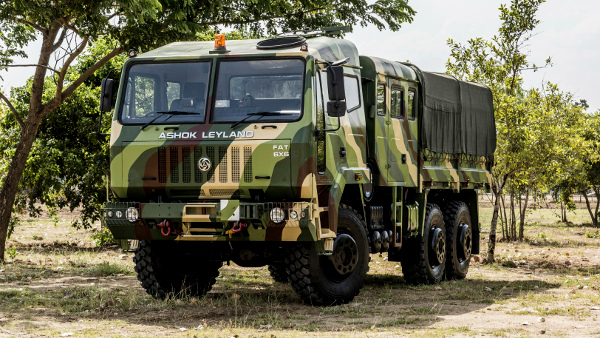
India’s defence mobility sector is moving into a new technological phase, and Ashok Leyland is positioning itself at the centre of that shift. The company, already a major supplier of vehicles to the Indian armed forces, is now exploring autonomous defence vehicles, logistics drones, alternative fuel platforms and overseas defence markets. This marks a clear movement from conventional military transport toward intelligent, connected and future-ready battlefield mobility.
At the heart of this transition is the Stallion, one of the most familiar logistics vehicles in Indian military service. The Stallion has served as a trusted workhorse for troop movement, equipment transport and field logistics across difficult terrain. Ashok Leyland is now working on the challenge of making this platform autonomous. An autonomous Stallion would represent a major leap in battlefield logistics, allowing vehicles to support frontline formations with reduced risk to personnel.
Autonomous military vehicles can play an important role in modern war because supply chains are now direct targets. Ammunition, fuel, food, spares and medical material must reach forward positions even under surveillance, artillery threat and drone observation. A connected and autonomous logistics vehicle can reduce the exposure of drivers and support troops while improving movement discipline across dangerous routes. Such systems can also operate in convoy formations, support last-mile delivery and serve in high-risk zones where human presence must be limited.
Ashok Leyland’s defence plans also include a possible move into logistics drones. This is important because military logistics is no longer limited to road convoys. Small and medium drones can carry urgent supplies, medical kits, communication devices and lightweight equipment to remote posts or forward units. In mountains, deserts, forests and border areas, drone-based logistics can save time and reduce dependence on vulnerable ground routes.
The company is also watching a large domestic opportunity. India’s defence land-mobility market is expected to offer around ₹11,000 crore worth of tenders over the next three to four years. This includes requirements for specialised military vehicles, protected mobility, troop carriers, logistics trucks and other platforms needed by the armed forces. Ashok Leyland’s existing defence experience gives it a strong base to compete for these programmes.
The company already has around 30 platforms serving the armed forces. Many of these platforms have either replaced imported vehicles or supported new military applications. This reflects the broader direction of India’s defence policy, where domestic manufacturing is being strengthened across vehicles, weapons, electronics and support systems.
Ashok Leyland’s current defence order book is around ₹2,000 crore, with nearly 90 percent of it coming from domestic orders. The company now wants to increase its overseas revenue share from about 10 percent to around 25 percent. This export ambition is important because defence mobility has a large market across developing countries that need rugged, affordable and reliable military vehicles.
The company is focusing on regions such as SAARC countries, Africa, ASEAN and the Gulf. Its tie-up with Indonesia’s PT Pindad is especially significant because it opens the door for joint development and localised manufacturing of electric buses and defence vehicles. Such partnerships allow Indian companies to move beyond product exports and enter deeper industrial cooperation with friendly countries.
Alternative fuels are another part of Ashok Leyland’s defence strategy. The company is looking at CNG, LNG, electric platforms and a hydrogen-engine option for the Stallion range in partnership with Vehicle Factory Jabalpur. This shows that future military mobility will also be shaped by fuel security, lower operating cost and flexible energy use. A defence force that can operate multiple fuel types gains greater resilience in long campaigns and remote deployments.
For India, the bigger story is the rise of private-sector capability in defence manufacturing. Ashok Leyland’s work in autonomous vehicles, drone logistics and alternative fuel military platforms shows how traditional automobile companies can become defence technology companies. The next stage of land warfare will require vehicles that are connected, intelligent, rugged and adaptable.
The autonomous Stallion idea captures this shift clearly. It takes a proven military platform and pushes it toward the future battlefield. If successfully developed and inducted, it can strengthen India’s logistics chain, reduce human risk and improve battlefield endurance. Ashok Leyland’s bet on defence mobility is therefore not only a business move; it is part of India’s larger journey toward self-reliant, technology-driven military capability.
You may also like
-
Indian Army Special Forces Depart for Indonesia for Exercise Garuda Shakti 2026
-
India to Train 600 Nigerian Army Soldiers in Specialised Jungle and Mountain Warfare
-
India Moves Towards Five-Year Assured Orders for Defence Startups Under New Procurement Reforms
-
Zen Technologies Introduces Indigenous Hyper-Strike Falcon AI-Guided Counter-Drone Interceptor
-
L&T and Germany’s SCHOTTEL Expand Partnership for Controllable Pitch Propeller Systems in Indian Shipbuilding
