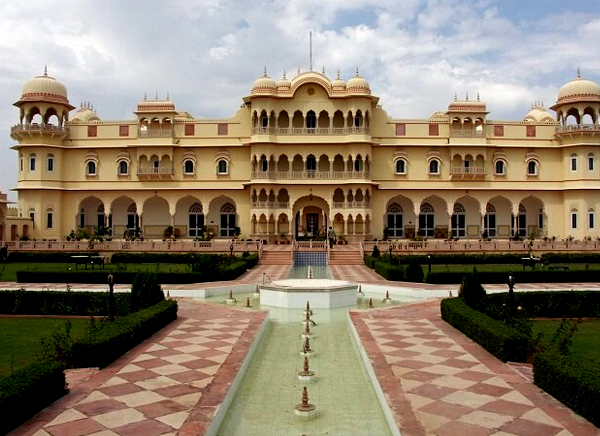
One of the most majestic forts of Rajasthan, Nahargarh Fort is nestled in the Aravalli mountain ranges in Jaipur. Built in 1734 primarily as a strong defence for the city against invasion, Nahargarh literally means ‘abode of tigers’ and was named after the tigers that were believed to have roamed the area.
There’s a lot to see and admire in the fort: a temple dedicated to a yesteryear prince -Nahar Singh Bhomia; a 12-storey building named Madhavendra Bhavan and Diwan-i-Am, an open enclosure where the kings met the commoners to hear out their grievances.
Though Nahargarh Fort was built for defence purposes, it was never attacked by the enemies. Which means, the field guns stationed at the fort were never used for war. The untouched beauty of the fort is what makes it such a delight to the onlooker.
If you want to explore a part extensively, let that be the spectacular Madhavendra Bhavan. The 12 storeys have 12 identical suites; each for the 12 queens of one of the rulers – Sawai Madho Singh. The stunning frescoes and the connecting hallways are especially a treat to the eyes. It is said that the rooms were built in a way that when the king visited one of the queens, the others never got to know.
While the fort is a visual treat any time of the day, it is especially stunning in the evening when it’s fully lit. Also, remember to indulge in cycling and trekking – two activities that can easily be done at Nahargarh Fort. You’d be surprised to see the Nahargarh Biological Park located within the fort premises; adding a touch of green to the glorious architectural wonder.
Other attractions within the fort include an open-air restaurant called Padao, and an enclosed restaurant called Once Upon A Time. A stop here to load up on refreshments is highly recommended.
If you have extra time in hand, couple your trip to the fort with other attractions in the vicinity such as Jantar Mantar, Jaigarh Fort, Amer Fort, City Palace, Hawa Mahal and Jal Mahal.
Source: India
Image Courtesy: Travel Planet
You may also like
-
Vatsa in the Mahabharata: The Ancient Kingdom of Kaushambi and the Prayagraj Region
-
Tibetans in Dharamshala Mark India’s 80th Independence Day, Link Freedom Struggle With Tibetan Aspirations
-
Why the British Feared Vande Mataram — and Why the National Song Still Provokes Political Unease
-
Songs of Freedom: How Music Gave Courage, Unity and Energy to Liberation Movements Across the World
-
वन्दे मातरम् — Vande Mataram
