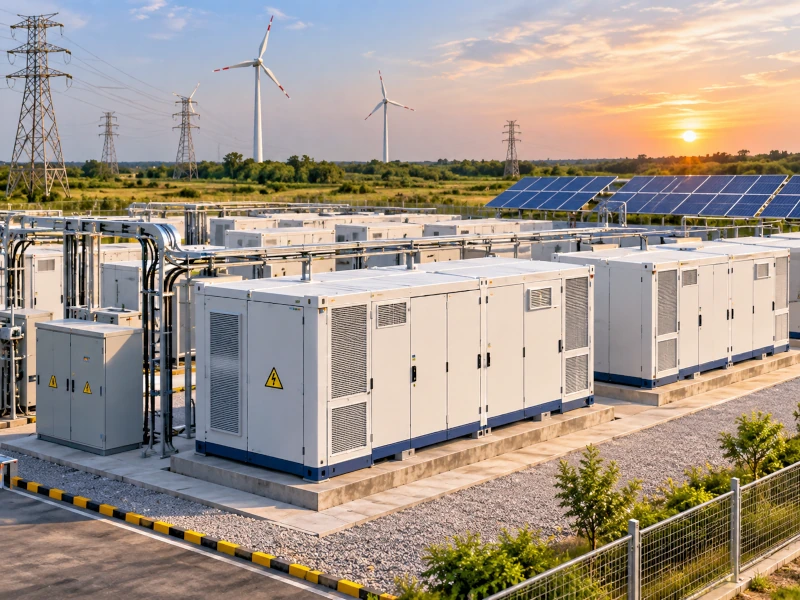
Larsen & Toubro (L&T) has secured a significant contract to develop a 300 MW/900 MWh Battery Energy Storage System (BESS) at Khavda in Gujarat. Announced on 25 November 2026, the contract was jointly secured by the company’s Renewables business and L&T Electronic Products & Systems (LTEPS). The project represents an important development in India’s energy storage infrastructure, supporting greater renewable energy integration and improving the flexibility and reliability of the national electricity network.
Large-Scale Energy Storage Infrastructure at Khavda
The proposed facility will have a rated output of 300 MW and sufficient storage capacity to sustain that output for three hours under rated operating conditions. This capability will enable electricity generated during periods of abundant renewable energy production to be stored and subsequently supplied when demand increases. The project will complement renewable energy generation infrastructure by addressing the variability associated with solar and wind power.
L&T has categorised the contract within its significant order classification, corresponding to a value between ₹1,000 crore and ₹2,500 crore. The company has not disclosed the precise financial value, customer identity or scheduled commissioning date in its announcement. The contract expands L&T’s participation in India’s emerging utility-scale energy storage market.
Advanced Liquid-Cooling Technology
The battery energy storage facility will incorporate liquid-based thermal management technology to regulate operating temperatures. Maintaining consistent temperatures across battery cells is essential for efficient energy storage, particularly in large installations operating under demanding environmental conditions. Effective thermal management also helps limit uneven battery degradation and maintain operational consistency.
According to L&T, the proposed cooling architecture is intended to improve power density, operational safety and equipment longevity. These characteristics are particularly relevant to large-scale battery installations that undergo frequent charging and discharging cycles. The technology reflects the increasing importance of advanced engineering solutions in developing reliable and commercially sustainable energy storage infrastructure.
Supporting Renewable Energy Integration
Solar and wind power generation depends on environmental conditions that do not always correspond with electricity consumption patterns. Solar installations generally produce their highest output during daylight hours, while electricity demand may remain elevated after sunset. Battery storage systems help address this mismatch by allowing electricity to be retained for use during periods of greater demand or lower renewable generation.
The Khavda project is designed to facilitate this process by absorbing excess renewable electricity and making it available during peak consumption periods. Such infrastructure can help reduce renewable energy curtailment, improve the utilisation of existing generation assets and support more predictable electricity delivery. As renewable generation expands, storage facilities will become increasingly important in maintaining a balanced and dependable electricity network.
Strengthening Grid Stability and Energy Security
Utility-scale battery storage introduces an additional layer of flexibility into electricity transmission and distribution systems. Unlike conventional generation facilities that may require longer periods to adjust their output, battery systems can respond rapidly to changes in electricity demand and supply. Depending on their configuration and grid integration arrangements, these installations can also support frequency regulation and other grid-balancing requirements.
Developing large-scale energy storage infrastructure alongside renewable generation can reduce the need to rely exclusively on conventional power plants during periods of peak demand. This capability can contribute towards more efficient utilisation of domestic energy resources while supporting the gradual diversification of India’s electricity generation and storage ecosystem. Reliable storage infrastructure will therefore play an important role in advancing the country’s long-term energy security objectives.
Expanding India’s Energy Storage Engineering Capabilities
The joint participation of L&T’s Renewables business and Electronic Products & Systems division brings together engineering expertise from complementary industrial and technological domains. Large battery storage projects require the integration of electrical equipment, power conversion systems, thermal management infrastructure, monitoring technologies and grid connectivity solutions. The ability to coordinate these technologies within a unified engineering framework is essential for executing complex energy infrastructure projects.
The Khavda contract provides further opportunities for Indian engineering enterprises to develop expertise in utility-scale energy storage deployment. As the domestic market expands, projects of this nature can support the development of specialised industrial capabilities and technical skills across the wider energy storage value chain. However, the company has not disclosed the extent of domestic sourcing or indigenous battery content associated with the project.
Building a More Resilient Clean Energy Ecosystem
The development of large-scale battery storage infrastructure represents an important stage in India’s transition towards a more flexible and diversified electricity system. Expanding renewable generation capacity must be accompanied by investments in storage, transmission and intelligent grid management to ensure that clean electricity remains available when required. The Khavda project illustrates how energy storage can complement renewable generation and enhance the reliability of electricity supply.
L&T’s latest contract reflects the growing participation of Indian private-sector engineering companies in advanced energy infrastructure development. Once operational, the proposed 900 MWh facility will contribute towards strengthening renewable energy utilisation and improving grid flexibility. Continued investment in such projects can provide a stronger foundation for India’s energy security, industrial competitiveness and sustainable economic development.
You may also like
-
Alpex Solar Commences Commercial Production at 2.2 GW TOPCon Solar Cell Facility
-
SEBI Explores Indigenous AI Model for India’s Securities Market
-
Indian Railways Completes Excavation of All 14 Tunnels in Sivok–Rangpo Railway Project
-
Ramnathapuram Mundu Chilli: Tamil Nadu’s Distinctive Round Chilli and Its Geographical Indication Heritage
-
Raise Financial Services Launches Indigenous AI-Powered TradingCharts Platform
