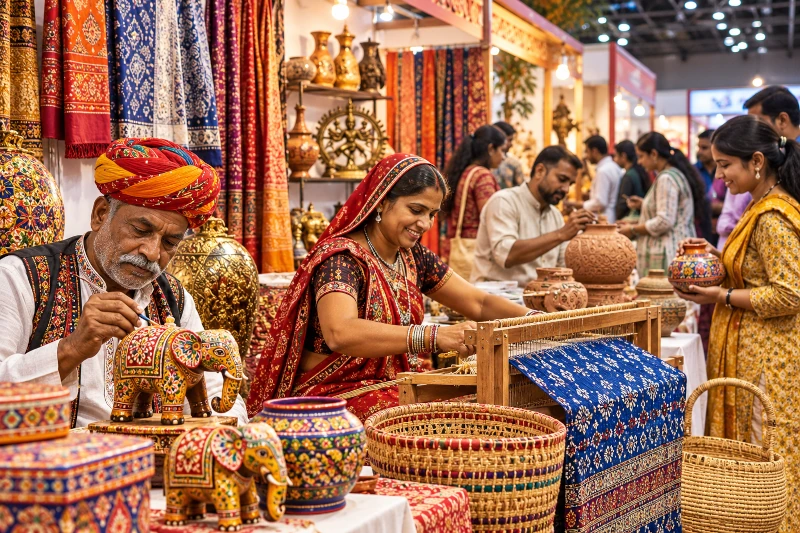
Traditional Indian artisans participating in the 45th India International Trade Fair (IITF) 2026 recorded cumulative sales of approximately ₹2.07 crore at the pavilion of the Ministry of Social Justice and Empowerment as of 26 November 2026. Bringing together more than 130 artisans from 19 states, the exhibition showcased India’s diverse artistic traditions and indigenous craftsmanship. The commercial achievement highlights the relationship between cultural heritage, grassroots entrepreneurship and sustainable livelihood generation.
Artisans from 19 States Showcase India’s Cultural Heritage
Located in Hall No. 5 at Bharat Mandapam in New Delhi, the Ministry’s pavilion provided a national platform for artisans representing different regional and cultural traditions. The exhibition featured handwoven textiles, traditional handicrafts, jewellery, footwear and other handmade products. Visitors had opportunities to interact directly with artisans and learn about the skills and traditions associated with their creations.
Such exhibitions help bring regional craftsmanship beyond its traditional geographical markets. By connecting artisans with a wider consumer base, they provide opportunities to increase product recognition, develop commercial relationships and establish new market linkages.
Steady Growth in Sales Reflects Consumer Interest
The pavilion recorded sustained growth in cumulative sales throughout the exhibition. Sales increased from approximately ₹60.78 lakh on 19 November to ₹1.16 crore on 22 November, before crossing ₹1.81 crore on 25 November. By 26 November, the cumulative figure had reached approximately ₹2.07 crore.
The progression reflects encouraging consumer interest in indigenous products and traditional craftsmanship during the event. These figures represent recorded sales rather than projected revenues, although the final turnover for the entire exhibition has yet to be established through a concluding report.
TULIP Programme Strengthens Artisan Market Access
An important component of the Ministry’s participation was the promotion of TULIP, the Traditional Artisans’ Upliftment Livelihood Programme. The initiative seeks to establish a recognisable market identity for artisan-made products and improve their visibility among consumers. It connects the preservation of traditional craftsmanship with contemporary approaches to entrepreneurship and product marketing.
A distinctive market identity can help artisans communicate the cultural significance, quality and origins of their products. Complementing traditional production skills with improved market access, branding and commercial awareness can support the long-term economic viability of indigenous craft enterprises.
Preserving India’s Living Cultural Heritage
India’s traditional crafts represent generations of accumulated knowledge in material selection, weaving, embroidery, carving, metalworking and decorative arts. Many of these skills have been preserved through family traditions, community-based production systems and apprenticeships. Their continued existence depends not only on cultural recognition but also on the availability of sustainable economic opportunities for practising artisans.
Commercial platforms such as the India International Trade Fair can contribute to this process by connecting traditional craftsmanship with contemporary consumer demand. Supporting the economic viability of these professions can encourage the transmission of specialised knowledge to younger generations while preserving the distinctive artistic identities of different regions.
Strengthening Grassroots Entrepreneurship
Traditional craft enterprises frequently operate through small-scale production systems involving individual artisans, households and local communities. Access to national exhibitions can help these producers overcome some of the geographical and commercial limitations associated with smaller markets. Direct interaction with consumers also provides opportunities to understand changing preferences and identify potential areas for product development.
Strengthening market linkages can complement wider efforts to promote financial inclusion, skills development and entrepreneurship among artisan communities. The long-term effectiveness of these initiatives will depend on sustained commercial opportunities beyond individual exhibitions, including access to digital marketplaces and established distribution networks.
Connecting Cultural Preservation with Economic Development
Traditional craftsmanship occupies a distinctive position within India’s economy because it combines cultural expression with productive economic activity. Unlike heritage objects preserved exclusively in museums, handmade products allow artistic traditions to remain part of contemporary everyday life. Their commercial success can therefore contribute to preserving cultural knowledge through continued practice.
The performance of the Ministry’s pavilion at IITF 2026 illustrates how cultural heritage can serve as a foundation for grassroots enterprise. Expanding opportunities for artisans while respecting the authenticity and regional identities of their products can help establish a more inclusive and culturally diverse manufacturing ecosystem.
Towards a Sustainable Future for India’s Artisan Communities
The cumulative sales of ₹2.07 crore recorded at the Ministry of Social Justice and Empowerment’s pavilion demonstrate the commercial opportunities available to traditional Indian artisans through wider market engagement. By bringing together craftsmanship, cultural preservation and entrepreneurship, initiatives such as IITF and TULIP can contribute to strengthening the economic foundations of India’s living heritage. Sustained support for artisan communities can help ensure that the country’s traditional knowledge and artistic excellence continue to flourish across future generations.
References
- Ministry of Social Justice and Empowerment, Press Information Bureau — MoSJE Pavilion at 45th IITF 2026 Records Sales of Approximately ₹2.07 Crore as on November 26, 27 November 2026. PIB Release ID: 2342712.
- Ministry of Social Justice and Empowerment — IITF Pavilion Crosses ₹1.81 Crore Sales Milestone, 26 November 2026. PIB Release ID: 2342065.
- Ministry of Social Justice and Empowerment — IITF Pavilion Records Cumulative Sales of Approximately ₹1.16 Crore, 23 November 2026. PIB Release ID: 2340532.
You may also like
-
Hindustan Mag and Prozeal Green Energy Plan 600-Tonne Rare-Earth Magnet Facility in Gujarat
-
ISRO Advances Next-Generation Methane Rocket Engine with Two Successful Subsystem Tests
-
Pixxel Plans ₹350 Crore Satellite Factory, Partners Centum to Advance Indigenous Space Technologies
-
Indian Railways Achieves 6.59-Kilometre Himalayan Tunnel Breakthrough in Uttarakhand
-
Indian Public Sector Banks’ Gross Advances Reach ₹127 Lakh Crore as Net NPAs Fall to 0.33 Per Cent
